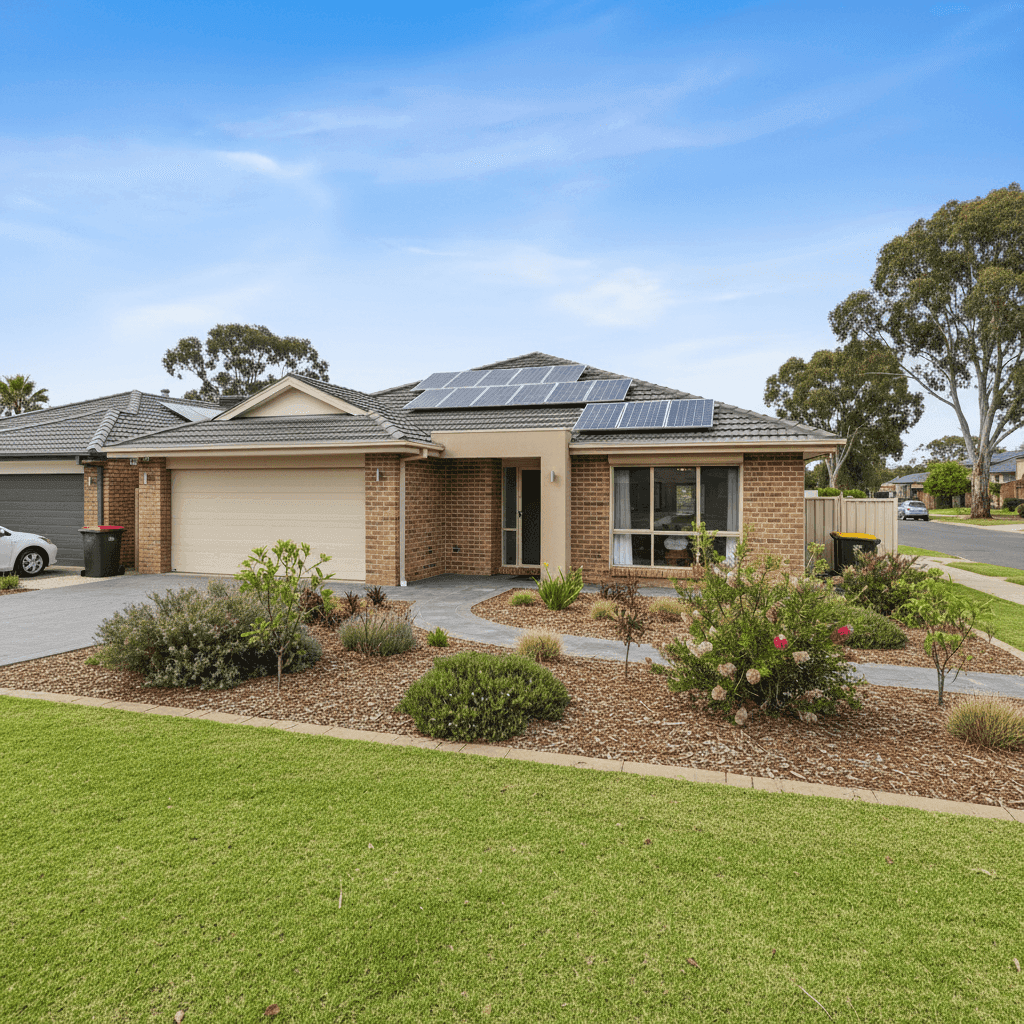
Berwick is one of Melbourne's most established outer south-eastern suburbs — a family-friendly pocket of Casey known for its leafy streets, quality schools, and a strong mix of newer and well-maintained homes. If you own a free standing home here, understanding what you should be paying for home and contents insurance is an important part of managing your household budget. This article breaks down a real quote for a five-bedroom brick veneer home in Berwick and puts the numbers into context against local, state, and national benchmarks.
---
Is This Quote Fair?
The quote in question comes in at $2,003 per year (or $208 per month) for combined home and contents cover, with a building sum insured of $550,000 and contents valued at $50,000. The building excess sits at $3,000, with a $1,000 excess on contents.
Our price rating for this quote is FAIR — Around Average, which is a reasonable outcome for a property of this size and specification. It's neither a standout bargain nor a cause for concern, but it does sit in a competitive range worth understanding in detail.
To put it plainly: this premium is below the Berwick suburb average of $2,219/yr, and very close to the suburb median of $1,926/yr — landing just 4% above it. That's a solid position. It falls comfortably within the middle band of what Berwick homeowners are paying, well clear of the 75th percentile of $2,574/yr where premiums start to look expensive.
---
How Berwick Compares
One of the most useful ways to evaluate any insurance quote is to zoom out and look at the broader market. Here's how this quote stacks up across three levels of comparison:
| Benchmark | Average Premium | Median Premium |
|---|---|---|
| Berwick (3806) | $2,219/yr | $1,926/yr |
| LGA – Casey | $2,142/yr | — |
| Victoria (VIC) | $3,000/yr | $2,718/yr |
| National | $5,347/yr | $2,764/yr |
(Based on [148 quotes collected for Berwick](https://coverclub.com.au/stats/VIC/3806/berwick))
A few things stand out here. First, Berwick homeowners are paying significantly less than the Victorian state average — roughly 33% less on a median basis. This reflects the suburb's relatively low-risk profile: no cyclone exposure, manageable bushfire risk compared to more rural parts of the state, and well-established infrastructure.
Second, the national average of $5,347/yr looks eye-watering by comparison, but this figure is heavily skewed by high-risk regions in Queensland, Western Australia, and the Northern Territory — areas prone to cyclones, flooding, and extreme weather events. The national median of $2,764/yr is a more useful yardstick, and this quote sits comfortably below it.
You can explore Victoria-wide insurance trends or the national insurance statistics to dig deeper into how different regions compare.
---
Property Features That Affect Your Premium
Every property has a unique combination of characteristics that insurers weigh up when calculating risk. Here's how the features of this particular home play into the premium:
Brick Veneer Walls & Tiled Roof This is one of the most common and insurer-friendly construction combinations in suburban Melbourne. Brick veneer offers solid fire resistance and structural durability, while a tiled roof is considered low-maintenance and resilient. Together, they typically attract more competitive premiums compared to, say, a weatherboard home with a metal roof.
Slab Foundation A concrete slab foundation is the standard for homes built around 2000 in Victoria. It carries minimal additional risk for insurers and doesn't introduce the subsidence or pest-related concerns that can affect older homes with timber stumps.
Timber & Laminate Flooring While timber and laminate flooring can be more costly to replace than carpet, the contents sum insured of $50,000 appears to account for this reasonably. It's worth ensuring your contents cover reflects the actual replacement value of your flooring if it's included in your policy.
Solar Panels This property has solar panels, which are worth noting from an insurance perspective. Most home and contents policies cover solar panels as part of the building, but it's important to confirm this with your insurer — particularly for damage caused by storms, hail, or electrical faults. Given the $550,000 building sum insured, there should be adequate room to cover panel replacement costs.
Ducted Climate Control Ducted heating and cooling systems are a significant fixed asset. They're generally covered under building insurance, but mechanical or electrical breakdown is often excluded unless you have a specific appliance or home assist add-on. Worth checking the fine print.
No Pool, No Cyclone Risk The absence of a pool removes a common liability and maintenance concern that can nudge premiums higher. And being outside any designated cyclone risk zone means this property avoids the significant loading that affects premiums in northern Australia.
---
Tips for Homeowners in Berwick
1. Review your building sum insured annually Construction costs in Victoria have risen sharply in recent years. A $550,000 sum insured may have been appropriate when the policy was first taken out, but rebuilding costs can change. Use a building cost calculator or speak with a quantity surveyor to ensure you're not underinsured — this is one of the most common and costly mistakes homeowners make.
2. Confirm solar panel coverage explicitly Don't assume your solar panels are covered — ask your insurer directly. Check whether the policy covers panels for storm damage, hail impact, and accidental damage, and whether there's a separate sub-limit that might not fully cover replacement costs.
3. Reassess your contents sum insured $50,000 in contents cover is on the modest side for a five-bedroom home. If you've accumulated furniture, appliances, clothing, electronics, and personal valuables over the years, it's worth doing a proper home inventory to make sure you're not left short after a claim.
4. Compare quotes at renewal time A "FAIR" rating means this quote is competitive — but the insurance market shifts constantly. Insurers reprice based on claims data, reinsurance costs, and risk modelling. What's fair today might look expensive in 12 months. Get a fresh comparison quote at CoverClub before auto-renewing to make sure you're still getting value.
---
Ready to Compare?
Whether you're reviewing an existing policy or shopping for cover on a new property, CoverClub makes it easy to see how your premium stacks up. Start your comparison at CoverClub and find out whether you're paying a fair price — or whether there's a better deal waiting for you. You can also explore detailed suburb-level insurance data for Berwick to benchmark your own quote against real market data.