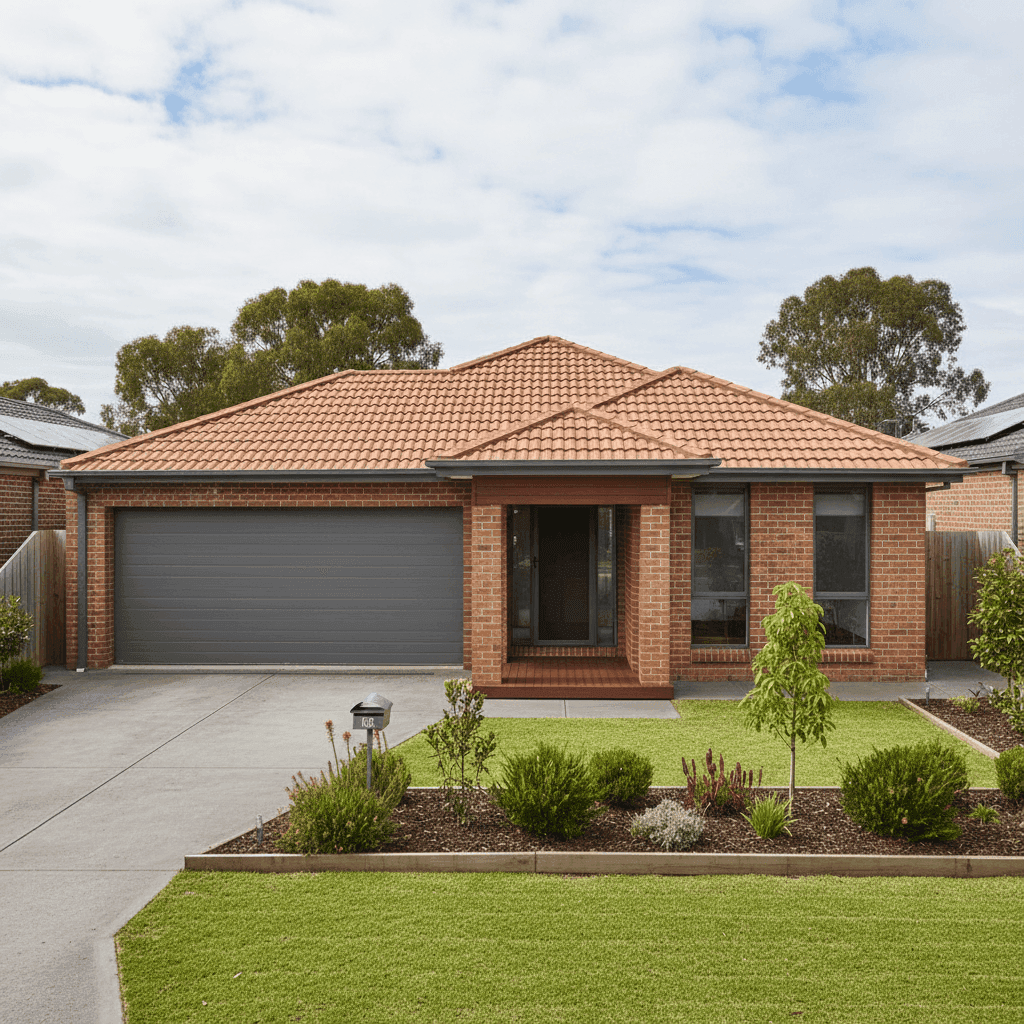
Berwick is one of Melbourne's most established outer south-eastern suburbs — a family-friendly pocket of Casey known for its leafy streets, quality schools, and a strong mix of newer and established housing stock. If you own a free standing home in the area and you're wondering whether your home and contents insurance premium is reasonable, you're in the right place. This article breaks down a recent quote for a three-bedroom, two-bathroom brick veneer home in Berwick, compares it against local, state, and national benchmarks, and offers practical tips to help you get the best value cover.
---
Is This Quote Fair?
The annual premium for this quote came in at $1,646 per year (or roughly $161 per month), covering both building (sum insured: $714,000) and contents ($100,000), each with a $1,000 excess.
Our pricing engine has rated this quote as Fair — Around Average, which is a solid result for a property of this size and specification. Here's what that means in context:
- The suburb average for Berwick (postcode 3806) sits at $2,227/yr, based on 151 quotes collected for this area.
- The suburb median is $1,805/yr, meaning half of all quotes in Berwick come in above this figure.
- At $1,646/yr, this quote falls below both the suburb average and median — sitting comfortably in the lower half of the pricing distribution.
The 25th percentile for Berwick is $1,190/yr and the 75th percentile is $2,768/yr, which means this quote lands between the cheapest quarter and the midpoint of the market. For a well-specified home with a $714,000 building sum insured and $100,000 contents cover, that's genuinely competitive pricing.
---
How Berwick Compares to the Rest of Victoria and Australia
One of the most useful ways to evaluate any insurance quote is to zoom out and see how your suburb stacks up against broader benchmarks.
| Benchmark | Average Premium | Median Premium |
|---|---|---|
| Berwick (3806) | $2,227/yr | $1,805/yr |
| LGA: Casey | $2,094/yr | — |
| Victoria | $2,921/yr | $2,694/yr |
| Australia (National) | $2,965/yr | $2,716/yr |
A few things stand out here. First, Berwick homeowners generally pay less than the Victorian state average — the suburb average of $2,227 is around $700 less than the state-wide average of $2,921. Second, compared to the national average of $2,965, Berwick sits roughly 25% cheaper — a meaningful difference that likely reflects the suburb's relatively low exposure to extreme weather events such as cyclones, flooding, or coastal storm surge.
The LGA of Casey, which encompasses Berwick and surrounding suburbs, averages $2,094/yr — slightly below the Berwick suburb average, suggesting pricing is fairly consistent across the broader council area.
For this particular quote at $1,646/yr, the homeowner is paying well below every benchmark listed above, which is an encouraging sign that the insurer has priced this property competitively.
---
Property Features That Affect Your Premium
Insurance premiums aren't pulled from thin air — they're calculated based on a detailed profile of your property. Here's how the features of this home likely influence its pricing:
Brick Veneer Construction Brick veneer is one of the most common external wall types in Australian suburban homes, and insurers generally view it favourably. It offers good fire resistance and structural durability compared to weatherboard or lightweight cladding, which can translate to lower rebuild risk and, in turn, more competitive premiums.
Tiled Roof A tiled roof is considered a relatively low-risk roofing material. Tiles are durable, fire-resistant, and have a long lifespan when maintained properly. This is a positive factor in premium calculations compared to older materials like corrugated iron or asbestos-cement sheeting.
Concrete Slab Foundation Slab foundations are standard for homes built in the 2000s and are generally well-regarded by insurers. They tend to be less susceptible to subsidence and pest damage than older pier-and-beam constructions.
Construction Year: 2008 At around 16–17 years old, this home is relatively modern. Newer builds benefit from more recent building codes, which typically require better fire safety, structural integrity, and electrical standards. This often results in lower premiums compared to homes built pre-1990.
Ducted Climate Control The presence of ducted heating and cooling adds to the overall replacement value of the home's fixtures and fittings, which is reflected in the building sum insured. It's worth ensuring your sum insured accounts for the full cost of replacing this system in the event of a total loss.
No Pool or Solar Panels The absence of a pool removes a common liability risk, while no solar panels means there's no additional replacement cost for rooftop systems. Both factors contribute to a cleaner, lower-risk risk profile.
Building Size: 214 sqm At 214 square metres, this is a mid-to-large family home. The $714,000 building sum insured works out to approximately $3,336 per square metre — broadly in line with current construction costs in metropolitan Victoria for a standard-quality brick veneer build.
---
Tips for Homeowners in Berwick
Whether you're reviewing your existing policy or shopping for the first time, these tips can help you get better value from your home insurance.
1. Check Your Building Sum Insured Annually Construction costs have risen significantly in recent years. Make sure your sum insured reflects current rebuild costs — not the figure you set when you first took out the policy. Underinsurance is one of the most common and costly mistakes homeowners make. Tools like the Cordell Sum Sure calculator can help you estimate an appropriate figure.
2. Compare Quotes Before Renewing Insurers don't always reward loyalty with competitive pricing. Before accepting your renewal offer, take 10 minutes to compare quotes on CoverClub — you may find a materially better price for equivalent cover.
3. Consider Your Excess Level A $1,000 excess is fairly standard, but opting for a higher excess (say, $2,000) can meaningfully reduce your annual premium. If you have a solid emergency fund and your home is in a relatively low-risk area like Berwick, this trade-off can make financial sense.
4. Review Your Contents Cover $100,000 in contents cover is a reasonable starting point, but it's worth doing a room-by-room inventory to make sure it reflects the actual value of your belongings. Electronics, jewellery, and appliances add up quickly — and being underinsured on contents can leave you significantly out of pocket after a claim.
---
Ready to Compare?
Whether you're a first-time buyer or a long-time Berwick resident, it pays to know where your premium sits in the market. CoverClub makes it easy to benchmark your quote against real data from your suburb and beyond. Get a home insurance quote today and see how your premium stacks up — you might be surprised at what's available.
For more localised pricing data, explore the Berwick suburb insurance stats or browse the full Victoria insurance overview.