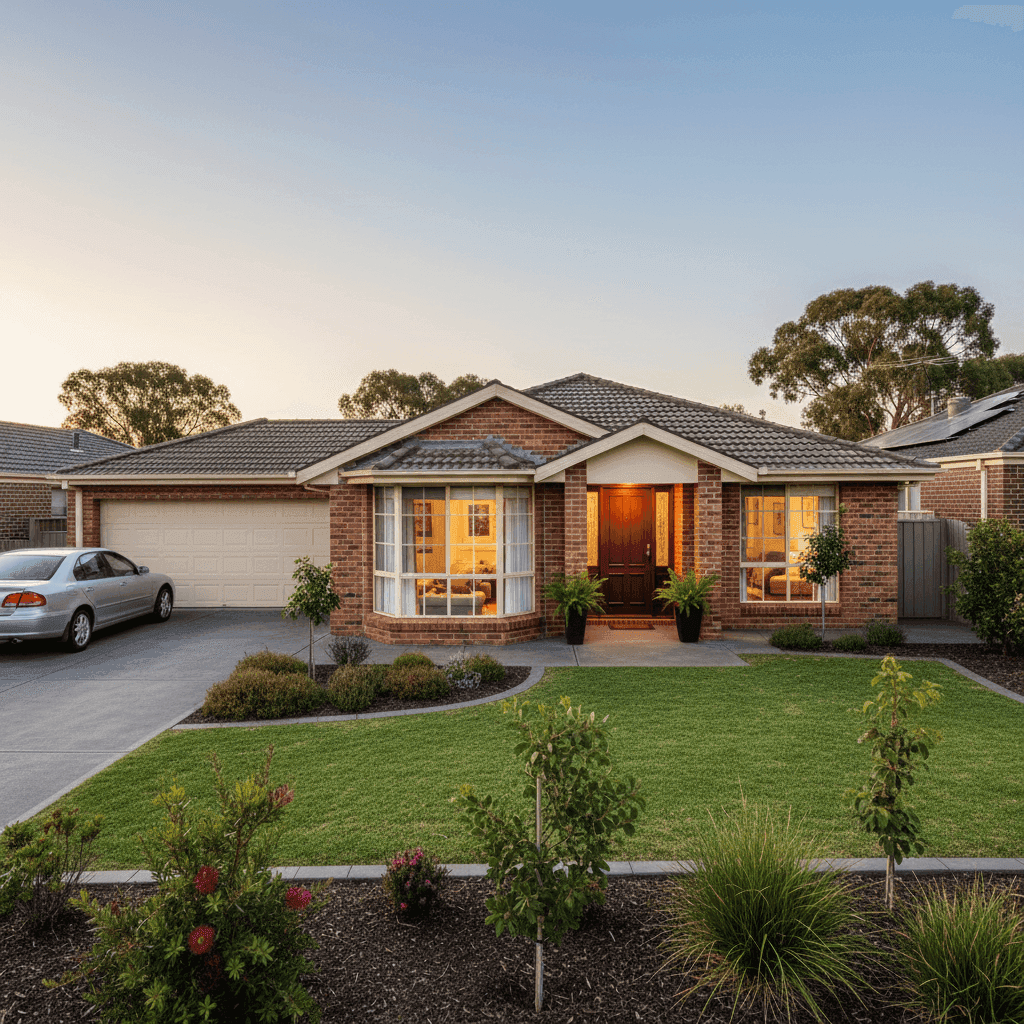
If you own a free standing home in Berwick, VIC 3806, you've probably wondered whether you're paying a fair price for home insurance — or leaving money on the table. This article breaks down a real home and contents insurance quote for a four-bedroom, three-bathroom brick veneer home in Berwick, comparing it against local, state-wide, and national benchmarks so you can make a more informed decision at renewal time.
---
Is This Quote Fair?
The quote in question comes in at $1,299 per year (or $120/month) for combined home and contents cover, with a building sum insured of $750,000 and contents valued at $100,000. The building excess is $3,000 and the contents excess is $1,000.
Our price rating for this quote is FAIR — Around Average.
At first glance, $1,299 might sound reasonable, but the full picture is a little more nuanced. Within Berwick itself, the suburb average sits at $2,227/yr and the median is $1,805/yr, based on 151 quotes in our dataset. That means this quote is tracking notably below both the average and median for the area — landing closer to the 25th percentile of $1,190/yr. In other words, roughly three-quarters of comparable Berwick properties are paying more.
That said, "fair" doesn't mean "the best available." There's still a meaningful gap between this quote and the cheapest 25% of the market, and with the right comparison, a lower premium may well be achievable.
---
How Berwick Compares
To put this quote in proper context, here's how Berwick stacks up against broader benchmarks:
| Benchmark | Average Premium | Median Premium |
|---|---|---|
| Berwick (3806) | $2,227/yr | $1,805/yr |
| LGA: Casey | $2,122/yr | — |
| Victoria | $2,921/yr | $2,694/yr |
| National | $2,965/yr | $2,716/yr |
A few things stand out here. Berwick premiums are meaningfully lower than both the Victorian and national averages — a reflection of the suburb's relatively low natural hazard exposure. There's no cyclone risk, bushfire risk in this part of Melbourne's south-east is moderate rather than extreme, and the area doesn't face the flood pressures seen in some other parts of Victoria.
The LGA of Casey follows a similar pattern, with an average of $2,122/yr — slightly below the Berwick suburb average, suggesting pricing is broadly consistent across the local government area.
Compared to the Victorian state average of $2,921/yr and the national average of $2,965/yr, Berwick homeowners are generally getting a better deal. You can explore the full breakdown of local pricing trends on the Berwick suburb stats page.
---
Property Features That Affect Your Premium
Every insurer prices risk differently, but the physical characteristics of a property play a significant role in determining your premium. Here's how the features of this particular home come into play:
Brick Veneer Walls Brick veneer is one of the most common external wall materials in Australian suburban homes built from the 1980s onwards. Insurers generally view it favourably — it offers solid fire resistance and reasonable structural durability, which can contribute to more competitive premiums compared to timber-clad homes.
Concrete Tile Roof Concrete tiles are durable and widely used across Melbourne's suburbs. They hold up well in hail and wind events and are relatively straightforward to repair or replace. This is a positive factor from an insurer's perspective.
Slab Foundation A concrete slab foundation is standard for homes of this era and construction type. It's generally considered low-risk, with fewer concerns around subsidence or movement compared to older pier-and-beam foundations — particularly relevant in areas with reactive clay soils.
Construction Year: 1995 At around 30 years old, this home sits in a comfortable middle ground. It's old enough that some wear is expected, but it was built under reasonably modern building codes. Homes of this vintage don't typically attract the age-related loading that older properties might.
Ducted Climate Control The presence of ducted heating and cooling adds to the overall rebuild cost and replacement value of the home's fixtures, which is factored into the building sum insured. It's worth ensuring your sum insured reflects the cost of replacing this system, as ducted systems can be expensive to reinstate.
No Pool or Solar Panels The absence of a swimming pool and solar panels simplifies the risk profile slightly. Both features can add to the insured value and, in some cases, the premium — so their absence is a minor pricing positive.
---
Tips for Homeowners in Berwick
1. Review your sum insured regularly With a building sum insured of $750,000, it's worth checking whether this figure accurately reflects current rebuild costs — not the market value of your home. Construction costs have risen significantly across Victoria in recent years, and being underinsured can leave you seriously out of pocket after a major claim. Use a building cost calculator or speak to a quantity surveyor if you're unsure.
2. Consider your excess strategically This quote carries a $3,000 building excess and a $1,000 contents excess. Opting for a higher excess is one of the most effective ways to reduce your annual premium, but make sure you could comfortably cover that amount in the event of a claim. If $3,000 would be a stretch, it may be worth paying a slightly higher premium for a lower excess.
3. Don't set and forget at renewal Insurers often apply automatic increases at renewal, sometimes well above inflation. Even if your current premium feels reasonable, it's worth getting a fresh comparison each year. The market can shift, and loyalty doesn't always pay in insurance.
4. Bundle thoughtfully — but check the maths Combined home and contents policies like this one can offer convenience and sometimes a discount. But it's always worth pricing them separately too, to confirm you're actually better off with a bundled policy rather than two standalone covers.
---
Compare Your Home Insurance Options
Whether you're reviewing an existing policy or shopping for cover on a new property, comparing quotes is the single most effective way to ensure you're not overpaying. At CoverClub, we make it easy to see how your premium stacks up against real data from across your suburb, state, and the country.
Get a home insurance quote today and find out whether your current cover is genuinely competitive — or whether there's a better deal waiting for you.