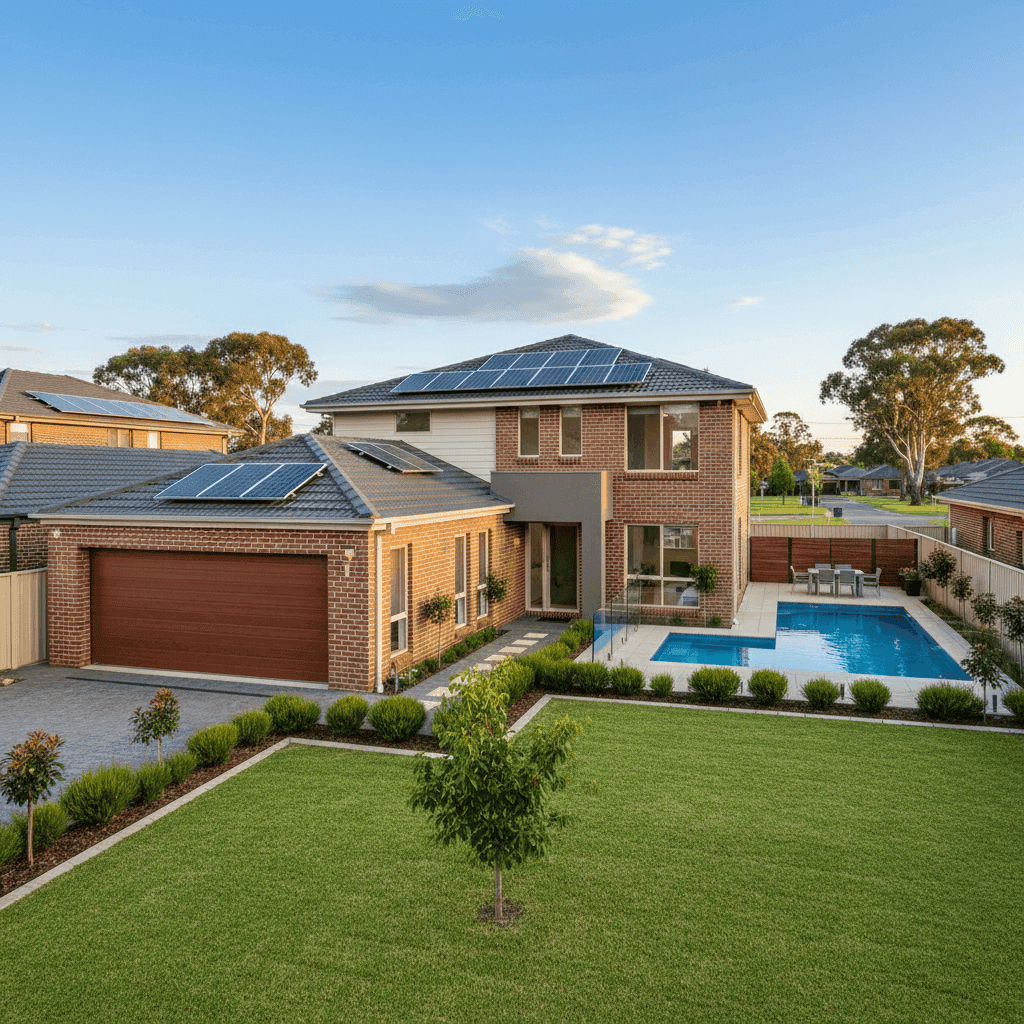
Berwick is one of Melbourne's most established outer south-eastern suburbs — a family-friendly pocket of Casey known for its leafy streets, quality schools, and a strong mix of newer and established housing stock. If you own a free standing home here, understanding what you should be paying for home and contents insurance is a smart financial move. This article breaks down a real quote for a four-bedroom, two-bathroom brick veneer home in Berwick, and puts it in context against local, state, and national benchmarks.
---
Is This Quote Fair?
The quote in question comes in at $1,466 per year (or roughly $144 per month), covering both building and contents for a property insured at $622,000 for the building and $40,000 for contents, each with a $2,000 excess.
Our price rating for this quote is CHEAP — below average for the suburb. That's a meaningful finding. Based on 148 quotes collected for Berwick (3806), the suburb average sits at $2,219 per year and the median at $1,926 per year. This quote lands right at the 25th percentile ($1,467/yr), meaning roughly 75% of comparable quotes in the area cost more.
For homeowners, that's genuinely good news — but it's also worth understanding why the premium is where it is, and whether the coverage is appropriate for the property's rebuild value and contents.
---
How Berwick Compares
Putting this quote into a broader geographic context reveals just how favourable the pricing is:
| Benchmark | Average Premium | Median Premium |
|---|---|---|
| Berwick (3806) | $2,219/yr | $1,926/yr |
| LGA: Casey | $2,142/yr | — |
| Victoria (VIC) | $3,000/yr | $2,718/yr |
| National | $5,347/yr | $2,764/yr |
At $1,466/yr, this quote is:
- 34% below the Berwick suburb average
- 51% below the Victorian state average
- 73% below the national average
The national average is heavily skewed by high-risk regions — particularly cyclone-prone areas in Queensland and Western Australia, as well as flood-affected zones — so the national figure should be interpreted with some caution. That said, even against the Victorian state average and the national median, this quote is competitively priced.
Berwick itself sits in a relatively low-risk zone. It is not classified as a cyclone risk area, and while parts of greater Casey can be subject to bushfire risk, Berwick's established urban character generally places it in a lower bushfire attack level (BAL) category compared to more rural fringe suburbs. These factors contribute to the suburb's premiums sitting well below the Victorian and national averages.
---
Property Features That Affect Your Premium
Several characteristics of this particular property work in the homeowner's favour from a risk and pricing perspective:
Brick Veneer Construction Brick veneer is one of the most common wall materials in Australian suburban homes built from the 1980s onwards, and insurers generally view it favourably. It offers solid fire resistance compared to weatherboard or lightweight cladding, which can translate to lower building premiums.
Tiled Roof Terracotta or concrete tiles are considered durable and relatively low-maintenance by insurers. They perform well in hail events compared to metal roofing in some scenarios, and their longevity reduces the likelihood of weather-related claims.
Slab Foundation A concrete slab foundation is standard for homes of this era in Victoria and presents minimal additional risk to insurers. It avoids the subsidence concerns sometimes associated with older pier-and-beam or strip footings.
Construction Year: 2006 At around 18–19 years old, this home sits in a sweet spot — modern enough to comply with contemporary building codes (including improved electrical and structural standards), but not so new that replacement costs are inflated by current construction price surges.
Swimming Pool A backyard pool does add a layer of liability risk and can nudge premiums upward slightly. It's worth confirming your policy includes adequate public liability cover — typically at least $10 million — to protect against accidents involving visitors or neighbours.
Solar Panels Solar panels are increasingly common on Australian rooftops, but they do represent an additional asset to insure. Most home insurance policies cover rooftop solar as part of the building sum insured, but it's worth checking whether your policy explicitly includes them — and whether the $622,000 building sum insured accounts for their replacement value.
Ducted Climate Control Ducted heating and cooling systems are a fixed building fixture and should be included in the building sum insured. Given the cost of replacing a full ducted system (often $8,000–$15,000+), ensure this is factored into your coverage amount.
Contents: $40,000 A $40,000 contents value is on the lower end for a four-bedroom home. It's worth doing a room-by-room inventory to confirm this figure accurately reflects your furniture, appliances, electronics, clothing, and personal items. Underinsurance on contents is a common issue that only becomes apparent at claim time.
---
Tips for Homeowners in Berwick
1. Review your building sum insured annually Construction costs have risen sharply across Victoria in recent years. A sum insured of $622,000 for a 214 sqm home works out to approximately $2,907 per sqm — which is within a reasonable range, but rebuild costs vary. Use a building calculator or speak with a quantity surveyor to validate this figure, especially if you've done renovations or additions since the home was built.
2. Don't underestimate your contents As mentioned above, $40,000 for a four-bedroom home may not fully cover everything inside. Walk through each room and estimate the replacement cost (not second-hand value) of your belongings. Many insurers offer online contents calculators to help.
3. Understand your excess and its trade-offs A $2,000 excess on both building and contents is relatively high. Higher excesses typically reduce your annual premium, which is reflected in this competitive quote — but it means you'll need to cover the first $2,000 of any claim out of pocket. Make sure this is a figure you're comfortable with given your financial situation.
4. Compare quotes at renewal time Even if you're happy with your current premium, the insurance market shifts regularly. Insurers reprice based on claims history, reinsurance costs, and risk modelling. Running a fresh comparison at renewal — rather than simply auto-renewing — is one of the easiest ways to ensure you're not paying more than you need to.
---
Ready to Compare Home Insurance in Berwick?
Whether you're a first-time buyer or a long-time Berwick resident, comparing quotes side by side is the best way to make sure you're getting genuine value. CoverClub makes it easy to see what other homeowners in your area are paying and find a policy that suits your property and budget.
Get a home insurance quote for your Berwick property →
You can also explore detailed premium data for your area at the Berwick (3806) suburb stats page.