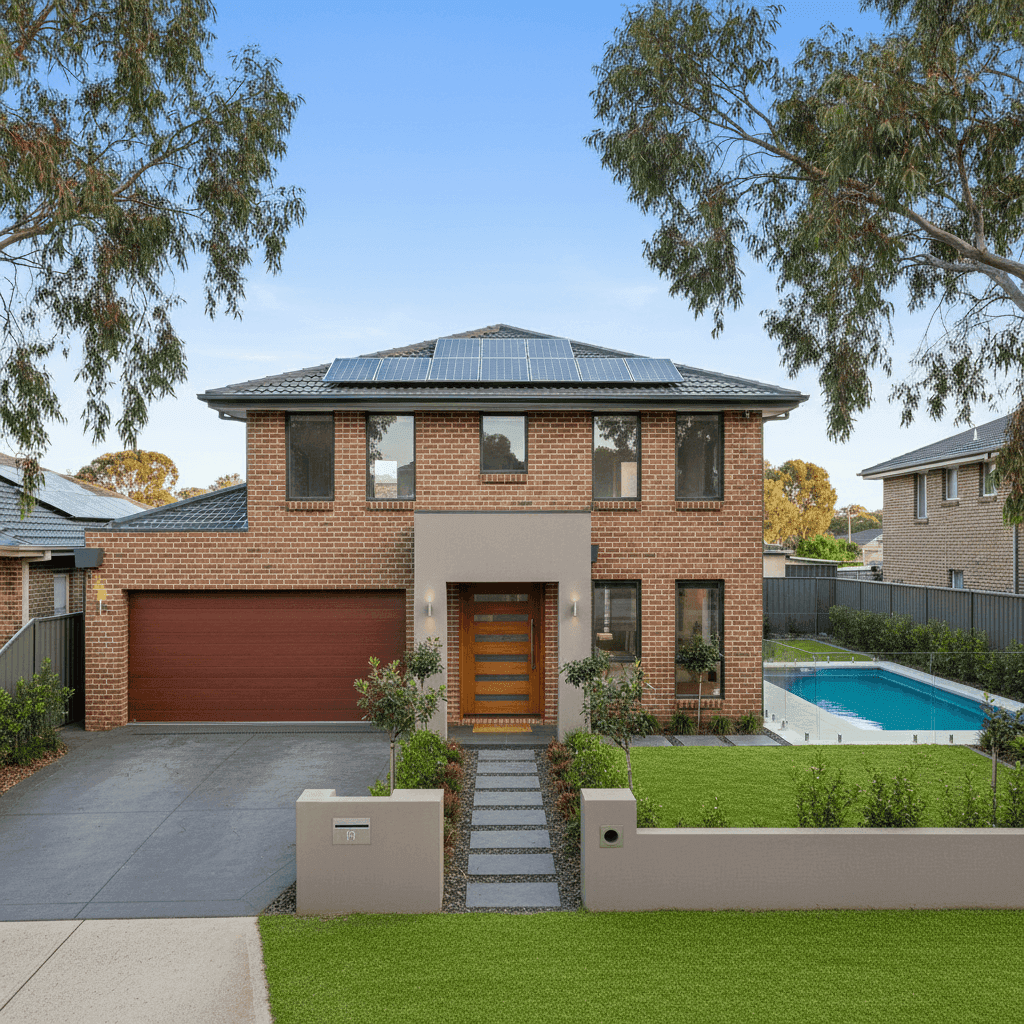
Berwick is one of Melbourne's most popular outer south-eastern suburbs — a well-established, family-friendly area in the City of Casey known for its leafy streets, quality schools, and a strong mix of modern and established housing stock. If you own a free standing home here, understanding what you should be paying for home and contents insurance is an important part of protecting one of your most valuable assets. This article breaks down a real insurance quote for a 4-bedroom, 2-bathroom brick veneer home in Berwick, and puts the numbers into context so you can make a more informed decision.
---
Is This Quote Fair?
The quote in question comes in at $1,761 per year (or $172/month) for combined home and contents cover, with a building sum insured of $713,000 and contents valued at $50,000. Both the building and contents excess sit at $1,000.
Our price rating for this quote is FAIR — Around Average, and the data backs that up. At $1,761/yr, this premium sits comfortably below the suburb average of $2,219/yr and also under the suburb median of $1,926/yr. That's a meaningful saving compared to what many Berwick homeowners are paying.
That said, "fair" doesn't necessarily mean "the best available." The suburb's 25th percentile sits at $1,467/yr, which means roughly a quarter of comparable quotes in the area come in even cheaper. There's a reasonable spread in the market — the 75th percentile reaches $2,574/yr — so shopping around can genuinely make a difference to what you pay.
---
How Berwick Compares
To put this quote in broader perspective, it helps to look at how Berwick stacks up against Victorian and national benchmarks. You can explore the full data on the Berwick suburb stats page, the Victoria state overview, and national insurance statistics.
| Benchmark | Average Premium | Median Premium |
|---|---|---|
| Berwick (3806) | $2,219/yr | $1,926/yr |
| LGA (Casey) | $2,142/yr | — |
| Victoria | $3,000/yr | $2,718/yr |
| National | $5,347/yr | $2,764/yr |
A few things stand out here. First, Berwick and the broader Casey LGA are notably more affordable than the Victorian state average — homeowners in this part of Melbourne are generally paying less than those in many other parts of the state. Second, the national average of $5,347/yr is heavily skewed upward by high-risk regions such as cyclone-prone areas of Queensland and the Northern Territory, as well as flood-affected zones. The national median of $2,764/yr is a more useful comparison point, and Berwick sits well below it.
At $1,761/yr, this quote is tracking 21% below the suburb average, 35% below the Victorian average, and a significant margin below the national median. For a property of this size and specification, that's a solid result — though it's always worth checking whether the cover terms and limits are appropriate for your situation.
---
Property Features That Affect Your Premium
Insurance underwriters look at a wide range of property characteristics when calculating your premium. Here's how the key features of this home are likely to influence the price:
Brick Veneer Walls & Tiled Roof Brick veneer construction with a tiled roof is one of the most common combinations in suburban Melbourne, and insurers generally view it favourably. Brick veneer is resistant to fire and weathering, while terracotta or concrete tiles are durable and widely understood by assessors. This combination typically attracts more competitive premiums compared to timber-framed or lightweight cladded homes.
Slab Foundation A concrete slab foundation is standard for homes built in the 2000s across Victoria. It's considered low-risk from a structural standpoint and doesn't carry the subsidence concerns sometimes associated with older pier-and-beam foundations.
Built in 2006 At roughly 18–20 years old, this home is in the sweet spot for insurers — modern enough to meet contemporary building codes (which significantly improved after the 2004 updates), but not so new that replacement costs are at a premium. Homes of this era tend to attract more straightforward underwriting.
Swimming Pool The presence of a pool adds some complexity to a home insurance policy. Pools can increase liability exposure and may require specific inclusions in your policy. It's worth confirming that your policy explicitly covers pool-related structures and equipment, including pumps and filtration systems.
Solar Panels Solar panels are increasingly common on Australian homes, but they're not always automatically covered under a standard building policy. Check whether your insurer covers panels for accidental damage, storm damage, and theft — and at what value. Given the cost of a typical rooftop solar system, this is an important detail to clarify.
Ducted Climate Control Ducted heating and cooling systems are a significant fixed asset and should be covered under your building sum insured. Make sure the $713,000 building cover adequately accounts for the cost of replacing this system as part of a full rebuild.
No Cyclone Risk Berwick is not in a cyclone-risk zone, which removes one of the biggest premium loading factors seen in northern Australia. This is a meaningful reason why premiums in this suburb are so much lower than the national average.
---
Tips for Homeowners in Berwick
1. Review your building sum insured regularly Construction costs have risen significantly in recent years. A 214 sqm home with quality inclusions like ducted climate control and a pool could cost considerably more to rebuild today than it would have just a few years ago. Use a building cost calculator or speak to a quantity surveyor to ensure your sum insured keeps pace with actual rebuild costs — underinsurance is a real risk.
2. Check what's covered for your pool and solar panels As mentioned above, these are two features that can fall through the cracks in standard policies. Ask your insurer directly: Are solar panels covered for accidental damage and storm events? Is the pool equipment (pump, filtration, heating) included in the building cover? Get the answers in writing.
3. Compare quotes before renewing Even if your current premium feels reasonable, the insurance market is competitive and prices can shift significantly between providers. Based on the data from 148 quotes in the Berwick area, there's a wide spread from the 25th to the 75th percentile — meaning the market rewards those who shop around. Get a new quote at CoverClub to see what's available.
4. Consider your excess settings Both the building and contents excess on this policy are set at $1,000. A higher excess can reduce your annual premium, which may suit homeowners who are comfortable covering smaller claims out of pocket. Conversely, if cash flow is a concern, a lower excess might be worth the slightly higher premium. It's a trade-off worth modelling with your insurer.
---
Ready to Compare?
Whether you're reviewing your existing cover or shopping for the first time, CoverClub makes it easy to see how your home insurance quote stacks up against real data from your suburb and beyond. Start comparing quotes at CoverClub and find out if you're getting a fair deal — or if there's a better option waiting for you.