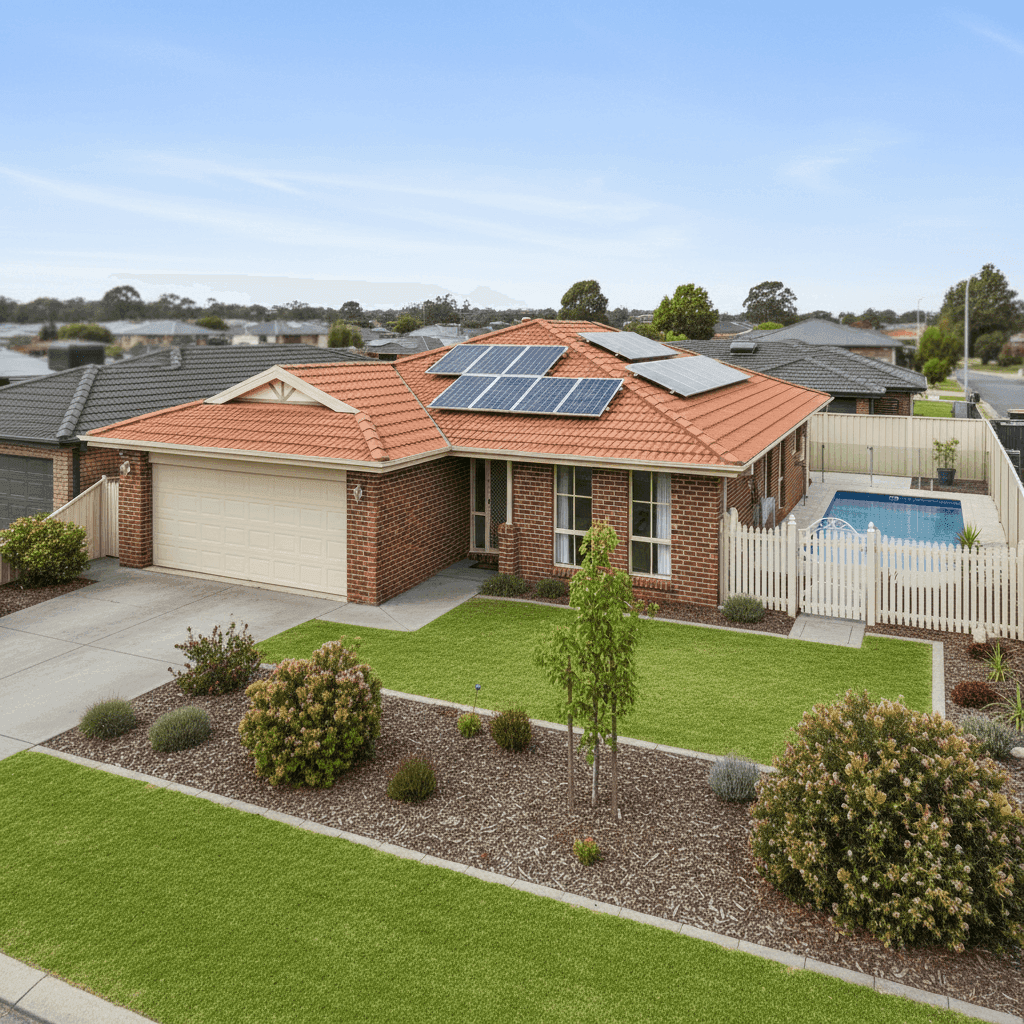
Berwick is one of Melbourne's most established outer south-eastern suburbs — a family-friendly area in the City of Casey known for its leafy streetscapes, quality schools, and a strong mix of newer and well-maintained homes. If you own a free standing home here, understanding what you should be paying for home and contents insurance is a smart financial move. This article breaks down a real quote for a 4-bedroom, 2-bathroom brick veneer home in Berwick (VIC 3806), and puts that figure in context against local, state, and national benchmarks.
---
Is This Quote Fair?
The annual premium for this property came in at $1,728 per year (or $169/month), covering both building (sum insured: $843,000) and contents ($80,000), each with a $2,000 excess. CoverClub's pricing engine has rated this quote as Fair — Around Average.
That's a reasonable outcome. The premium sits below the suburb average of $2,219/yr and also under the suburb median of $1,926/yr, meaning this homeowner is paying less than the majority of comparable Berwick properties in our dataset. It's not rock-bottom pricing — the cheapest 25% of Berwick quotes come in at $1,467/yr or below — but it's comfortably within a sensible range for a home of this size, age, and specification.
In short: this isn't a bargain, but it's not an overpriced policy either. For a 277 sqm home built in 2005 with a pool, solar panels, and ducted climate control, a premium of $1,728/yr reflects a realistic assessment of risk and replacement cost.
---
How Berwick Compares
To properly evaluate any insurance quote, context is everything. Here's how this premium stacks up across different geographic levels:
| Benchmark | Average Premium | Median Premium |
|---|---|---|
| This Quote | $1,728/yr | — |
| Berwick (3806) | $2,219/yr | $1,926/yr |
| LGA (Casey) | $2,142/yr | — |
| Victoria | $3,000/yr | $2,718/yr |
| National | $5,347/yr | $2,764/yr |
Based on 148 quotes collected for the Berwick suburb.
A few things stand out here. First, Berwick's premiums are meaningfully lower than the Victorian state average — homeowners in this suburb pay roughly 26% less than the typical Victorian policyholder. This reflects the relatively low natural hazard profile of the area: no cyclone risk, moderate bushfire exposure compared to more rural parts of the state, and well-maintained urban infrastructure.
The national average of $5,347/yr looks startling at first glance, but this figure is heavily skewed by high-risk regions in Queensland, Western Australia, and Northern Australia — areas prone to cyclones, flooding, and extreme weather events. The national median of $2,764/yr is a more representative comparison point, and this Berwick quote still comes in well under that figure.
For Berwick specifically, the interquartile range runs from $1,467/yr (25th percentile) to $2,574/yr (75th percentile), meaning this quote at $1,728/yr sits in the lower-middle portion of the local distribution — a solid position for a well-specified family home.
---
Property Features That Affect Your Premium
Every home is different, and insurers price risk based on a combination of structural characteristics, location, and optional features. Here's how the specifics of this property likely influence the premium:
Brick Veneer Walls & Tiled Roof Brick veneer is one of the most common and well-regarded construction types in Australian suburbia. It offers good fire resistance and structural durability, which insurers generally view favourably. Combined with a tiled roof — another low-maintenance, fire-resistant material — this home presents a relatively low structural risk profile.
Concrete Slab Foundation A slab-on-ground foundation is standard for homes built in this era across Melbourne's outer suburbs. It's generally considered stable and low-risk, particularly in areas without significant soil movement or flood exposure.
Timber & Laminate Flooring While attractive, timber and laminate flooring can be more susceptible to water damage than tiles or polished concrete. This is a minor factor, but insurers do consider internal finishes when assessing contents and building replacement costs.
Swimming Pool A pool adds both value and liability to a property. Insurers factor in the cost of pool equipment, fencing compliance, and potential liability for accidents. It's worth confirming your policy explicitly covers pool infrastructure and any associated legal liability.
Solar Panels Rooftop solar systems are increasingly common across Victoria, and most modern home insurance policies cover them as part of the building sum insured. At 277 sqm with a full solar installation, it's important to ensure your building sum insured ($843,000 in this case) adequately accounts for panel replacement costs.
Ducted Climate Control Ducted heating and cooling systems are a significant fixed asset and are typically covered under building insurance. They can be costly to repair or replace, so their inclusion in the building sum insured is essential.
2005 Construction Homes built in the early 2000s generally benefit from modern building standards without the premium complexity of heritage properties. This vintage sits in a sweet spot — structurally sound, relatively straightforward to insure, and not yet at an age where major systems are nearing end-of-life.
---
Tips for Homeowners in Berwick
1. Review your building sum insured regularly Construction costs have risen sharply across Victoria in recent years. A sum insured of $843,000 for a 277 sqm home works out to roughly $3,044/sqm — which is in the right ballpark for a standard-quality build, but worth revisiting annually. Underinsurance remains one of the most common and costly mistakes Australian homeowners make.
2. Check that your pool and solar are explicitly covered Not all policies automatically include pool equipment or solar panel systems without specific mention. Read your Product Disclosure Statement (PDS) carefully, or ask your insurer directly, to confirm these assets are included in your building cover.
3. Consider your excess strategically Both the building and contents excess on this policy are set at $2,000. A higher excess typically lowers your premium, but make sure you could comfortably cover that amount out of pocket in the event of a claim. For most Berwick homeowners, $2,000 is manageable — but it's worth modelling different excess levels when comparing quotes.
4. Compare quotes at renewal time Insurance loyalty rarely pays off in Australia. Insurers frequently offer better pricing to new customers than to existing ones. Even if your current premium feels reasonable, it costs nothing to compare — and you may find equivalent or better cover for less. Get a comparison quote at CoverClub before your next renewal.
---
Find the Right Cover for Your Berwick Home
Whether you're renewing an existing policy or insuring a new property, comparing quotes is the single most effective way to ensure you're not overpaying. CoverClub aggregates real pricing data from across Australia, so you can see exactly how your premium stacks up against your neighbours — and find a better deal if one exists.
Check your suburb's insurance stats or get a personalised quote in minutes. Your home is likely your most valuable asset — it deserves the right cover at a fair price.