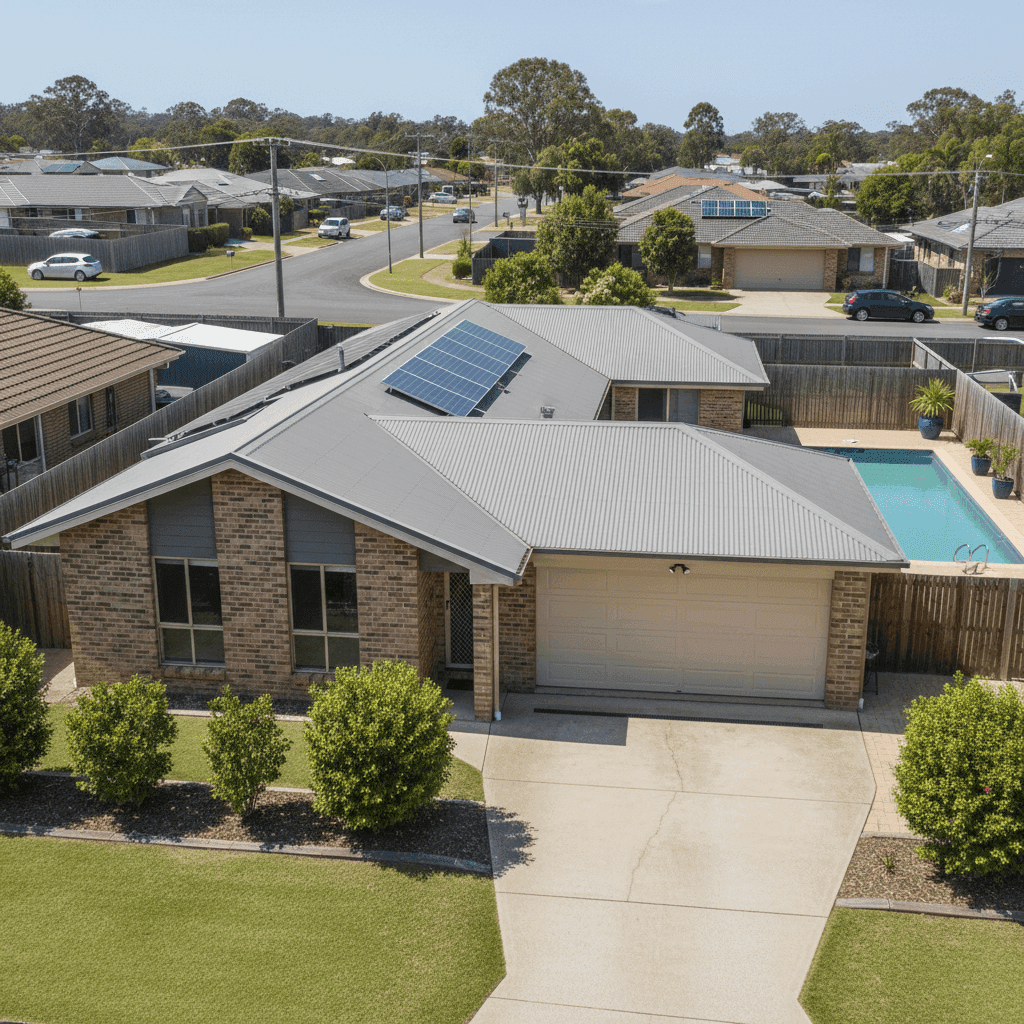
If you own a free standing home in Bethania, QLD 4205, you're probably wondering whether what you're paying for home insurance is reasonable — or whether you're leaving money on the table. This article breaks down a real home and contents insurance quote for a three-bedroom, two-bathroom brick veneer home in Bethania, comparing it against suburb, state, and national benchmarks to help you make a more informed decision.
---
Is This Quote Fair?
The quote in question comes in at $2,778 per year (or $275/month) for combined home and contents cover, with a building sum insured of $520,000 and contents valued at $52,000. The building excess is set at $3,000, and the contents excess at $1,000.
Our pricing engine has rated this quote as FAIR — Around Average, which is a reasonable outcome for a property of this type in the Logan region. It sits comfortably below the suburb average of $4,141/yr and just under the suburb median of $2,998/yr, meaning it's in the more competitive half of quotes seen for this area. It's not the cheapest on the market — the 25th percentile for Bethania sits at $2,153/yr — but it's a solid result that reflects the property's characteristics and the level of cover provided.
Given that the 75th percentile for Bethania reaches $5,289/yr, homeowners on higher premiums have a meaningful opportunity to review their cover. A "Fair" rating means this quote isn't a standout bargain, but it's not overpriced either — it's a reasonable reflection of market conditions for this suburb.
---
How Bethania Compares
To put this quote in proper context, it helps to look at the broader pricing landscape. Here's how Bethania stacks up:
| Benchmark | Premium |
|---|---|
| This Quote | $2,778/yr |
| Bethania Suburb Average | $4,141/yr |
| Bethania Suburb Median | $2,998/yr |
| Logan LGA Average | $4,617/yr |
| QLD State Average | $9,129/yr |
| QLD State Median | $3,903/yr |
| National Average | $5,347/yr |
| National Median | $2,764/yr |
(Based on 49 quotes sampled for the Bethania area. View full [Bethania suburb stats](https://coverclub.com.au/stats/QLD/4205/bethania), [QLD state stats](https://coverclub.com.au/stats/QLD), and [national stats](https://coverclub.com.au/stats/national).)
A few things stand out here. Queensland's state average of $9,129/yr is dramatically higher than both the national average and the Bethania suburb figures — a reflection of the significant weather-related risk that affects much of regional and coastal QLD. Cyclone-prone areas in North Queensland in particular push that state average up considerably.
Bethania, located in the Logan City area south of Brisbane, benefits from not being in a designated cyclone risk zone, which helps keep premiums more manageable. The suburb average of $4,141/yr is well below the QLD state average, and this quote at $2,778/yr comes in below even the suburb median — a positive sign.
Compared to the national median of $2,764/yr, this quote is essentially on par, which further supports the "Fair" rating. Homeowners in Bethania are generally paying less than the typical Australian, which is a relatively favourable position given Queensland's broader insurance pricing pressures.
---
Property Features That Affect Your Premium
Several characteristics of this property influence how insurers price the risk:
Brick Veneer Walls & Colorbond Roof Brick veneer is one of the most common — and insurer-friendly — wall constructions in Australian suburbia. It's durable, fire-resistant, and widely understood by underwriters. Paired with a steel Colorbond roof, this combination is generally viewed favourably. Colorbond roofs are lightweight, resistant to corrosion, and have a long lifespan, which can help moderate the replacement cost component of a building premium.
Slab Foundation A concrete slab foundation is standard for homes built in this era and region. It presents minimal risk of subsidence or underfloor moisture damage compared to some older suspended timber floor systems, which is a modest positive from an underwriting perspective.
Construction Year: 1987 At nearly 40 years old, this home falls into a mid-aged category. Homes of this vintage are generally well-understood by insurers, but it's worth noting that older electrical, plumbing, and roofing systems may be approaching the end of their service life. Insurers may factor this into pricing, particularly if the home hasn't had documented updates to key systems.
Swimming Pool A pool adds to the replacement cost of the property and can also introduce liability considerations. It's a feature that will contribute to a higher sum insured requirement and, in turn, a slightly elevated premium compared to an equivalent home without one.
Solar Panels Solar panels are increasingly common on Australian rooftops, but they do add to the insured value of the building. It's important to confirm with your insurer that your solar system is explicitly covered under the building policy — some policies include it automatically, while others may require it to be specified.
Standard Fittings & Carpet Flooring Standard-quality fittings and carpet flooring keep the replacement cost estimate more predictable and moderate. High-end finishes can significantly increase the cost to rebuild, so standard fittings generally result in a more straightforward valuation.
Building Size: 139 sqm At 139 square metres, this is a modestly sized home for a three-bedroom property. A smaller footprint generally means a lower cost to rebuild, which is reflected in the sum insured and ultimately the premium.
---
Tips for Homeowners in Bethania
1. Review Your Sum Insured Regularly Construction costs have risen sharply across Australia in recent years. A building sum insured of $520,000 for a 139 sqm brick veneer home in the Logan area may be appropriate today, but it's worth recalculating annually using a building cost estimator to ensure you're not underinsured — particularly given rising labour and materials costs.
2. Confirm Solar Panel Coverage With solar panels on the roof, double-check your policy wording to ensure the system is covered for damage from storms, hail, or fire. Some standard policies cover solar panels as a fixed fixture of the building, but the extent of that cover (including inverters and battery storage if applicable) can vary between insurers.
3. Consider Your Excess Levels Strategically This quote carries a $3,000 building excess and a $1,000 contents excess. A higher excess typically lowers your premium, but it means more out-of-pocket expense at claim time. If you have the financial buffer to absorb a larger excess, it can be a smart way to reduce your annual cost — but make sure the saving justifies the risk you're taking on.
4. Compare Quotes Before Renewal With a suburb price range stretching from $2,153/yr at the 25th percentile to $5,289/yr at the 75th percentile, there's clearly significant variation in what insurers are charging for similar properties in Bethania. Don't assume your renewal price is competitive — shopping around at renewal time is one of the easiest ways to avoid overpaying.
---
Ready to Compare?
Whether you're reviewing an existing policy or shopping for the first time, CoverClub makes it easy to see how your quote stacks up. Get a home insurance quote today and compare your premium against real data from your suburb, your region, and across Australia. Knowledge is your best tool when it comes to getting fair value on your home insurance.