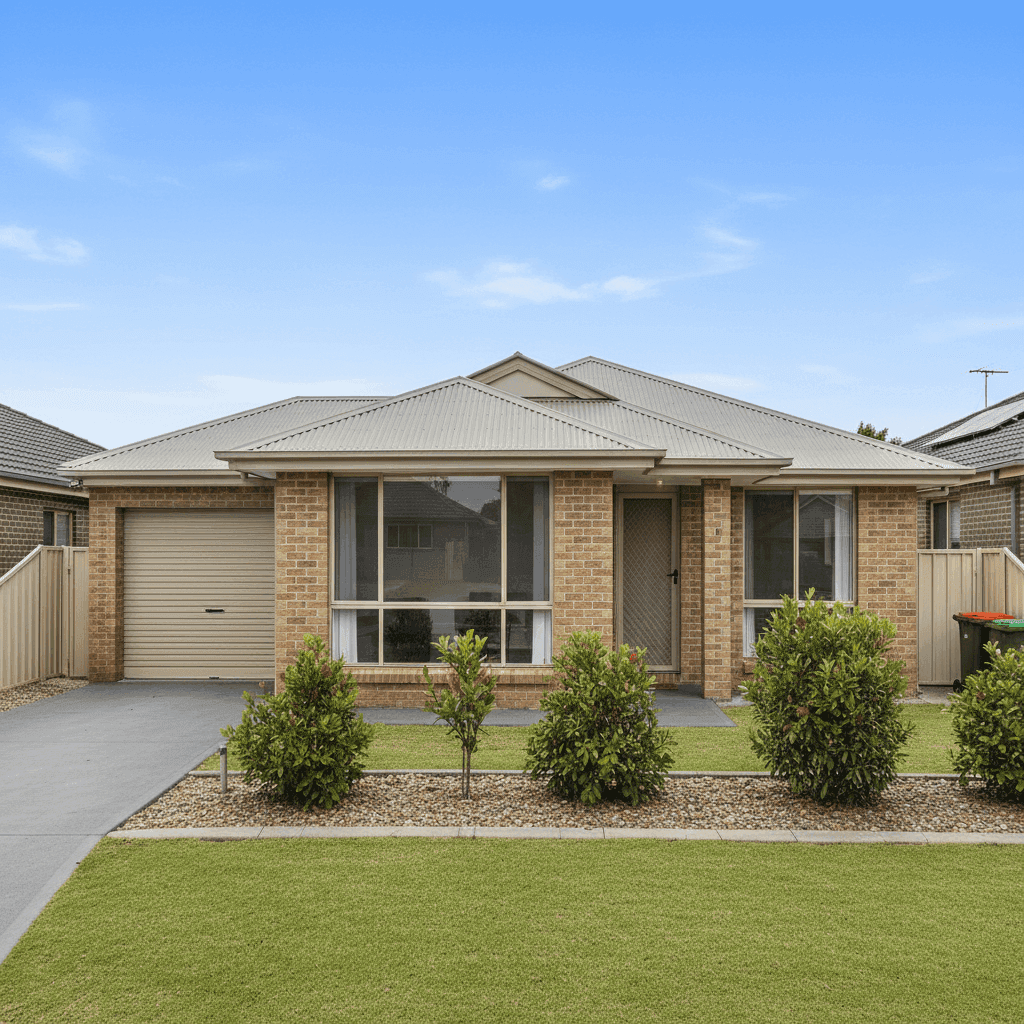
If you own a free standing home in Bexhill, NSW 2480, you're likely wondering whether you're getting a fair deal on your home insurance. Bexhill is a quiet semi-rural locality in the Northern Rivers region of New South Wales, sitting within the Ballina Local Government Area. Like many properties across the region, homes here face a unique mix of risk factors that can significantly influence insurance premiums. This article breaks down a real building insurance quote for a 3-bedroom, 2-bathroom brick veneer home in Bexhill — and puts it in context against suburb, state, and national benchmarks.
---
Is This Quote Fair?
The quote in question comes in at $2,010 per year (or $196/month) for building-only cover on a home with a sum insured of $447,000 and a $1,000 building excess. Our analysis rates this as CHEAP — below average — which is genuinely good news for the homeowner.
To put that in perspective:
- The suburb average for Bexhill is $5,700/yr
- The NSW state average is $3,801/yr
- The national average is $2,965/yr
At $2,010, this quote sits well below every one of those benchmarks — including the national average. That's a meaningful saving, particularly when you consider that the Ballina LGA average sits at a striking $23,241/yr, reflecting the elevated flood and storm risk that affects much of the broader region.
So yes — by any reasonable measure, this is a competitive quote. Whether it's the result of the specific insurer's pricing model, the property's characteristics, or simply good timing, it represents solid value for building cover in this part of NSW.
---
How Bexhill Compares
Understanding where Bexhill sits in the broader insurance landscape helps homeowners make smarter decisions. Here's a snapshot of how premiums stack up across different levels:
| Benchmark | Annual Premium |
|---|---|
| This Quote | $2,010 |
| Bexhill Suburb Average | $5,700 |
| Bexhill Suburb Median | $4,499 |
| Bexhill 25th Percentile | $3,901 |
| NSW State Average | $3,801 |
| NSW State Median | $3,410 |
| National Average | $2,965 |
| National Median | $2,716 |
| Ballina LGA Average | $23,241 |
Even at the cheapest end of Bexhill's local range (the 25th percentile at $3,901), this quote still comes in nearly $1,900 cheaper per year. That's a difference worth paying attention to.
The outsized Ballina LGA average — nearly $23,000/yr — tells an important story. Many properties across the Ballina LGA are heavily exposed to flood risk, particularly those near the Richmond River and its tributaries. Bexhill itself has pockets of varying flood exposure, which is one reason premiums in the area can vary so dramatically from one property to the next. You can explore localised data further on the Bexhill suburb stats page, or compare against all of NSW and national benchmarks.
---
Property Features That Affect Your Premium
Several characteristics of this particular property likely contribute to its competitive premium. Let's walk through the key ones:
Brick Veneer Construction
Brick veneer is generally viewed favourably by insurers. It offers good fire resistance and structural durability, which can translate into lower rebuild risk compared to timber-framed or clad homes.
Colorbond Steel Roof
Steel roofing — particularly Colorbond — is a popular choice in regional NSW and tends to perform well in assessments. It's durable, low-maintenance, and resistant to fire and corrosion. Insurers often price steel roofs more favourably than older tile or fibrous cement alternatives.
Concrete Slab Foundation
A slab foundation is considered stable and low-risk from an insurance perspective, particularly when compared to timber stumps or pier-and-beam foundations that can be more vulnerable to movement or pest damage.
Built in 1985
Homes from this era are generally well-established in terms of structural integrity, though they can carry some risk around ageing plumbing and electrical systems. At 40 years old, it's worth ensuring the sum insured reflects any updates or improvements made since construction.
No Pool, Solar Panels, or Ducted Climate Control
The absence of these features simplifies the risk profile. Pools, solar systems, and ducted HVAC all add complexity (and potential liability or replacement cost) to a home insurance policy. Without them, the insurer has fewer variables to price in.
139 sqm Building Size
At 139 square metres, this is a modest-sized home. Rebuild costs are directly tied to floor area, so a smaller footprint generally means a lower sum insured requirement — and a lower premium.
---
Tips for Homeowners in Bexhill
Whether you're renewing an existing policy or shopping around for the first time, here are some practical steps to make sure you're well covered without overpaying.
1. Review Your Sum Insured Annually
Building costs have risen significantly across regional NSW in recent years. Make sure your $447,000 sum insured still reflects the true cost to rebuild your home — including demolition, site preparation, and current labour and materials rates. Underinsurance is one of the most common and costly mistakes homeowners make.
2. Understand Your Flood Risk
Bexhill's proximity to the broader Northern Rivers floodplain means flood cover is worth scrutinising carefully. Check whether your policy includes flood as standard or as an optional add-on — and clarify exactly what "flood" means under your policy's definitions, as it can differ from "storm surge" or "rainwater runoff."
3. Don't Auto-Renew Without Comparing
The fact that this quote came in well below the suburb average shows that premiums can vary significantly between insurers for the same property. Auto-renewing without shopping around could mean paying hundreds — or even thousands — more than necessary each year.
4. Consider the Excess Trade-Off
A $1,000 building excess is fairly standard. If you're comfortable with a higher excess (say, $2,500), you may be able to reduce your annual premium further. Just make sure you'd genuinely be able to cover that cost in the event of a claim.
---
Compare Your Own Quote
Curious how your home insurance stacks up? CoverClub makes it easy to compare quotes from multiple insurers in one place — so you can see exactly where you sit relative to your suburb, state, and the national average. Get a quote today at CoverClub and find out whether you're paying a fair price for your home insurance.