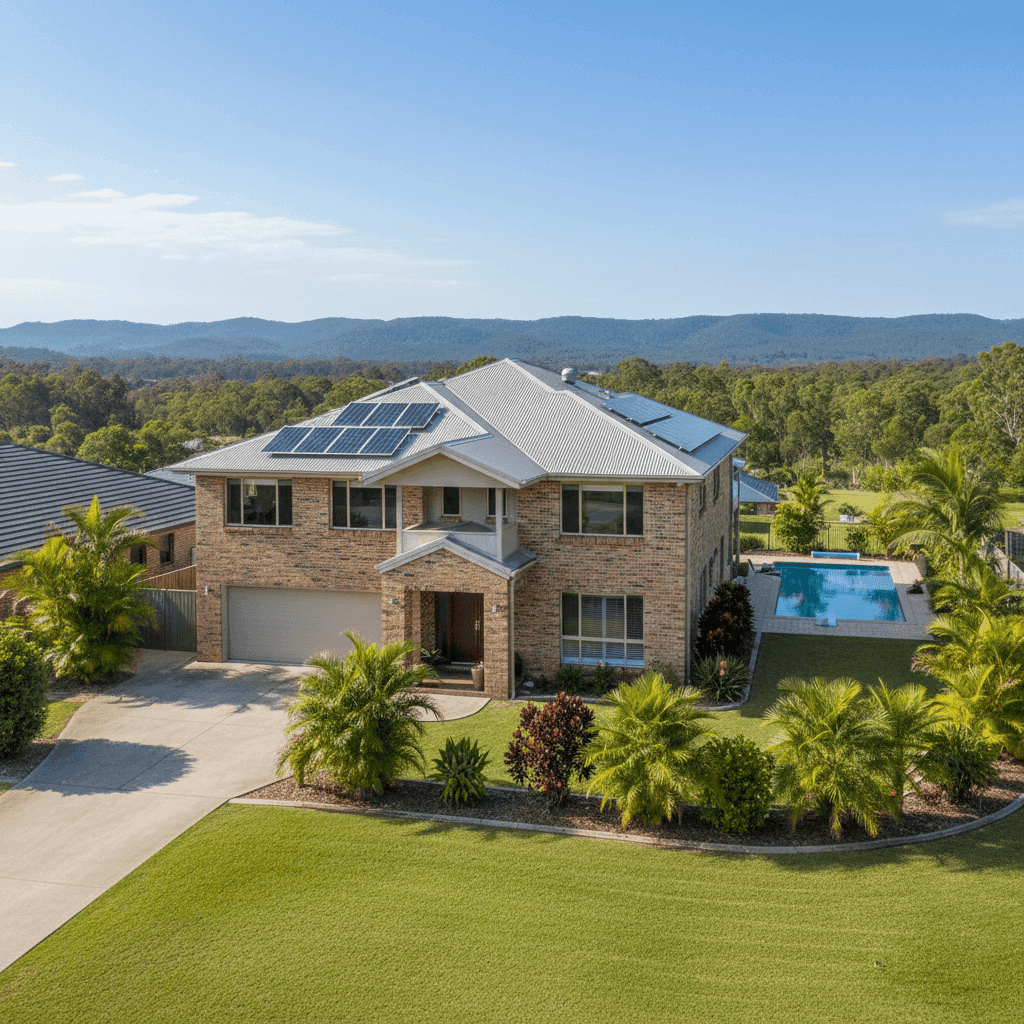
Bilambil Heights is a leafy, elevated suburb in the Tweed region of northern New South Wales — popular with families drawn to its quiet streets, generous block sizes, and easy access to both the Gold Coast and the NSW coast. For owners of a substantial free standing home in this area, getting the right home and contents insurance is an important financial decision. This article breaks down a real insurance quote for a five-bedroom property in the 2486 postcode, so you can understand what's driving the price and whether there's room to save.
---
Is This Quote Fair?
The quote in question comes in at $4,638 per year (or $454 per month) for combined home and contents cover, with a building sum insured of $1,554,000 and contents valued at $96,000. Our analysis rates this quote as Expensive — above average for the area.
To put that in context: the suburb average for Bilambil Heights sits at $3,173 per year, and the median is $2,778. That means this quote is roughly 46% above the suburb average and 67% above the suburb median. Even when measured against the 75th percentile of local quotes ($3,684/yr), this premium still comes in noticeably higher.
That said, it's worth noting that the LGA (Tweed) average is $5,645 per year — so while this quote is above the suburb norm, it actually sits below the broader Tweed local government area average. This suggests that premiums across the Tweed LGA can vary significantly depending on specific property characteristics, flood zones, and proximity to bushland or coastal areas.
The building excess is set at $2,000 and the contents excess at $1,000. Higher excesses typically reduce premiums, so if these were lowered, the annual cost could climb further still.
---
How Bilambil Heights Compares
Understanding where this quote sits relative to broader benchmarks is key to evaluating value for money.
| Benchmark | Premium |
|---|---|
| This Quote | $4,638/yr |
| Bilambil Heights suburb average | $3,173/yr |
| Bilambil Heights suburb median | $2,778/yr |
| NSW state average | $3,801/yr |
| NSW state median | $3,410/yr |
| National average | $2,965/yr |
| National median | $2,716/yr |
| Tweed LGA average | $5,645/yr |
You can explore more local data on the Bilambil Heights insurance stats page, compare against NSW-wide figures, or see how it stacks up against the national picture.
A few things stand out here. This property's premium is above both the NSW state average and the national average, which is notable given that many parts of NSW — particularly in flood-prone or bushfire-affected regions — carry very high premiums. The Tweed LGA average being significantly higher than this quote does provide some reassurance that the quote isn't wildly out of step with the broader region.
It's also worth noting that the suburb sample size is 15 quotes, which is a relatively modest dataset. As more quotes are collected for the 2486 postcode, the averages may shift.
---
Property Features That Affect Your Premium
Several characteristics of this property have a direct bearing on the premium quoted.
Size and sum insured: At 315 sqm, this is a large home — well above the Australian average for new builds. A building sum insured of $1,554,000 reflects the significant rebuild cost for a property of this scale, and insurers price accordingly. Larger homes simply cost more to replace.
Brick veneer construction with a Colorbond roof: Brick veneer walls are generally viewed favourably by insurers — they offer good fire resistance and structural durability. A steel Colorbond roof is similarly well-regarded for its longevity and resistance to weather damage, which can help moderate premiums compared to, say, tile or timber roofing.
Slab foundation: A concrete slab foundation is standard for homes of this era and construction type, and generally doesn't attract any premium loading. It offers good stability and is less susceptible to subfloor pest damage.
Timber and laminate flooring: While attractive and common in Australian homes, timber and laminate floors can be more costly to repair or replace after water damage events, which may be factored into contents or building pricing.
Swimming pool: The presence of a pool adds to the insured asset base and can increase liability considerations under some policies. It's worth confirming your policy explicitly covers pool-related structures and equipment.
Solar panels: Solar panel systems are increasingly common in Australian homes, but coverage varies considerably between insurers. Some policies include panels as part of the building sum insured, while others treat them as a separate item or exclude damage from certain causes. It's essential to verify that your $1,554,000 building sum insured accounts for the full replacement cost of your solar system.
Construction year (2002): A home built in 2002 is relatively modern and benefits from building codes that were updated significantly during the late 1990s and early 2000s. This generally means better cyclone, wind, and fire resistance standards — a positive factor for insurers.
---
Tips for Homeowners in Bilambil Heights
1. Shop around — seriously. With a quote rated as expensive relative to local benchmarks, this is the clearest signal to compare alternatives. Even a modest saving of 15–20% on this premium would represent $700–$900 per year back in your pocket. Use a comparison tool like CoverClub to see multiple quotes side by side.
2. Confirm your solar panels are fully covered. Ask your insurer specifically how solar panels are treated under your policy — whether they're included in the building sum insured, subject to a sublimit, or excluded from certain types of damage (such as storm or hail). Given the value of modern solar systems, this is a gap you don't want to discover at claim time.
3. Review your building sum insured annually. Construction costs in Australia have risen sharply in recent years. A sum insured that was accurate two or three years ago may now be insufficient to cover a full rebuild. Underinsurance is one of the most common — and costly — mistakes homeowners make. Consider using a professional quantity surveyor or your insurer's rebuild cost calculator to validate the figure.
4. Consider your excess settings carefully. This policy carries a $2,000 building excess and a $1,000 contents excess. While higher excesses do reduce premiums, make sure the savings justify the out-of-pocket risk. If you'd struggle to find $2,000 quickly in the event of a claim, it may be worth adjusting your excess and accepting a slightly higher annual premium.
---
Ready to Compare?
If this quote has you wondering whether you're paying too much, you're not alone. Home insurance premiums can vary dramatically between providers — even for the same property. At CoverClub, we make it easy to compare home and contents insurance quotes tailored to your specific property. Get a quote today and see how much you could save.