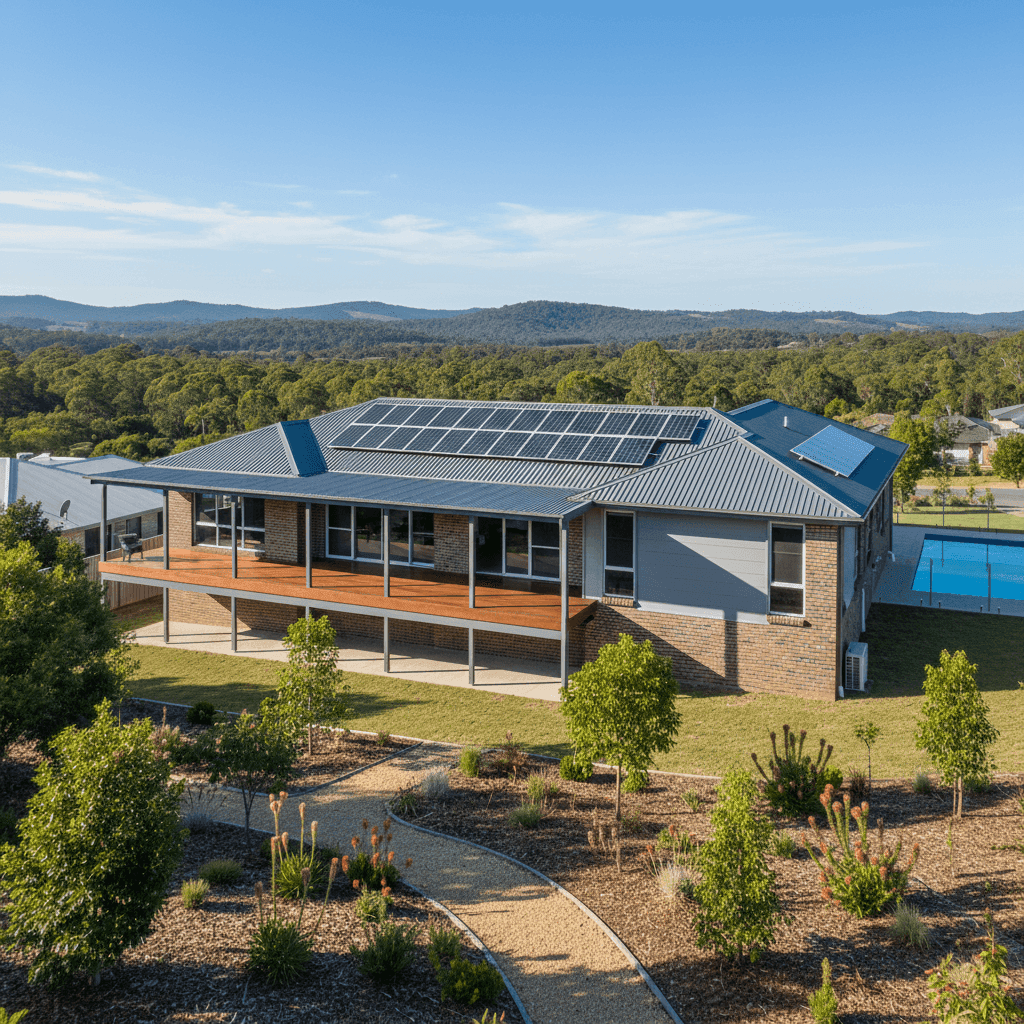
Bilambil Heights is a quiet, leafy suburb tucked into the hills of the Tweed region in northern New South Wales — just a short drive from the Gold Coast border. It's an area that attracts families and owner-occupiers drawn to its elevated positions, modern homes, and semi-rural feel. For a four-bedroom, four-bathroom free standing home built in 2023, securing the right home and contents insurance is an important financial decision. This article breaks down a recent quote of $2,497 per year (or $245/month) for a property in this suburb, and puts it in context against local, state, and national benchmarks.
---
Is This Quote Fair?
The short answer: yes, broadly speaking. This quote has been rated Fair (Around Average) — meaning it's competitive without being a standout bargain. At $2,497 annually, it sits comfortably below both the suburb average and the NSW state average, which is a solid outcome for a well-appointed modern home.
To put it in perspective:
- The suburb average for Bilambil Heights is $3,173/yr, meaning this quote is roughly $676 cheaper than what many locals are paying.
- The suburb median sits at $2,778/yr — still above this quote by around $281.
- This quote falls between the 25th percentile ($2,372/yr) and the median ($2,778/yr), placing it in the lower-middle range of the market for the area.
So while it's not the cheapest quote available in the suburb, it's well below what the average homeowner in Bilambil Heights is spending. For a brand-new home with a building sum insured of $994,000 and $50,000 in contents cover, this represents reasonable value.
It's worth noting that the building excess is $2,000 and the contents excess is $1,000. Higher excesses typically reduce your annual premium, so if you're comparing this quote with others, make sure you're comparing like-for-like excess levels.
---
How Bilambil Heights Compares
Zooming out reveals just how much location influences what Australians pay for home insurance. Here's how this quote stacks up across different geographic benchmarks:
| Benchmark | Average Premium |
|---|---|
| Bilambil Heights (suburb) | $3,173/yr |
| Tweed LGA | $4,680/yr |
| NSW State Average | $3,801/yr |
| National Average | $2,965/yr |
| This Quote | $2,497/yr |
The standout figure here is the Tweed LGA average of $4,680/yr — significantly higher than both the NSW and national averages. This likely reflects the broader risk profile of the Tweed region, which includes coastal and flood-prone areas. Bilambil Heights, being elevated, may attract more favourable pricing than lower-lying parts of the LGA.
Compared to the NSW state average of $3,801/yr, this quote is $1,304 cheaper — a meaningful annual saving. Against the national average of $2,965/yr, it's still $468 below the benchmark.
You can explore more local pricing data on the Bilambil Heights suburb stats page, which includes median premiums, percentile ranges, and how the area compares over time.
> Note: The suburb sample size for this analysis is 15 quotes, which provides a useful directional guide but may not capture the full range of pricing available in the area.
---
Property Features That Affect Your Premium
Several characteristics of this particular property will influence how insurers assess and price the risk. Here's what's most relevant:
New Construction (2023)
A home built in 2023 is about as modern as it gets. Newer builds typically comply with the latest Australian building codes, use contemporary materials, and are less likely to have hidden structural issues. Insurers generally view this favourably, and it can contribute to more competitive premiums.
Brick Veneer Walls & Colorbond Roof
Brick veneer is one of the most common and well-regarded wall constructions in Australia. It offers solid fire resistance and durability. Combined with a steel Colorbond roof — which is lightweight, resistant to corrosion, and performs well in high-wind conditions — this is a construction type that tends to attract standard or even reduced risk ratings from insurers.
Elevated Foundation (At Least 1m)
The property sits elevated by at least one metre on a slab foundation. In the Tweed region, where parts of the LGA are susceptible to flooding and storm water, elevation is a genuine advantage. It reduces the risk of inundation and can positively influence flood-related components of a premium.
Swimming Pool
A pool adds to the replacement value of the property and introduces some additional liability considerations. Insurers factor in the cost of pool infrastructure when calculating building sums insured, so it's important to ensure your sum insured of $994,000 adequately reflects the full replacement cost, including the pool, fencing, and associated equipment.
Solar Panels
Solar panels are increasingly common on Australian homes, but they do add complexity to insurance assessments. They increase the replacement value of the building and can be damaged by hail, storm, or fire. Confirm with your insurer that solar panels are explicitly covered under your policy — some policies include them automatically as a fixed fixture, while others may require a specific endorsement.
Ducted Climate Control
A ducted air conditioning system is a significant fixed asset that forms part of the building sum insured. Given the warm, humid climate of the Tweed region, this is a standard and expected feature — but it's worth verifying it's captured in your building valuation.
---
Tips for Homeowners in Bilambil Heights
1. Validate Your Building Sum Insured Regularly
With a brand-new home, construction costs at the time of build are known — but building costs across Australia have risen sharply in recent years. Review your $994,000 sum insured annually to ensure it reflects current replacement costs, including any upgrades, the pool, and solar system. Underinsurance is one of the most common and costly mistakes homeowners make.
2. Compare Quotes Before Renewal
Insurance premiums can shift significantly at renewal, sometimes without any change in your circumstances. Given the wide spread between the 25th percentile ($2,372/yr) and 75th percentile ($3,684/yr) in Bilambil Heights, there's clearly meaningful variation in the market. Use a comparison tool like CoverClub before accepting your renewal offer.
3. Check Flood and Storm Cover Carefully
Even though Bilambil Heights is elevated, the broader Tweed region has a complex flood and storm risk profile. Review your policy's Product Disclosure Statement (PDS) to understand exactly what storm surge, rainwater, and flood scenarios are covered — and which might be excluded or subject to sub-limits.
4. Ask About Discounts for Security Features
Modern homes like this one may be eligible for premium discounts if fitted with monitored alarm systems, deadbolts, or security cameras. It's always worth asking your insurer directly what security-related discounts apply to your policy.
---
Ready to Compare?
Whether you're reviewing your current policy or shopping for the first time, it pays to see what the market looks like before committing. CoverClub makes it easy to compare home and contents insurance quotes tailored to your property. Get a quote today at CoverClub and find out if you could be paying less for the same level of cover.