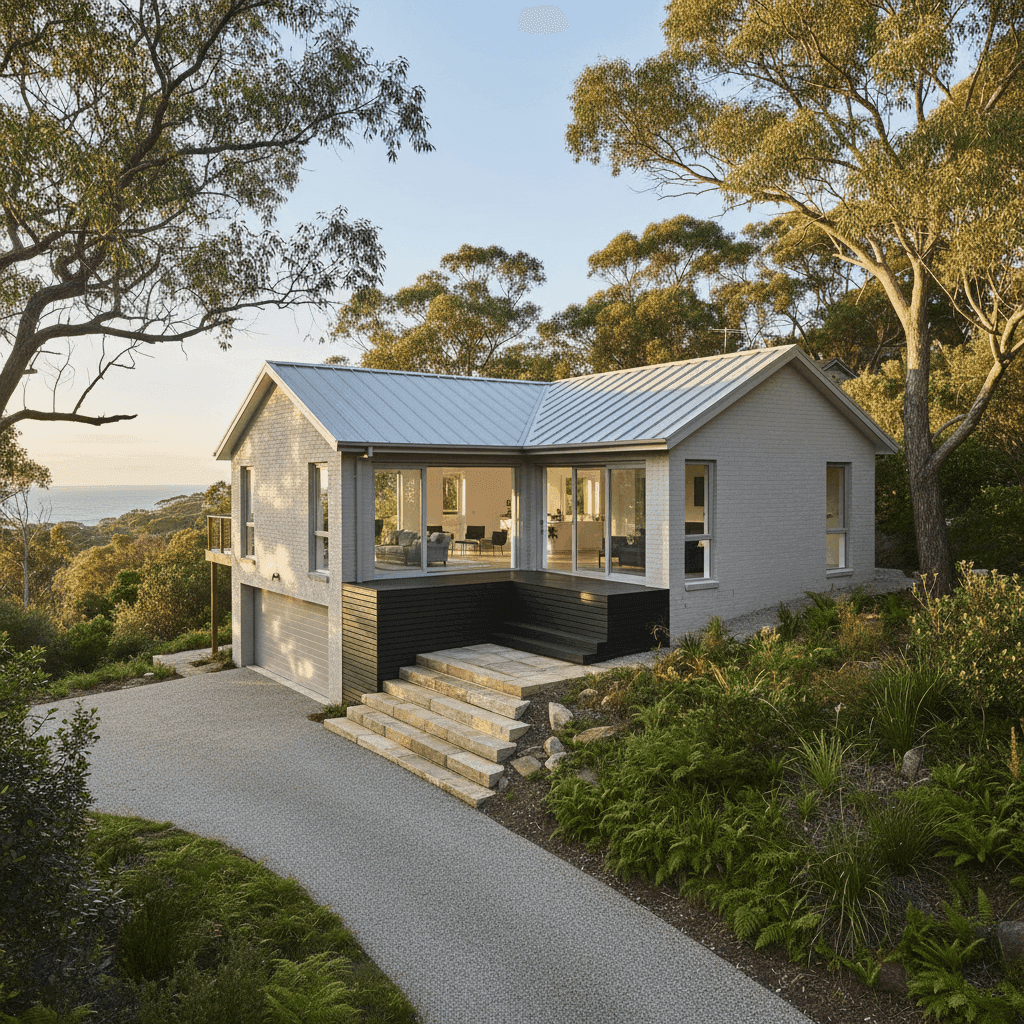
If you own a free standing home in Bilgola Plateau, NSW 2107, you're living in one of Sydney's Northern Beaches most sought-after pockets — a leafy, elevated suburb that blends coastal lifestyle with residential charm. But what does it actually cost to insure a property here, and how do you know if you're getting a fair deal? This article breaks down a real building insurance quote for a four-bedroom, five-bathroom home in Bilgola Plateau and puts the numbers in context against suburb, state, and national benchmarks.
---
Is This Quote Fair?
The quote in question comes in at $2,844 per year (or $292 per month) for building-only cover on a free standing home with a sum insured of $815,000 and a building excess of $3,000.
Our price rating for this quote is CHEAP — below average for the area. That's genuinely good news for the homeowner. To put it plainly: this premium sits well below what most comparable properties in Bilgola Plateau are paying, and it undercuts the suburb average by more than $1,500 per year.
For a home of this size and construction quality, a sub-$3,000 annual premium is a strong result. It suggests the insurer has assessed the property's risk profile favourably — which, as we'll explore below, is likely tied to several physical features of the home itself.
---
How Bilgola Plateau Compares
Understanding where your premium sits relative to the broader market is one of the most useful things you can do as a homeowner. Here's how this quote stacks up:
| Benchmark | Premium |
|---|---|
| This quote | $2,844/yr |
| Suburb average (Bilgola Plateau) | $4,348/yr |
| Suburb median | $4,471/yr |
| Suburb 25th percentile | $3,475/yr |
| Suburb 75th percentile | $5,217/yr |
| LGA average (Northern Beaches) | $3,266/yr |
| NSW average | $9,528/yr |
| NSW median | $3,770/yr |
| National average | $5,347/yr |
| National median | $2,764/yr |
(Suburb data based on a sample of 10 quotes in postcode 2107.)
This quote is below the suburb's 25th percentile, meaning it's cheaper than at least 75% of quotes collected in the area — a genuinely competitive result. It also sits below the Northern Beaches LGA average of $3,266 and well under the NSW average of $9,528 (which is heavily skewed upward by high-value and high-risk properties across the state).
Compared to the national average of $5,347, this quote is nearly half the price — though it's worth noting the national median of $2,764 is closer to this figure, reflecting that averages can be pulled up by outlier premiums in disaster-prone regions.
The takeaway: this is a below-average premium in a suburb where insurance can get expensive. Homeowners in Bilgola Plateau who haven't reviewed their policy recently may be paying significantly more for equivalent cover.
---
Property Features That Affect Your Premium
Insurers don't price every home the same way. They assess a combination of construction quality, location risk factors, and physical characteristics to determine how likely a claim is — and how costly it might be. Here's how the features of this particular property likely influenced the premium:
Double Brick External Walls
Double brick construction is regarded by insurers as one of the most resilient wall types available. It offers strong resistance to fire, wind, and general structural damage. Compared to weatherboard or lightweight cladding, double brick homes typically attract lower premiums because they're less susceptible to catastrophic loss.
Steel / Colorbond Roof
Colorbond steel roofing is a popular choice in coastal NSW and for good reason — it's durable, low-maintenance, and performs well in high-wind conditions. Insurers generally view it favourably compared to older tile roofs, which can crack, shift, or leak over time.
Concrete Slab Foundation
A slab foundation provides a stable base and reduces the risk of subsidence or movement-related damage. This is a positive risk indicator for insurers, particularly in areas with variable soil conditions.
Elevated by at Least 1 Metre
Being elevated is a double-edged sword depending on the context. In flood-prone areas, elevation is a significant risk mitigant and can meaningfully reduce premiums. In Bilgola Plateau — a hillside suburb rather than a low-lying flood plain — elevation may contribute to the home's structural profile and reduce storm-water ingress risk.
Construction Year: 2012
A home built in 2012 benefits from modern building codes, which require stronger structural standards than homes built decades earlier. Newer builds tend to be priced more competitively by insurers because they're less likely to have hidden maintenance issues or outdated electrical and plumbing systems.
No Pool, No Solar Panels, No Cyclone Risk
The absence of a pool removes a common liability exposure. No solar panels means no additional risk of electrical faults or roof penetration issues. And sitting outside a designated cyclone risk zone keeps this property in a lower catastrophe-risk category — all factors that contribute to a more competitive premium.
---
Tips for Homeowners in Bilgola Plateau
Whether you're reviewing your existing policy or shopping for the first time, here are four practical tips tailored to homeowners in this part of the Northern Beaches:
- Review your sum insured annually. Building costs in NSW have risen significantly since 2020. If your sum insured hasn't kept pace with construction cost inflation, you could be underinsured — meaning you'd receive less than it costs to rebuild if the worst happened. Use a building cost calculator or speak with a quantity surveyor to verify your coverage amount is adequate.
- Compare quotes before your renewal date. Loyalty doesn't always pay in insurance. Many insurers reserve their best pricing for new customers, and the gap between your current premium and what's available on the market can be substantial. With suburb averages in Bilgola Plateau sitting above $4,300, even a modest saving could be worth hundreds of dollars per year.
- Consider your excess strategically. This policy carries a $3,000 building excess. A higher excess typically lowers your annual premium, but it also means more out-of-pocket cost at claim time. Think about what you could comfortably absorb in an emergency and choose an excess level that reflects your financial position.
- Document your home's features. When applying for or renewing insurance, make sure you accurately describe your home's construction — wall type, roof material, foundation, and any upgrades. Underreporting quality features (like double brick walls or a Colorbond roof) can result in a higher quote than necessary, as the insurer may default to a less favourable assumption.
---
Compare Your Home Insurance Today
Whether this quote reflects your own situation or you're simply curious about what you should be paying, the best way to find out is to compare. Get a home insurance quote at CoverClub and see how your property stacks up against the market. You can also explore suburb-level insurance data for Bilgola Plateau or browse statewide NSW benchmarks to better understand the pricing landscape in your area. A few minutes of comparison could save you more than you'd expect.