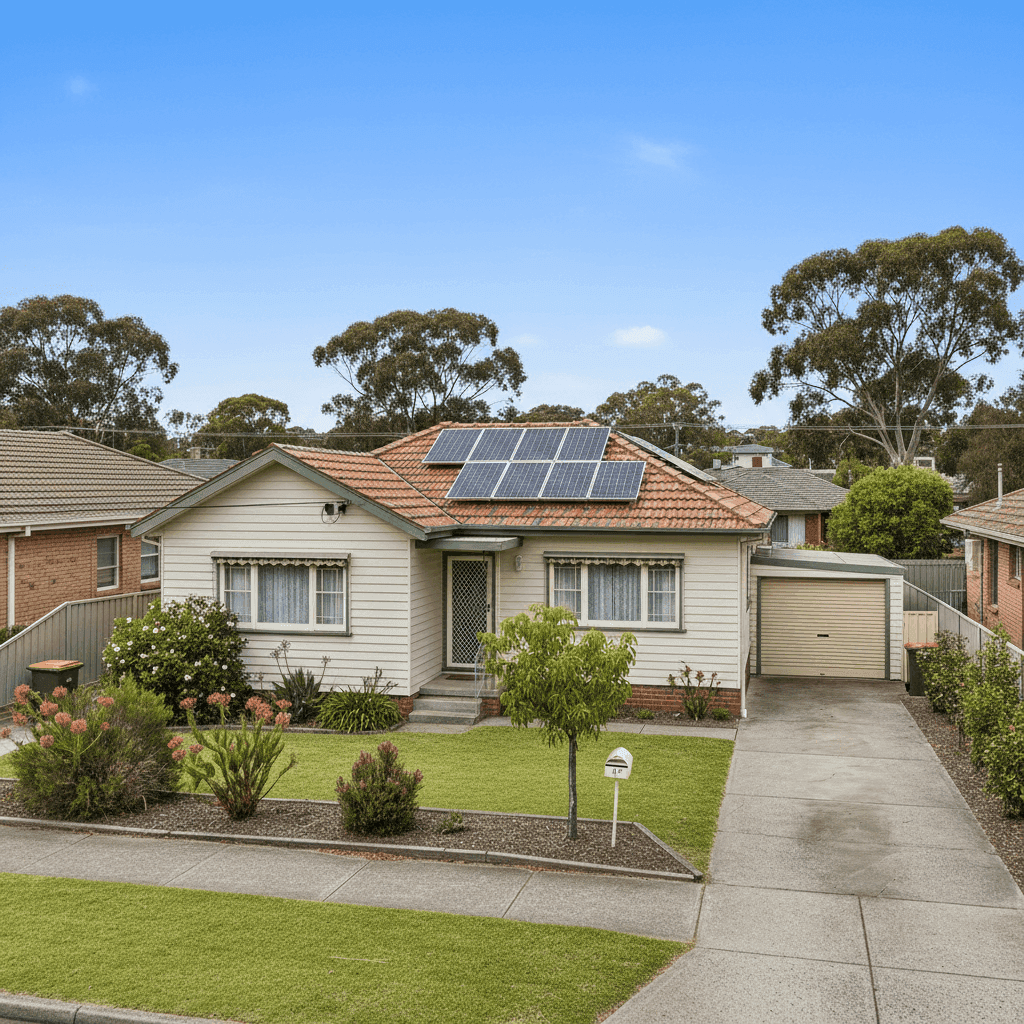
If you own a free standing home in Birmingham Gardens, NSW 2287, you're likely no stranger to the task of shopping around for a competitive home insurance premium. This Lake Macquarie suburb sits in a well-established residential pocket of the Hunter Region, and like many older Australian suburbs, the age and construction style of local homes can have a meaningful influence on what you pay to protect them.
This article takes a close look at a real building-only insurance quote for a three-bedroom, two-bathroom free standing home in Birmingham Gardens — and puts that figure under the microscope against local, state, and national benchmarks.
---
Is This Quote Fair?
The quote in question comes in at $3,478 per year (or roughly $333 per month) for building-only cover, with a $2,000 building excess and a sum insured of $446,000.
Our price rating for this quote is FAIR — Around Average, which is a reasonable outcome in the current market. Here's what that means in practice:
- The quote sits $405 below the Birmingham Gardens suburb average of $3,883/yr
- It's $210 above the suburb median of $3,268/yr
- It falls comfortably within the suburb's interquartile range of $1,829/yr (25th percentile) to $5,038/yr (75th percentile)
In other words, this premium isn't a bargain, but it's also not overpriced. It lands in the middle of the pack for the local area — neither the cheapest option available nor the most expensive. For a 1968-built weatherboard home, that's a fairly typical outcome.
---
How Birmingham Gardens Compares
To really understand whether this quote represents good value, it helps to zoom out and look at the broader picture. You can explore the full data set on the Birmingham Gardens suburb stats page, but here's a quick summary:
| Benchmark | Premium |
|---|---|
| This quote | $3,478/yr |
| Birmingham Gardens average | $3,883/yr |
| Birmingham Gardens median | $3,268/yr |
| NSW average | $9,528/yr |
| NSW median | $3,770/yr |
| National average | $5,347/yr |
| National median | $2,764/yr |
| Lake Macquarie LGA average | $11,064/yr |
A few things stand out here. First, the NSW state average of $9,528/yr is dramatically higher than what's being quoted in Birmingham Gardens — a reminder that state-wide averages are heavily skewed by high-risk and high-value properties in areas like Sydney's Northern Beaches, coastal flood zones, and bushfire-prone regions. The NSW state stats illustrate just how wide the spread can be across the state.
Second, the Lake Macquarie LGA average of $11,064/yr is eye-catching. This is likely influenced by properties in higher-risk parts of the LGA — particularly waterfront or low-lying areas susceptible to flooding — which can pull the average up significantly. Birmingham Gardens itself appears to sit in a more moderate-risk zone by comparison.
Against the national picture, this quote also looks reasonable. The national average of $5,347/yr is well above this quote, though the national median of $2,764/yr is somewhat lower — again reflecting the diversity of properties and risk profiles across Australia.
---
Property Features That Affect Your Premium
Several characteristics of this particular property will be influencing the premium, and it's worth understanding how:
Weatherboard Timber Walls
Weatherboard construction is common in homes built in the mid-20th century, and this property is no exception — constructed in 1968. While timber-clad homes have a classic charm, insurers generally view them as carrying a higher fire risk than brick or rendered masonry. This can push premiums upward compared to brick-veneer equivalents.
Tiled Roof
A tiled roof is generally viewed favourably by insurers. Tiles are durable, fire-resistant, and widely used across Australian suburbs. Compared to older corrugated iron or asbestos-cement roofing, tiles represent a lower-risk material that can work in the homeowner's favour at renewal time.
Slab Foundation
A concrete slab foundation is a stable and common choice in NSW, and typically doesn't attract any particular loading from insurers. It's considered low-risk compared to older timber stumps or pier-and-beam foundations that may be more susceptible to subsidence or pest damage.
Solar Panels
This property has solar panels installed. While solar adds value and sustainability, it's worth confirming with your insurer that panels are explicitly covered under your building policy — some policies include them automatically, while others may require an endorsement or have specific exclusions around storm or hail damage.
Timber and Laminate Flooring
The flooring type is primarily timber and laminate. While this is a contents or internal finishes consideration more than a structural one, it's worth noting that water damage claims involving timber floors can be costly — something to keep in mind when reviewing your policy's water damage provisions.
Standard Fittings
With standard-quality fittings, the sum insured of $446,000 for a 139 sqm home reflects a realistic rebuild cost in today's market, particularly given the elevated construction costs seen across NSW in recent years.
---
Tips for Homeowners in Birmingham Gardens
1. Don't Rely on the LGA Average as a Benchmark
The Lake Macquarie LGA average of $11,064/yr is heavily influenced by high-risk properties elsewhere in the region. If you're using that figure as a reference point, you may assume you're getting a great deal when you're actually just average. Always compare against suburb-level data where possible.
2. Check Your Solar Panel Coverage
Solar panels are now a common feature on Australian homes, but coverage varies between insurers. Ask your insurer directly whether your panels are covered for storm, hail, and fire damage — and whether the inverter is included. Don't assume they're automatically included in your building sum insured.
3. Review Your Sum Insured Annually
Construction costs in NSW have risen sharply over the past few years. A sum insured set even two or three years ago may no longer reflect the true cost to rebuild your home. Consider using a building cost calculator annually to ensure you're not underinsured — a situation that can leave you significantly out of pocket after a major claim.
4. Consider Your Excess Carefully
This quote carries a $2,000 building excess. Opting for a higher excess is one of the most straightforward ways to reduce your annual premium, but it's a trade-off — you'll need to be comfortable covering that amount out of pocket in the event of a claim. If cash flow is a concern, a lower excess with a slightly higher premium may be the better option.
---
Compare Your Options with CoverClub
Whether you're renewing your current policy or shopping around for the first time, comparing quotes is the single most effective way to ensure you're not overpaying. CoverClub makes it easy to see how your premium stacks up against real data from your suburb and beyond. Get a building insurance quote today and find out where your home sits in the market.