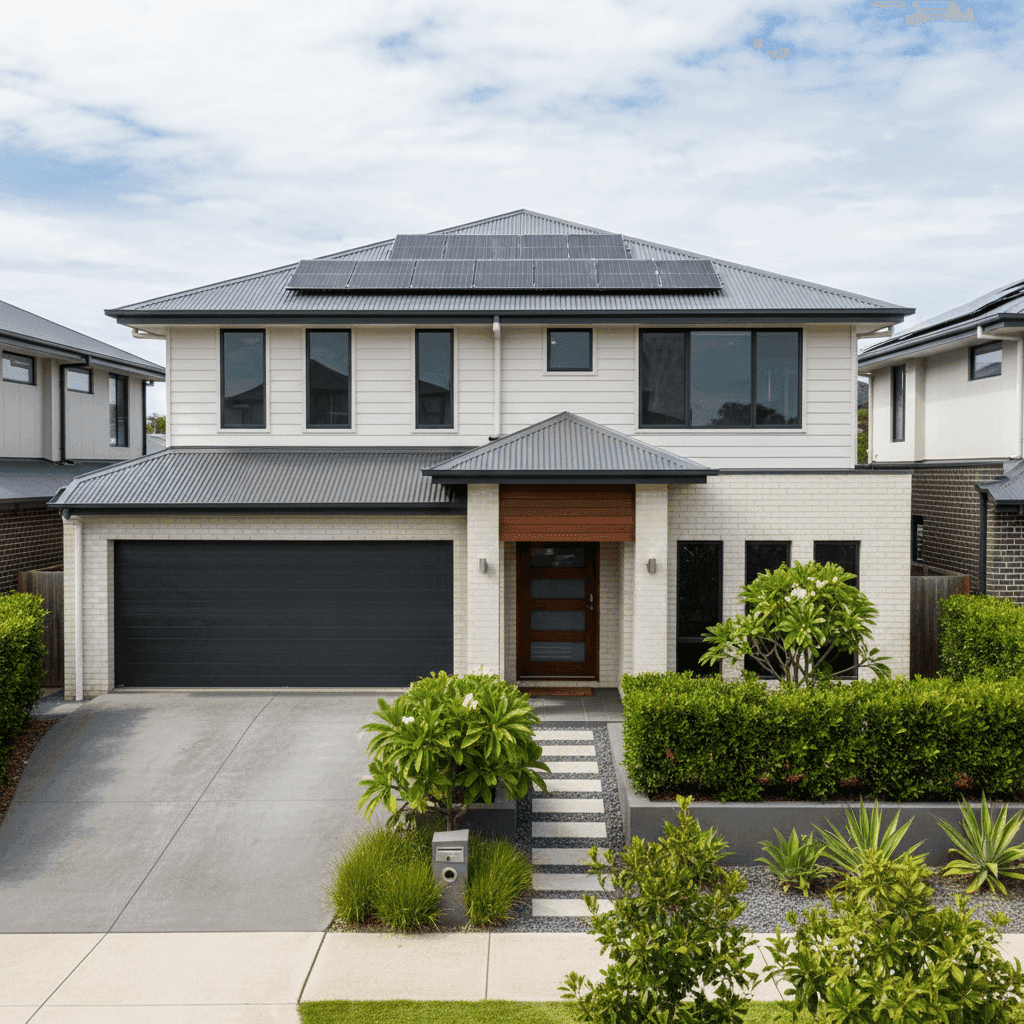
Birtinya is one of the Sunshine Coast's newer residential pockets — a master-planned suburb sitting between Bokarina Beach and Kawana Shoppingworld, popular with families drawn to its modern housing stock and proximity to the Sunshine Coast University Hospital precinct. If you own a free-standing home here, you're likely insuring a relatively recent, well-built property — and that context matters a great deal when it comes to understanding your home insurance premium.
This article breaks down a recent building-only insurance quote for a five-bedroom, three-bathroom free-standing home in Birtinya (postcode 4575), walking through whether the price is competitive, how it sits against local and national benchmarks, and what you can do to make sure you're getting the best deal possible.
---
Is This Quote Fair?
The quote in question comes in at $5,235 per year (or $514 per month) for building-only cover, with a building excess of $3,000 and a sum insured of $650,000.
Our price rating for this quote is FAIR — around average. That's a reasonable outcome, but it's worth unpacking what "average" actually means in this context.
The suburb average premium for Birtinya sits at $5,241 per year, which means this quote is almost exactly in line with what other homeowners in the area are paying. The suburb median, however, is notably lower at $3,814 — a gap that reflects how a handful of higher-risk or higher-value properties can pull the average upward. At $5,235, this quote falls above the median but well below the 75th percentile of $7,544, suggesting it's neither a bargain nor cause for alarm.
For a 315 sqm, five-bedroom home built in 2017 with a $650,000 sum insured, a premium in this range is broadly consistent with what the market is pricing in for comparable properties. That said, "fair" doesn't mean you can't do better — more on that shortly.
---
How Birtinya Compares
Zooming out to a wider lens reveals some interesting context. You can explore the full data set on the Birtinya suburb stats page.
| Benchmark | Premium |
|---|---|
| This quote | $5,235/yr |
| Birtinya suburb average | $5,241/yr |
| Birtinya suburb median | $3,814/yr |
| Sunshine Coast LGA average | $4,608/yr |
| QLD state average | $4,547/yr |
| QLD state median | $3,931/yr |
| National average | $2,965/yr |
| National median | $2,716/yr |
A few things stand out here. First, Queensland premiums are substantially higher than the national average — the state average of $4,547 is more than 50% above the national average of $2,965. This is a well-documented reality for Queensland homeowners, driven by the state's elevated exposure to natural hazards including storms, flooding, and hail events.
Second, the Sunshine Coast LGA average of $4,608 is slightly below the broader QLD average, which is a modest positive signal for the region. Birtinya itself, however, trends a little higher — likely reflecting the concentration of newer, larger homes with higher rebuild values in the suburb.
It's worth noting that the suburb data is drawn from a sample of 14 quotes, so while directionally useful, the figures should be interpreted with some caution. As more data flows in, these benchmarks will sharpen.
---
Property Features That Affect Your Premium
Several characteristics of this property have a meaningful bearing on what insurers are willing to charge.
Construction year (2017): A relatively modern build is generally viewed favourably by insurers. Homes constructed after significant updates to the Queensland Development Code — particularly those built post-2011 — typically incorporate stronger cyclone and storm-resistance standards. This can translate to lower risk assessments and, in some cases, reduced premiums.
Brick veneer walls and Colorbond roof: Brick veneer is considered a solid, mid-tier construction type from an insurance perspective — more resilient than timber weatherboard but not quite as robust as full brick. Colorbond steel roofing is widely regarded as durable and low-maintenance, and is well-suited to Queensland's climate. Together, these materials present a fairly standard risk profile.
Slab foundation: Concrete slab foundations are common in Queensland and are generally associated with lower subsidence risk compared to older pier-and-beam or strip footing systems. This is a neutral-to-positive factor for insurers.
Solar panels: The presence of a solar system on the roof is worth flagging. Some building policies automatically include solar panels as part of the building sum insured, while others may treat them as a separate item or exclude them entirely. It's essential to confirm with your insurer that your panels are covered — and that the $650,000 sum insured accounts for their replacement value.
Ducted climate control: Ducted air conditioning is a significant fixed asset and typically forms part of the building sum insured. Again, it's worth verifying this is captured correctly in your policy documentation.
No pool, no cyclone risk zone: The absence of a pool removes one common source of liability and maintenance-related claims. And while Birtinya sits on the Sunshine Coast — a region that can experience severe storm seasons — it is not classified as a cyclone risk area, which keeps a lid on premiums compared to properties further north.
---
Tips for Homeowners in Birtinya
1. Review your sum insured carefully. At $650,000 for a 315 sqm home, the sum insured works out to roughly $2,063 per square metre. Construction costs in South East Queensland have risen sharply in recent years, and underinsurance remains one of the most common and costly mistakes homeowners make. Use a building cost calculator or speak with a quantity surveyor to verify your figure is still accurate.
2. Confirm your solar panels are covered. As noted above, solar panels can fall into a grey area in building policies. Ask your insurer directly: are the panels included in the building sum insured? What's covered if they're damaged by hail or a storm? Getting clarity now is far easier than disputing a claim later.
3. Consider your excess strategically. This quote carries a $3,000 building excess — on the higher end of the typical range. A higher excess generally reduces your premium, which can make sense if you have the financial buffer to cover it. If cash flow is a concern, it may be worth requesting a quote with a lower excess to understand the trade-off.
4. Compare at renewal time. Insurance loyalty rarely pays off. Insurers frequently offer their best pricing to new customers, meaning long-standing policyholders can quietly drift above the market rate. Even if your current premium feels reasonable, running a comparison at renewal takes only a few minutes and can surface meaningfully cheaper options.
---
Ready to Compare?
Whether you're reviewing an existing policy or shopping for cover on a new purchase, comparing multiple quotes is the single most effective way to ensure you're not overpaying. Get a home insurance quote through CoverClub and see how your options stack up — it's free, fast, and gives you the suburb-level context to make a genuinely informed decision.