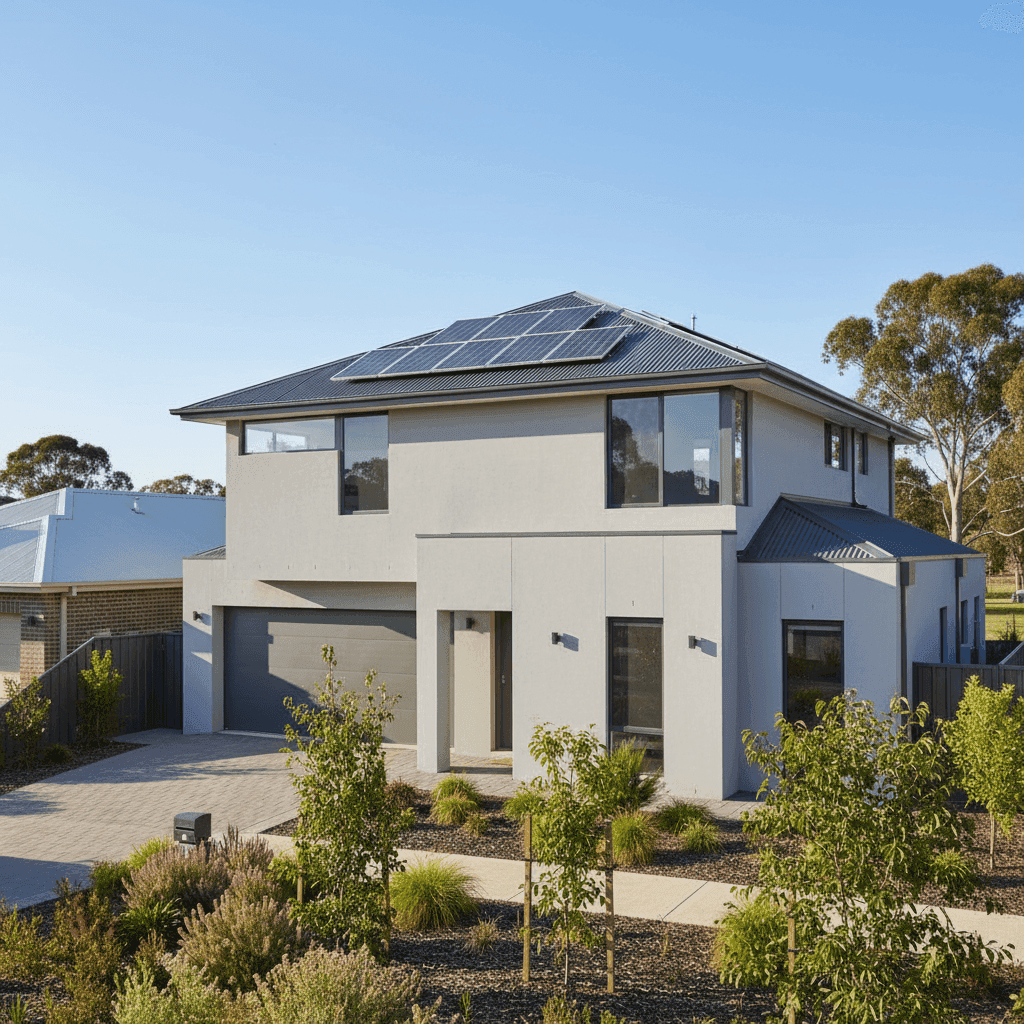
Bittern is a quiet residential suburb on Victoria's Mornington Peninsula, known for its leafy streets, semi-rural character, and proximity to Western Port Bay. It's also a suburb where home insurance costs can vary quite significantly depending on your property's characteristics. This article breaks down a recent home and contents insurance quote for a four-bedroom, three-bathroom free standing home in Bittern (postcode 3918), and puts the numbers into context against suburb, state, and national benchmarks.
---
Is This Quote Fair?
The annual premium for this property came in at $2,504 per year (or $233 per month), covering a building sum insured of $802,000 and contents valued at $85,000. Both the building and contents excess are set at $1,000.
Our price rating for this quote is Expensive — above average for the Bittern area.
To put that in perspective: the suburb average premium sits at $1,932 per year, and the median is $1,915. That means this quote is roughly $572 above the suburb average — a meaningful gap worth investigating before simply accepting the figure at face value.
That said, it's important not to read this rating in isolation. A higher premium isn't automatically a bad deal — it can reflect a higher level of cover, a more comprehensive policy, or simply the specific risk profile of the property. In this case, the building sum insured of $802,000 is a substantial figure, and for a 214 sqm home built in 2019 with quality finishes, that level of cover may well be appropriate.
---
How Bittern Compares
Understanding where Bittern sits relative to broader benchmarks helps put this quote into sharper focus.
| Benchmark | Average Premium | Median Premium |
|---|---|---|
| Bittern (postcode 3918) | $1,932/yr | $1,915/yr |
| Mornington Peninsula LGA | $2,819/yr | — |
| Victoria (VIC) | $2,921/yr | $2,694/yr |
| National | $2,965/yr | $2,716/yr |
A few things stand out here. First, Bittern is notably cheaper than both the Victorian and national averages — a positive sign for homeowners in the area. The suburb's 49-quote sample shows a 25th percentile of $1,389 and a 75th percentile of $2,285, which means this particular quote sits above the 75th percentile for the suburb.
Interestingly, the Mornington Peninsula LGA average of $2,819 is considerably higher than Bittern's suburb average, suggesting that other parts of the Peninsula — potentially those with greater flood, storm surge, or bushfire exposure — are pulling the LGA figure upward. Bittern itself appears to be a relatively lower-risk pocket within the broader region.
For a full breakdown of insurance pricing trends in the area, visit our Bittern suburb stats page, or explore Victoria-wide data and national comparisons.
---
Property Features That Affect Your Premium
Every property tells its own story when it comes to insurance risk. Here's how the key features of this home are likely influencing the premium:
Concrete external walls are generally viewed favourably by insurers. Concrete is highly resistant to fire, impact, and weather damage, which can contribute to lower risk assessments compared to timber-framed or clad exteriors.
Steel/Colorbond roofing is another positive. Colorbond is a staple of Australian residential construction for good reason — it's durable, low-maintenance, and performs well in high-wind and bushfire-prone conditions. Insurers typically regard it as a lower-risk roofing material than tiles, which can crack or dislodge in storms.
Slab foundation is the standard for modern construction and presents minimal concern from an insurance perspective. It's structurally sound and doesn't carry the subsidence risks sometimes associated with older stumped or pier-and-beam foundations.
Timber and laminate flooring can be a mild risk factor. While aesthetically popular, these materials are more susceptible to water damage than tile or polished concrete, and replacement costs can be significant — particularly for solid timber boards. This may have a modest upward influence on the contents or building premium.
Solar panels are worth noting. Installed solar systems add value to a property and can increase the cost to repair or replace the roof in the event of damage. Some insurers include solar panels automatically under building cover; others may require them to be specifically listed. It's worth confirming your policy covers the panels and inverter.
Built in 2019, this is a relatively new home, which is generally a premium advantage. Newer builds comply with modern Australian building codes, are less likely to have ageing infrastructure issues, and tend to attract more competitive rates.
No pool and no ducted climate control keep the risk profile clean — both features can add complexity and cost to a policy.
---
Tips for Homeowners in Bittern
1. Shop around — especially if you're above the 75th percentile This quote sits above the suburb's 75th percentile, which is a strong signal to compare alternatives. Even a modest reduction could save several hundred dollars annually. Use a comparison tool like CoverClub to benchmark your options quickly.
2. Review your building sum insured carefully At $802,000, the sum insured is a significant figure. Make sure it reflects the true cost to rebuild — not the market value of the property. Underinsurance is a common and costly mistake, but overinsuring can also mean paying unnecessarily high premiums. A quantity surveyor or online rebuild cost calculator can help you land on the right number.
3. Confirm your solar panels are covered Solar installations are increasingly common on Mornington Peninsula homes, but coverage varies between insurers. Check whether your policy explicitly covers the panels, mounting hardware, and inverter — and what the claims process looks like if they're damaged in a storm or hailstorm.
4. Ask about excess trade-offs Both the building and contents excess on this policy are set at $1,000. Opting for a higher excess (say, $2,000) can meaningfully reduce your annual premium. If you're a low-claims household with a solid emergency fund, this trade-off can make financial sense.
---
Compare Your Home Insurance Today
Whether you're a long-time Bittern resident or new to the area, it always pays to compare. Insurance pricing varies more than most people realise — even for very similar properties in the same street. CoverClub makes it easy to see what's available for your specific home and circumstances.