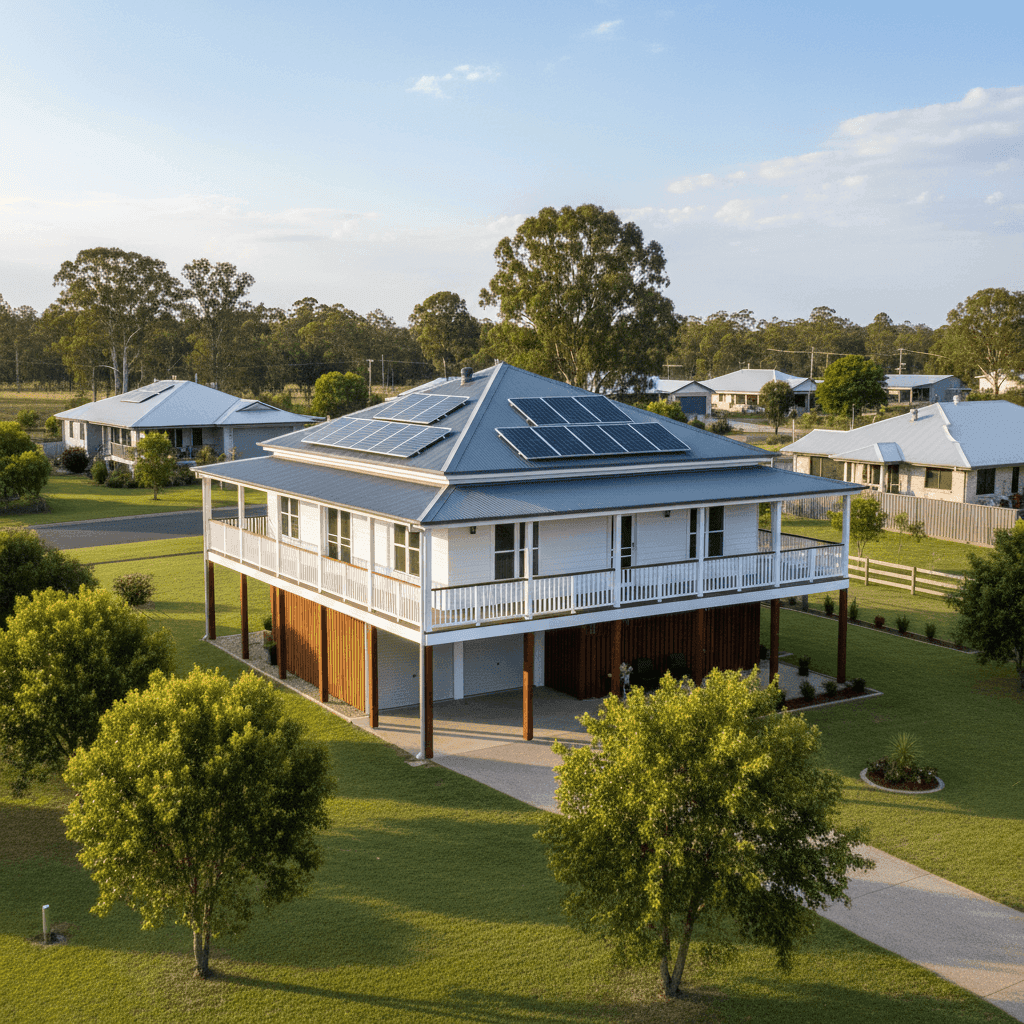
If you own a free standing home in Blackbutt North, QLD 4314, you're likely wondering whether you're paying a fair price for your home and contents insurance — or whether there's a better deal out there. This article breaks down a real insurance quote for a five-bedroom property in the area, compares it against local, state, and national benchmarks, and offers practical tips to help you get the most from your cover.
---
Is This Quote Fair?
The annual premium for this quote comes in at $2,481 per year (or $242/month), covering both building and contents for a five-bedroom free standing home with a building sum insured of $906,000 and contents valued at $110,000.
Our price rating for this quote is CHEAP — below average — which is genuinely good news for the homeowner. To put that in perspective:
- The Queensland state average premium sits at $4,547/year, with a median of $3,931/year
- The national average is $2,965/year, with a median of $2,716/year
- The Toowoomba LGA average is $2,535/year
At $2,481/year, this quote sits below every one of those benchmarks — including the LGA average for Toowoomba. That's a meaningful saving, particularly given the relatively high building sum insured of over $900,000.
For a property of this size and value, securing cover at this price point represents solid value. Queensland homeowners in particular tend to face elevated premiums due to the state's exposure to severe weather events, so beating the state average by more than $2,000 per year is a notable outcome.
---
How Blackbutt North Compares
Blackbutt North (QLD 4314) is a semi-rural locality in the Somerset Region, sitting on the Blackbutt Range west of Brisbane. While suburb-level premium data isn't available for this postcode at this time, we can draw meaningful comparisons using broader datasets.
| Benchmark | Annual Premium |
|---|---|
| This Quote | $2,481 |
| Toowoomba LGA Average | $2,535 |
| National Median | $2,716 |
| National Average | $2,965 |
| QLD State Median | $3,931 |
| QLD State Average | $4,547 |
The gap between this quote and the Queensland state average is striking. Queensland's premium environment is heavily influenced by cyclone, flood, and storm risk — particularly in coastal and low-lying areas. Inland, elevated localities like Blackbutt North tend to attract more favourable pricing because they sit outside many of the highest-risk zones.
Compared to the national average of $2,965/year, this quote still comes in cheaper — a sign that the property's characteristics and location are working in the homeowner's favour.
---
Property Features That Affect Your Premium
Several features of this property play a role in determining the final premium. Here's how they factor in:
Construction Materials
The home features Hardiplank/Hardiflex external walls and a steel/Colorbond roof — both of which are viewed positively by insurers. Fibre cement cladding like Hardiflex is fire-resistant and durable, while Colorbond steel roofing is well-regarded for its longevity and resistance to corrosion and wind uplift. These materials are generally considered lower risk than older or more vulnerable alternatives such as weatherboard or terracotta tiles.
Elevated on Stumps
The property is elevated on stumps by less than one metre. This classic Queensland construction style offers some protection against minor flooding and moisture, though insurers will still assess the broader flood risk of the area. Being elevated can be a positive factor, particularly in regions that experience heavy rainfall.
Timber and Laminate Flooring
Timber and laminate flooring is common in stump-set Queensland homes and is generally straightforward to assess for replacement cost purposes. It's worth ensuring your contents sum insured accounts for the cost of floor coverings, as these can be significant.
Solar Panels
The presence of solar panels is worth noting. While solar systems add value to a property, they also need to be considered when calculating your building sum insured. Most standard home insurance policies cover solar panels as part of the building, but it's always worth confirming this with your insurer and ensuring the panels are adequately reflected in your sum insured figure.
Building Size and Sum Insured
At 268 sqm, this is a generously sized home, and the building sum insured of $906,000 reflects the cost to rebuild — not the market value. Given current construction costs in regional Queensland, this figure appears well-considered. Underinsurance remains one of the biggest risks for Australian homeowners, so getting this number right is essential.
No Pool, No Ducted Climate Control
The absence of a pool and ducted air conditioning simplifies the risk profile slightly. Pools can introduce liability considerations, while ducted systems add to the replacement cost of a building. Neither is a major driver of premium, but their absence keeps things straightforward.
---
Tips for Homeowners in Blackbutt North
Whether you're renewing your policy or shopping around for the first time, these tips are worth keeping in mind:
1. Review Your Building Sum Insured Annually
Construction costs have risen significantly across Australia in recent years. A sum insured that was accurate two or three years ago may no longer reflect what it would cost to rebuild your home today. Use an online building calculator or speak with a local builder to get a current estimate — and update your policy accordingly.
2. Confirm Solar Panel Coverage
Check your policy wording to confirm your solar panels are covered under the building section, and that the system's value is factored into your sum insured. If you've recently upgraded your system or added battery storage, let your insurer know.
3. Don't Over-Insure Contents, But Don't Under-Insure Either
$110,000 in contents cover is a reasonable starting point for a five-bedroom home, but it's worth doing a room-by-room inventory to make sure it's accurate. Over-insuring wastes money; under-insuring can leave you out of pocket after a claim.
4. Compare Before You Renew
Even if you're happy with your current insurer, it pays to compare quotes at renewal time. Premiums can shift significantly from year to year, and the market is competitive. Use a comparison tool like CoverClub to see what other insurers are offering for your specific property.
---
Ready to Compare?
Whether this quote is your current policy or one you're considering, it's always worth seeing what else is available. At CoverClub, we make it easy to compare home and contents insurance quotes for properties across Queensland and Australia. Enter your address and get started today — it only takes a few minutes and could save you hundreds.