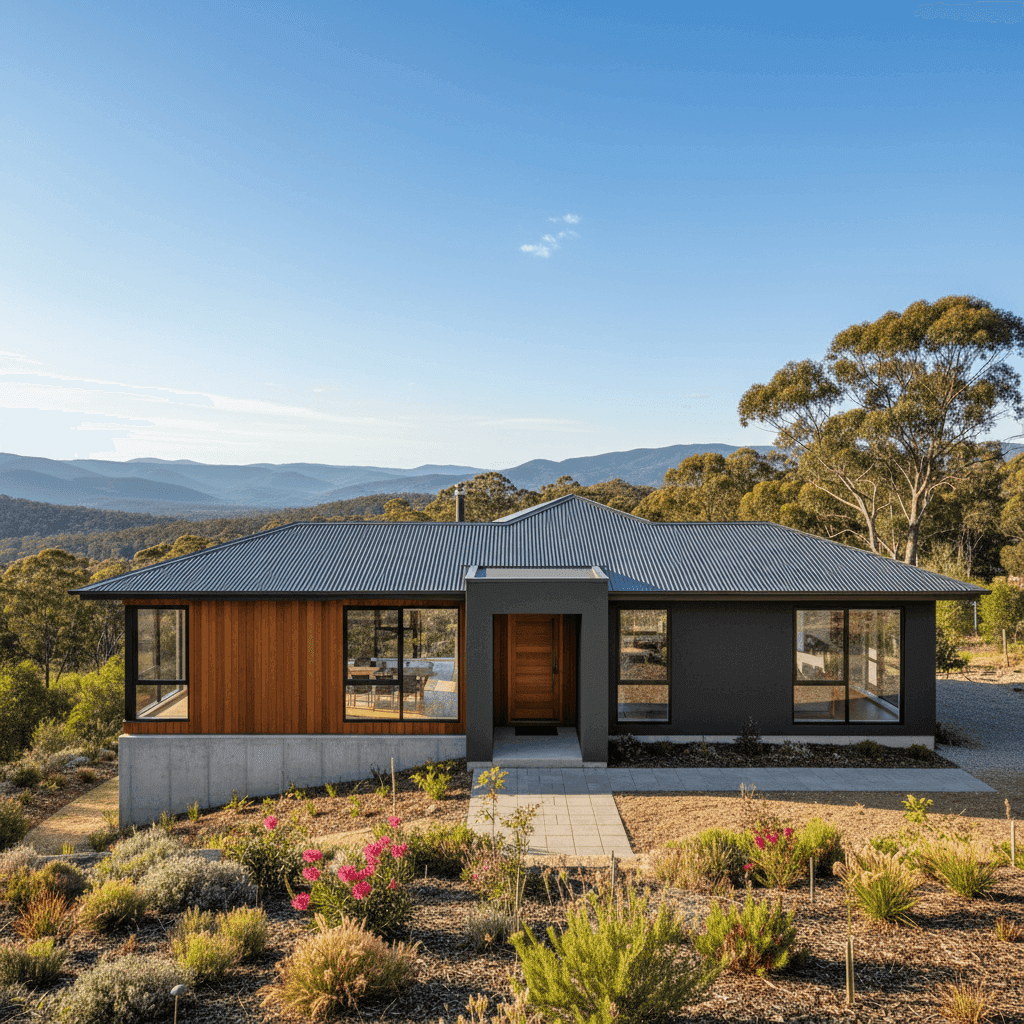
Blackheath sits high on the Blue Mountains plateau, roughly 100 kilometres west of Sydney, and it's one of those places that genuinely earns its reputation — dramatic escarpments, heritage streetscapes, and a tight-knit community that attracts both tree-changers and long-term locals alike. It's also a location that insurers pay close attention to, given its elevation, bushfire exposure, and the unique mix of older and newer housing stock. This article takes a close look at a recent home and contents insurance quote for a newly built, four-bedroom free-standing home in Blackheath, and puts the numbers in context so you can decide whether the price stacks up.
---
Is This Quote Fair?
The quote in question comes in at $2,928 per year (or $286 per month) for a combined home and contents policy. It covers a building sum insured of $750,000 and contents valued at $50,000, each with a $1,000 excess.
Based on available market data, this quote is rated Expensive — above average for the suburb. That doesn't automatically mean it's the wrong policy, but it does mean there's a reasonable chance a comparable level of cover could be found at a lower price point. The gap between this quote and the suburb average is meaningful: at $2,928, it sits roughly 58% above the Blackheath suburb average of $1,849 per year and nearly double the suburb median of $1,593 per year.
That said, context matters. This is a brand-new home (constructed in 2024) with a relatively high building sum insured of $750,000 — both factors that can push premiums upward compared to older or lower-value properties in the same postcode. A higher rebuild cost means more exposure for the insurer, and some providers price new builds differently as they assess risk profiles for modern construction methods and materials.
You can explore the full pricing landscape for this postcode at the Blackheath suburb stats page.
---
How Blackheath Compares
To put this quote in proper perspective, it helps to look at how Blackheath sits relative to broader benchmarks.
| Benchmark | Average Premium | Median Premium |
|---|---|---|
| Blackheath (2785) | $1,849/yr | $1,593/yr |
| NSW State | $9,528/yr | $3,770/yr |
| National | $5,347/yr | $2,764/yr |
| Lithgow LGA | $11,842/yr | — |
A few things stand out here. The NSW state average of $9,528 looks alarming at first glance, but averages can be heavily skewed by high-risk or high-value properties — the state median of $3,770 is a more reliable benchmark for typical homeowners. Similarly, the Lithgow LGA average of $11,842 reflects a wide spread of properties across a large regional area, some of which carry significant bushfire or flood risk.
By comparison, Blackheath's suburb median of $1,593 is actually quite modest — sitting well below both the NSW state median and the national median of $2,764. This suggests that for many properties in the area, insurers are pricing relatively competitively. The quote analysed here, at $2,928, lands above the suburb's 75th percentile of $2,438 — meaning it's more expensive than at least three-quarters of quotes observed in the area.
It's worth noting that the suburb sample size used in this comparison is 10 quotes, so while the data is directionally useful, a larger sample would provide even greater confidence.
---
Property Features That Affect Your Premium
Several characteristics of this property are worth unpacking when thinking about why the premium lands where it does.
New construction (2024): A home built in 2024 benefits from modern building codes, which generally means better structural integrity and fire resistance. However, new homes often carry higher rebuild costs per square metre due to current labour and materials pricing — and at 214 sqm, this is a reasonably sized home.
Steel/Colorbond roof: This is generally viewed favourably by insurers. Colorbond steel is durable, low-maintenance, and performs well in both bushfire-prone and storm-affected environments. It's one of the more insurer-friendly roofing choices available in Australia.
Slab foundation: A concrete slab is a solid, well-understood foundation type that tends to be straightforward for insurers to assess. It's less susceptible to subsidence issues than some older foundation styles and is common in newer builds.
Ducted climate control: The presence of a ducted climate control system adds to the replacement value of the home's fixtures and fittings, which can nudge building sum insured — and therefore premiums — slightly higher.
No pool, no solar panels: The absence of a pool and solar panels simplifies the risk profile. Both can add complexity and cost to a policy, so their absence is a mild positive from an insurance pricing perspective.
Standard fittings quality: Standard fittings keep rebuild costs predictable. Premium or high-end fittings (stone benchtops, custom joinery, imported tiles) can significantly increase the cost to rebuild, so a standard fittings rating generally keeps the sum insured more moderate.
Bushfire context: Blackheath and the broader Blue Mountains region carry an elevated bushfire risk profile. While this property isn't in a designated cyclone risk area, bushfire exposure is a real consideration for insurers operating in this postcode, and it can influence base premiums across the board.
---
Tips for Homeowners in Blackheath
1. Shop around — seriously. With this quote sitting above the suburb's 75th percentile, there's a genuine case for comparing alternatives. Insurers price risk differently, and a new Colorbond-roofed home on a slab could be viewed more favourably by some providers than others. Use a comparison tool like CoverClub to see multiple quotes side by side.
2. Review your sum insured carefully. A building sum insured of $750,000 for a 214 sqm home works out to roughly $3,505 per square metre — which is on the higher end for a standard fittings property, even accounting for current construction costs. It's worth getting an independent building cost estimate to make sure you're not over-insured, which can meaningfully reduce your premium without leaving you exposed.
3. Consider a higher excess. The current policy carries a $1,000 excess on both building and contents. Opting for a higher excess — say $2,000 or $2,500 — can reduce your annual premium noticeably. Just make sure the excess is an amount you could comfortably cover in the event of a claim.
4. Ask about bushfire preparedness discounts. Some insurers offer reduced premiums for homes that meet certain bushfire mitigation standards — things like ember guards on vents, appropriate vegetation clearance, and fire-resistant materials. Given Blackheath's environment, it's worth asking your insurer directly whether any such discounts apply.
---
Ready to Find a Better Deal?
If this quote has you wondering whether you're paying more than you need to, the best next step is to compare. CoverClub makes it easy to see what different insurers would charge for your specific property — no obligation, no spam, just real numbers. Get a home insurance quote today and find out where your premium really sits in the market.