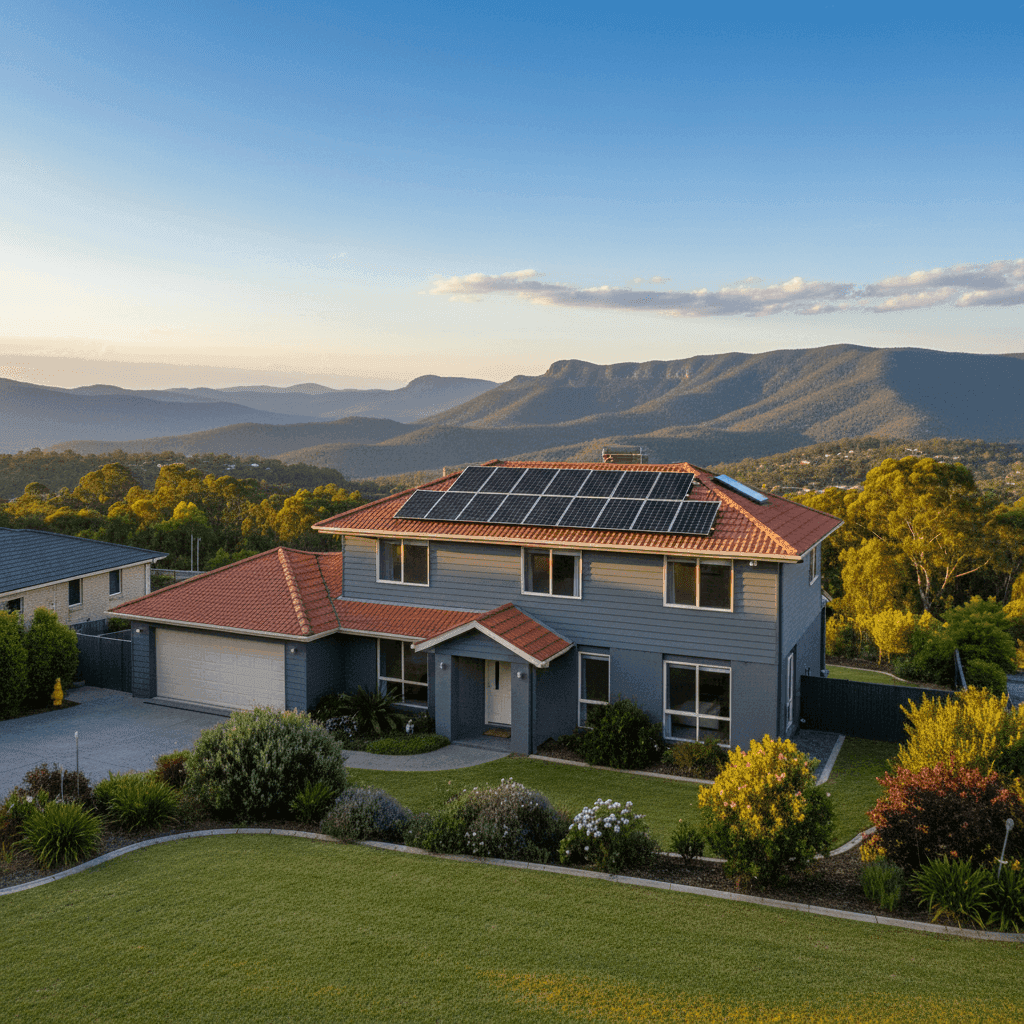
Nestled in the Blue Mountains at around 1,000 metres above sea level, Blackheath is one of the most picturesque — and climatically demanding — suburbs in New South Wales. For owners of free standing homes in this area, understanding what drives home insurance costs is essential. This article breaks down a real building-only insurance quote for a four-bedroom property in Blackheath (NSW 2785) and puts it in context against local, state, and national benchmarks.
---
Is This Quote Fair?
The quote in question sits at $4,171 per year (or $400/month) for building-only cover on a 226 sqm, four-bedroom free standing home, with a $1,000 building excess and a sum insured of $771,000.
Our price rating for this quote is EXPENSIVE — above average for the Blackheath area.
To put that in perspective:
- The suburb average for Blackheath is $1,849/yr, and the median sits at $1,593/yr
- This quote is roughly 2.3× the suburb average and more than 2.6× the suburb median
- Even at the 75th percentile for the suburb — meaning three-quarters of quotes are cheaper — premiums sit at $2,438/yr, still well below this figure
So while this is not the most expensive quote we've seen in NSW (the state average is a hefty $9,528/yr, driven by high-value and high-risk properties), it is meaningfully above what most Blackheath homeowners are paying. That said, the sum insured of $771,000 is a significant figure, and building size, construction materials, and add-ons like solar panels and ducted climate control all play a role in pushing the premium higher.
---
How Blackheath Compares
Understanding your premium means looking at multiple layers of comparison. Here's how Blackheath (NSW 2785) stacks up:
| Benchmark | Average Premium | Median Premium |
|---|---|---|
| Blackheath (NSW 2785) | $1,849/yr | $1,593/yr |
| Lithgow LGA | $11,842/yr avg | — |
| NSW State | $9,528/yr | $3,770/yr |
| National | $5,347/yr | $2,764/yr |
A few things stand out here. The Lithgow LGA average of $11,842/yr is extraordinarily high — likely skewed by a small number of very high-value or high-risk properties in the broader council area. The NSW state average of $9,528/yr tells a similar story: a handful of outliers (think flood-prone or bushfire-exposed properties) can dramatically inflate averages.
When you look at medians, the picture is more grounded. The NSW median of $3,770/yr and the national median of $2,764/yr are both useful reference points. This quote, at $4,171/yr, sits above the NSW median — reinforcing the "expensive" rating — but is well below the state and LGA averages.
It's also worth noting that the Blackheath suburb sample covers 10 quotes, which is a modest dataset. As more data comes in, these benchmarks will sharpen.
---
Property Features That Affect Your Premium
Several characteristics of this property have a direct bearing on what insurers charge. Here's what matters most:
Construction Materials — Hardiplank/Hardiflex Walls, Tiled Roof
Fibre cement cladding like Hardiplank and Hardiflex is generally well-regarded by insurers — it's durable, fire-resistant, and doesn't rot. Combined with a tiled roof (also considered a lower-risk roofing material), this is a solid construction profile. These factors can actually work in your favour compared to, say, timber weatherboard or Colorbond on older homes.
Age of Construction — Built 1985
A home built in 1985 is now over 40 years old. Insurers factor in the age of a dwelling when assessing the likelihood of claims related to ageing plumbing, wiring, and structural wear. Older homes can attract higher premiums, particularly if they haven't been significantly renovated.
Sum Insured — $771,000
This is the single biggest driver of the premium. A higher sum insured means the insurer carries more risk. At $771,000 for a 226 sqm home in the Blue Mountains, this reflects the genuine cost of rebuilding — including labour, materials, site access challenges, and compliance with current building codes.
Solar Panels
Solar panels are an increasingly common feature on Australian homes, but they do add to the rebuild cost and can introduce additional risk (particularly from hail or storm damage). Most insurers factor this into their assessment.
Ducted Climate Control
A ducted air conditioning system adds value to the home and increases the cost of reinstatement. This is reflected in both the sum insured and the premium.
Blue Mountains Location
Blackheath sits in a region that experiences cold winters, heavy rainfall, and elevated bushfire risk during dry seasons. Insurers price in environmental exposure, and the Blue Mountains is considered a higher-risk zone for both fire and storm events.
---
Tips for Homeowners in Blackheath
If you're looking to make sure you're getting value from your home insurance, here are four practical steps worth taking:
- Review your sum insured annually. Building costs have risen sharply in recent years. Make sure your sum insured reflects the current cost to rebuild your home — not what it was worth when you first took out the policy. Underinsurance is a serious risk, especially in regional areas where trades are in high demand.
- Compare multiple quotes. The gap between the cheapest and most expensive quotes for similar properties in Blackheath can be substantial. Getting a fresh quote through CoverClub takes minutes and could reveal meaningful savings without sacrificing cover quality.
- Ask about bushfire mitigation discounts. Some insurers offer reduced premiums for homes that have taken active steps to reduce bushfire risk — such as maintaining ember guards, clearing gutters, and keeping vegetation well away from the structure. It's worth asking your insurer directly.
- Consider your excess strategically. This policy carries a $1,000 building excess. Opting for a higher excess (say, $2,000 or $2,500) can reduce your annual premium. If you're financially comfortable absorbing a larger out-of-pocket cost in the event of a claim, this trade-off can make sense over the long term.
---
Compare Your Options with CoverClub
Whether you're a long-time Blackheath resident or new to the area, it pays to know where your premium sits relative to the market. CoverClub makes it easy to see how your current policy compares — and to find better value without the hassle. Start comparing home insurance quotes today and make sure you're not paying more than you need to.