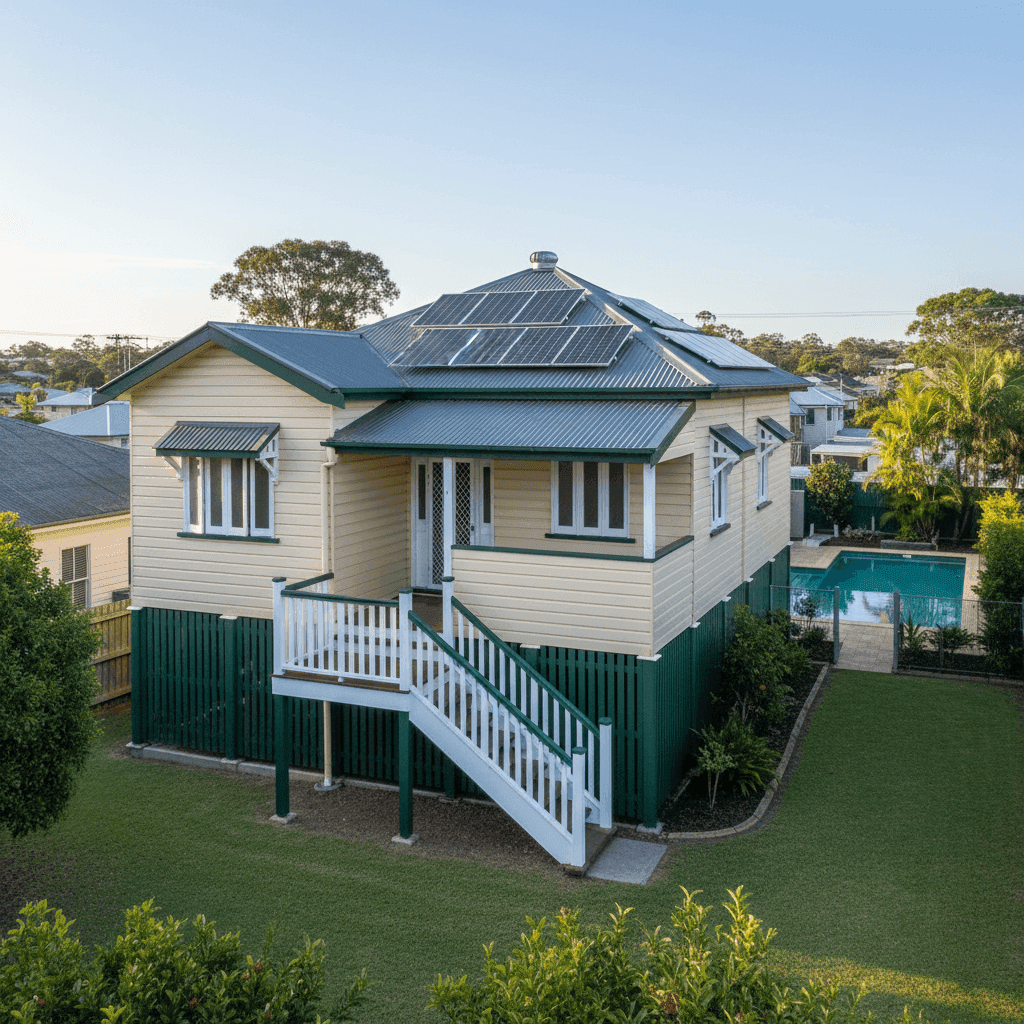
Blackstone is a quiet residential suburb sitting within the City of Ipswich, about 40 kilometres southwest of Brisbane's CBD. Known for its older housing stock and suburban character, it's home to a mix of families and long-term residents — many living in classic Queensland-style homes that have stood for decades. If you own a four-bedroom free standing home here, understanding what you should be paying for home and contents insurance is an important step toward protecting one of your biggest assets.
This article breaks down a real insurance quote for a four-bedroom, two-bathroom property in Blackstone and puts it in context against local, state, and national benchmarks.
---
Is This Quote Fair?
The quote in question comes in at $4,325 per year (or $439/month) for combined home and contents cover, with a building sum insured of $630,000 and contents valued at $110,000. Our pricing analysis rates this as CHEAP — below average for the market.
That's a meaningful finding. Home insurance in Queensland has become notoriously expensive in recent years, driven by an increasing frequency of severe weather events, flooding, and the rising cost of building materials. For a homeowner in Blackstone to land a quote well below state averages is genuinely good news — and worth understanding in detail.
The building excess sits at $3,000, which is on the higher side. This is often a lever insurers use to reduce premiums, so it's worth factoring that in when assessing overall value. The contents excess of $500 is more typical. If you're comparing policies, always weigh the excess against the premium savings to find the right balance for your situation.
---
How Blackstone Compares
To put this quote in proper perspective, here's how it sits against broader market data:
| Benchmark | Annual Premium |
|---|---|
| This Quote | $4,325 |
| QLD State Average | $9,129 |
| QLD State Median | $3,903 |
| National Average | $5,347 |
| National Median | $2,764 |
| Ipswich LGA Average | $8,901 |
A few things stand out immediately. The Ipswich LGA average of $8,901 per year is more than double this quote — a stark reminder of how much premiums can vary even within the same local government area. The Queensland state average of $9,129 is similarly elevated, reflecting the outsized impact of flood and storm risk across the state.
This quote sits above both the QLD and national medians, which makes sense given the size of the property (214 sqm), the relatively high building sum insured ($630,000), and the inclusion of contents cover. Larger, older homes with pools and solar panels typically attract higher premiums than a smaller, newer dwelling — so coming in below the state average is a solid outcome.
For suburb-specific data, visit the Blackstone insurance stats page. You can also explore Queensland-wide insurance data or the national insurance statistics for broader context.
---
Property Features That Affect Your Premium
Several characteristics of this property directly influence what insurers charge. Understanding these factors can help you make smarter decisions — both when buying cover and when considering home improvements.
Weatherboard Timber Construction
The external walls are weatherboard wood, a material that's common in older Queensland homes but carries higher risk in the eyes of insurers. Timber is more susceptible to fire, termite damage, and general deterioration compared to brick or rendered masonry. This typically pushes premiums higher, though the effect can be offset by other factors.
Steel/Colorbond Roof
Colorbond roofing is generally viewed favourably by insurers. It's durable, resistant to corrosion, and performs well in high winds — an important consideration in southeast Queensland where storms are a regular occurrence. This is likely helping to moderate the premium on this property.
Stump Foundation (Elevated)
The home sits on stumps and is elevated by less than one metre — a classic Queenslander configuration. Elevated homes can offer some flood resilience compared to slab-on-ground construction, though the degree of protection depends heavily on local flood mapping. The sub-floor space also needs to be considered, as it can be a vulnerability in storm events.
Timber and Laminate Flooring
Flooring type affects both building and contents replacement costs. Timber and laminate floors are moderately priced to replace but can be damaged by water ingress — something to consider in the context of storm and flood cover within your policy.
Swimming Pool
A pool adds to the insured value of the property and introduces additional liability considerations. Most insurers factor the pool into the building sum insured, and some may require specific liability cover. Ensure your policy explicitly covers pool-related structures and equipment.
Solar Panels
Solar panels are increasingly common in Queensland, and most modern home insurance policies cover them as part of the building. However, it's worth confirming this with your insurer — particularly whether the inverter and associated wiring are included — as some policies treat them as optional extras or have sub-limits on their replacement value.
Construction Year: 1962
A home built in 1962 is over 60 years old. Older properties can attract higher premiums due to the cost of sourcing period-appropriate materials and the likelihood of ageing systems (electrical, plumbing) that may need attention. Keeping maintenance up to date and documenting any upgrades can help when negotiating with insurers.
---
Tips for Homeowners in Blackstone
1. Review your sum insured regularly Building costs have risen sharply across Australia in recent years. A sum insured of $630,000 for a 214 sqm home is substantial, but it's worth verifying this against current rebuild cost estimates — not market value. Underinsurance is one of the most common and costly mistakes homeowners make.
2. Understand your flood and storm cover Ipswich has a well-documented history of flooding, and Blackstone is no exception to the broader regional risk profile. Check whether your policy includes flood cover as standard or as an optional add-on, and review the specific definitions used — "flood," "storm," and "rainwater runoff" can mean different things to different insurers.
3. Maintain your weatherboard exterior Timber walls require regular upkeep. Peeling paint, rotting boards, or gaps in the cladding can affect both the structural integrity of your home and potentially your ability to make a successful insurance claim if damage is deemed to result from poor maintenance. Annual inspections and timely repairs go a long way.
4. Check your solar panel and pool coverage Given this property has both solar panels and a swimming pool, it's worth reading the fine print. Confirm that both are explicitly listed in your policy, understand any sub-limits that apply, and check whether pool fencing liability is covered under your home insurance or requires a separate policy.
---
Compare and Save with CoverClub
Whether you're renewing your existing policy or shopping for cover for the first time, it pays to compare. The difference between the cheapest and most expensive quotes for a property like this one can run into thousands of dollars per year — and price isn't the only variable. Policy features, excess structures, and claims handling all matter too.
Get a home insurance quote through CoverClub and see how your options stack up in minutes. Our platform makes it easy to compare home and contents insurance from a range of Australian insurers, so you can find the cover that suits your property — and your budget.