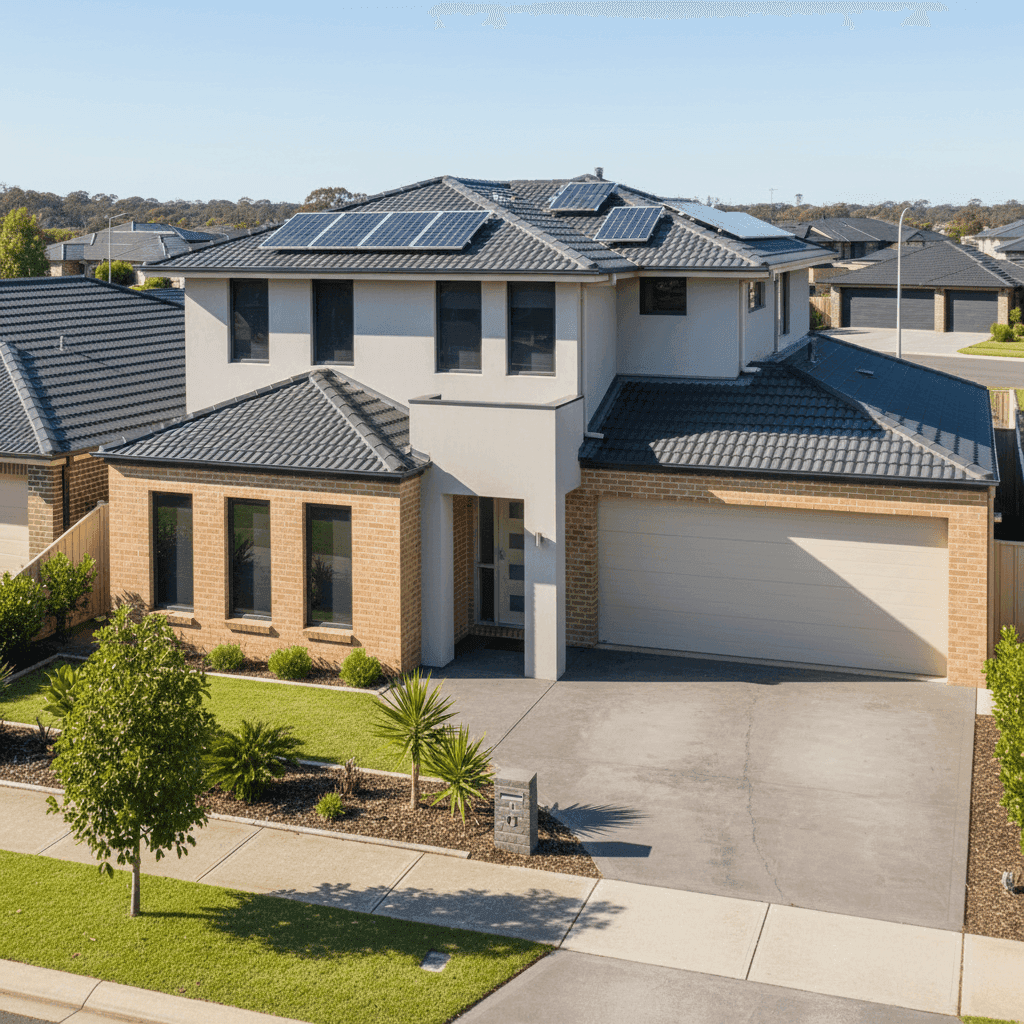
If you own a free standing home in Blacktown, NSW 2148, you've probably wondered whether you're paying a fair price for home and contents insurance — or whether you could be doing better. This article breaks down a real insurance quote for a five-bedroom brick veneer home in Blacktown, compares it against local, state and national benchmarks, and offers practical tips to help you get the most out of your cover.
---
Is This Quote Fair?
The quote in question comes in at $1,009 per year (or roughly $101/month) for combined home and contents cover, with a building sum insured of $416,000 and contents valued at $50,000. The building excess is $3,000 and the contents excess is $1,000.
Our price rating for this quote is FAIR — Around Average.
That rating reflects a nuanced picture. At $1,009/year, this premium sits just above the suburb's 25th percentile of $969/year, meaning roughly a quarter of comparable Blacktown quotes come in cheaper. However, it falls well below both the suburb average ($1,617/year) and the suburb median ($1,419/year), which tells us this is a competitive result — not a bargain, but certainly not overpriced either.
In short, the policyholder is paying less than most of their neighbours for similar cover. That's a solid outcome, even if there's still some room to potentially save.
---
How Blacktown Compares
To understand what this quote really means, it helps to zoom out and look at the broader pricing landscape. Here's how Blacktown stacks up:
| Benchmark | Premium |
|---|---|
| This Quote | $1,009/yr |
| Blacktown Suburb Average | $1,617/yr |
| Blacktown Suburb Median | $1,419/yr |
| NSW State Average | $3,801/yr |
| NSW State Median | $3,410/yr |
| National Average | $2,965/yr |
| National Median | $2,716/yr |
| Cumberland LGA Average | $1,792/yr |
The numbers tell a compelling story. Blacktown homeowners — including this property — are paying significantly less than the NSW state average, which sits at $3,801/year. That's nearly four times the cost of this particular quote. Even the state median of $3,410/year dwarfs what Blacktown residents typically pay.
Compared to the national average of $2,965/year, Blacktown's suburb average of $1,617/year looks very reasonable. This reflects the relatively lower risk profile of Western Sydney suburbs like Blacktown — they're not in cyclone zones, are not prone to coastal flooding, and generally don't carry the premium loading you'd see in higher-risk postcodes across Queensland, Northern Australia, or even parts of coastal NSW.
You can explore more detailed pricing data on the Blacktown suburb stats page, the NSW state overview, or the national home insurance stats.
> Note: The Blacktown suburb sample includes 12 quotes, so while the data is directionally useful, a larger sample would give even greater confidence in these figures.
---
Property Features That Affect Your Premium
Insurance premiums don't appear out of thin air — they're calculated based on the specific characteristics of your home. Here's how the features of this property influence its pricing:
Brick Veneer Walls & Tiled Roof
Brick veneer construction is generally viewed favourably by insurers. It's fire-resistant, durable, and less susceptible to storm damage than some lighter cladding materials. Paired with a tiled roof — another robust and commonly insured roofing type — this home presents a relatively low structural risk profile, which helps keep premiums down.
Slab Foundation
A concrete slab foundation is standard for homes built in this era and is generally considered low-risk from an insurance perspective. It doesn't carry the same subsidence concerns as older pier-and-beam foundations, and it's well-suited to the soil conditions common in Western Sydney.
Built in 2010
Newer homes tend to attract lower premiums than older ones, largely because they're built to more modern standards and are less likely to have ageing electrical, plumbing, or structural issues. A 2010 build is still relatively contemporary and likely compliant with building codes that reduce certain risk factors.
Solar Panels
This property has solar panels installed, which is increasingly common across Australian suburbs. Solar panels can add modest complexity to a claim (particularly in storm or hail events), and some insurers may factor this into their pricing. It's worth confirming that your policy explicitly covers solar panel damage, as not all standard policies include this automatically.
Ducted Climate Control
Ducted air conditioning systems represent a meaningful asset and can add to the cost of a claim if damaged. However, they're a standard feature in many Australian homes and are typically covered under building insurance without a significant premium impact.
Timber/Laminate Flooring & Above-Average Fittings
The above-average quality of fixtures and fittings — combined with timber or laminate flooring throughout — means the cost to rebuild or repair the home is higher than a standard finish. This is reflected in the $416,000 building sum insured, which needs to be accurate to avoid underinsurance. If you've renovated or upgraded recently, it's worth reviewing your sum insured regularly.
---
Tips for Homeowners in Blacktown
Whether you're reviewing an existing policy or shopping for new cover, here are four practical steps to make sure you're getting the best value:
- Check your sum insured annually. Building costs have risen sharply in recent years. If your $416,000 sum insured hasn't been reviewed since the policy was first taken out, it may no longer reflect the true cost of rebuilding your home. Underinsurance is one of the most common — and costly — mistakes homeowners make.
- Confirm solar panels are covered. Ask your insurer directly whether solar panels are included under your building cover and under what circumstances (storm, fire, accidental damage). Some policies treat them as an optional extra or exclude certain types of damage.
- Understand your excess structure. This policy carries a $3,000 building excess and a $1,000 contents excess. A higher excess generally means a lower premium, but make sure you're comfortable covering that amount out of pocket in the event of a claim. If $3,000 feels too steep, it may be worth modelling what a lower excess would cost.
- Compare quotes at renewal time. Insurers don't always reward loyalty with competitive pricing. Even if your current premium seems reasonable, it's worth running a comparison at renewal to make sure you're not leaving money on the table.
---
Compare Your Home Insurance Quote Today
Whether this quote matches your situation or you're looking at something entirely different, the best way to know if you're getting a fair deal is to compare. At CoverClub, you can enter your property details and see how your premium stacks up against real quotes from across Australia. It takes just a few minutes and could save you hundreds of dollars a year.