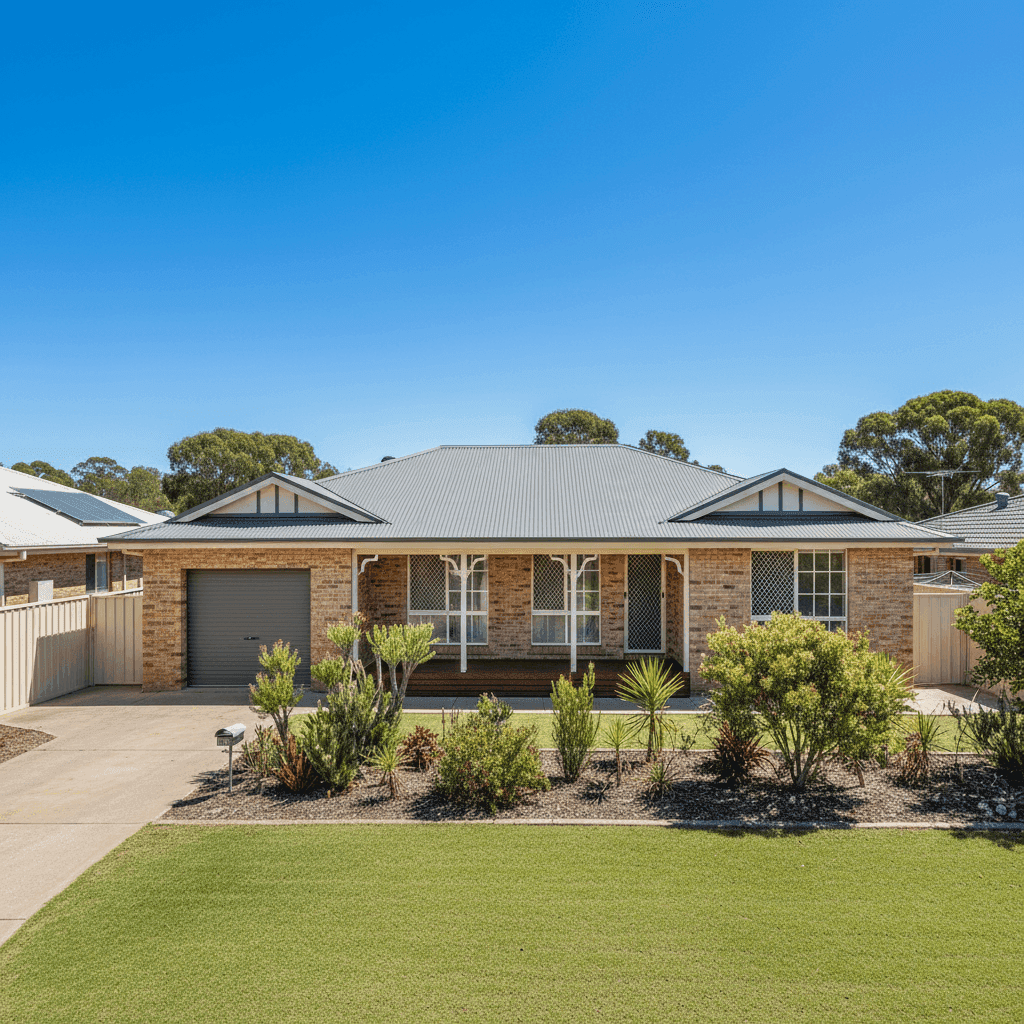
Blackwater is a regional Queensland town sitting in the heart of the Bowen Basin, known for its coal mining industry and tight-knit community. If you own a free standing home here, understanding what you should be paying for home and contents insurance — and why — can save you hundreds of dollars each year. This article breaks down a real quote for a 3-bedroom, 1-bathroom brick veneer home in Blackwater (postcode 4717) and puts the numbers into context against local, state, and national benchmarks.
---
Is This Quote Fair?
The short answer: yes — and then some. This quote comes in at $1,284 per year (or about $119 per month) for combined home and contents cover, with a $450,000 building sum insured and $80,000 in contents cover. Our price rating for this quote is CHEAP, meaning it sits well below the average for the area.
To put that in perspective, the suburb average for Blackwater is $2,466 per year, and the median sits even higher at $2,755 per year. That means this quote is roughly 48% below the suburb average — a significant saving for a homeowner who's done their research (or simply got lucky with their insurer's risk model).
Even compared to the suburb's 25th percentile — meaning the cheapest quarter of quotes — this premium of $1,284 still undercuts the $1,767 benchmark. In other words, this is genuinely one of the more competitive prices available in this postcode, not just marginally below average.
---
How Blackwater Compares
The broader pricing picture makes this quote look even more impressive. Here's how the numbers stack up:
| Benchmark | Premium |
|---|---|
| This quote | $1,284/yr |
| Blackwater suburb average | $2,466/yr |
| Blackwater suburb median | $2,755/yr |
| QLD state average | $9,129/yr |
| QLD state median | $3,903/yr |
| National average | $5,347/yr |
| National median | $2,764/yr |
| Central Highlands LGA average | $14,474/yr |
A few things stand out here. Queensland's state average of $9,129 is extraordinarily high — largely because it includes coastal and cyclone-prone areas like Cairns, Townsville, and the Whitsundays, where premiums can be eye-watering. Blackwater, sitting inland and outside designated cyclone risk zones, benefits from a much more favourable risk profile.
The Central Highlands LGA average of $14,474 is particularly striking. This figure is likely skewed upward by high-risk properties elsewhere in the region, including those in flood-prone or remote areas. Blackwater's relatively modest suburb average of $2,466 suggests it's one of the more insurable pockets within the LGA.
For detailed suburb-level data on Blackwater, including how premiums have shifted over time, head to CoverClub's suburb stats page. You can also explore QLD-wide insurance trends or compare against the national picture.
---
Property Features That Affect Your Premium
Several characteristics of this particular home work in favour of a lower premium. Let's unpack them:
Brick Veneer Walls Brick veneer is one of the more insurer-friendly wall materials in Australia. It offers solid fire resistance and structural durability compared to weatherboard or lightweight cladding. Insurers generally view brick veneer favourably, which can translate to lower premiums.
Steel / Colorbond Roof A Colorbond steel roof is considered low-maintenance and highly durable. It performs well in heat, resists corrosion, and is less susceptible to storm damage than older roofing materials like terracotta tiles or corrugated iron. This is a positive factor in premium calculations.
Slab Foundation Concrete slab foundations are generally stable and less prone to movement or subsidence compared to older timber stumped foundations. For insurers, this reduces the likelihood of structural claims — another tick in the right column.
Construction Year: 1987 Homes built in the late 1980s sit in a reasonable middle ground. They're old enough that some wear and tear is expected, but they were built under more regulated standards than homes from earlier decades. Wiring, plumbing, and structural elements from this era are generally considered manageable risk.
No Pool, No Solar, No Ducted Climate Control Each of these additions increases a home's replacement cost and introduces additional risk factors (e.g., pool liability, solar panel damage, complex HVAC systems). The absence of all three keeps the risk profile — and the premium — lean.
Building Size: 205 sqm At 205 square metres, this is a comfortably sized family home without being excessively large. The sum insured of $450,000 appears reasonable for a brick veneer home of this size in regional Queensland, though homeowners should periodically review their sum insured to ensure it reflects current construction costs.
---
Tips for Homeowners in Blackwater
1. Review Your Sum Insured Annually Construction costs across Australia have risen significantly in recent years. A sum insured that was adequate in 2020 may fall short today. Use a building cost calculator or speak with a local builder to sense-check whether $450,000 would genuinely cover a full rebuild — including demolition, materials, and labour at current rates.
2. Don't Assume Your Cheapest Quote Is Always the Best This quote is priced well below market, which is great — but always compare policy features, not just price. Check what's included for flood, storm, and accidental damage cover, and pay attention to any exclusions that might catch you out at claim time.
3. Consider Your Contents Cover Carefully $80,000 in contents cover is a reasonable starting point, but it's worth doing a room-by-room inventory. Electronics, appliances, furniture, clothing, and tools can add up faster than most people expect. Underinsuring your contents is a common and costly mistake.
4. Stay Informed About Flood Risk While Blackwater isn't in a cyclone risk zone, parts of Central Queensland can be affected by heavy rainfall and localised flooding. Check whether your policy includes flood cover as standard or as an optional add-on — and verify how your insurer defines "flood" versus "storm water" damage, as the distinction matters at claim time.
---
Compare Your Own Quote
Whether you're a first-time buyer or a long-term Blackwater homeowner, it pays to shop around. Premiums can vary dramatically between insurers for the same property — as this quote clearly demonstrates. Get a home insurance quote through CoverClub and see how your current premium stacks up against the market in seconds.