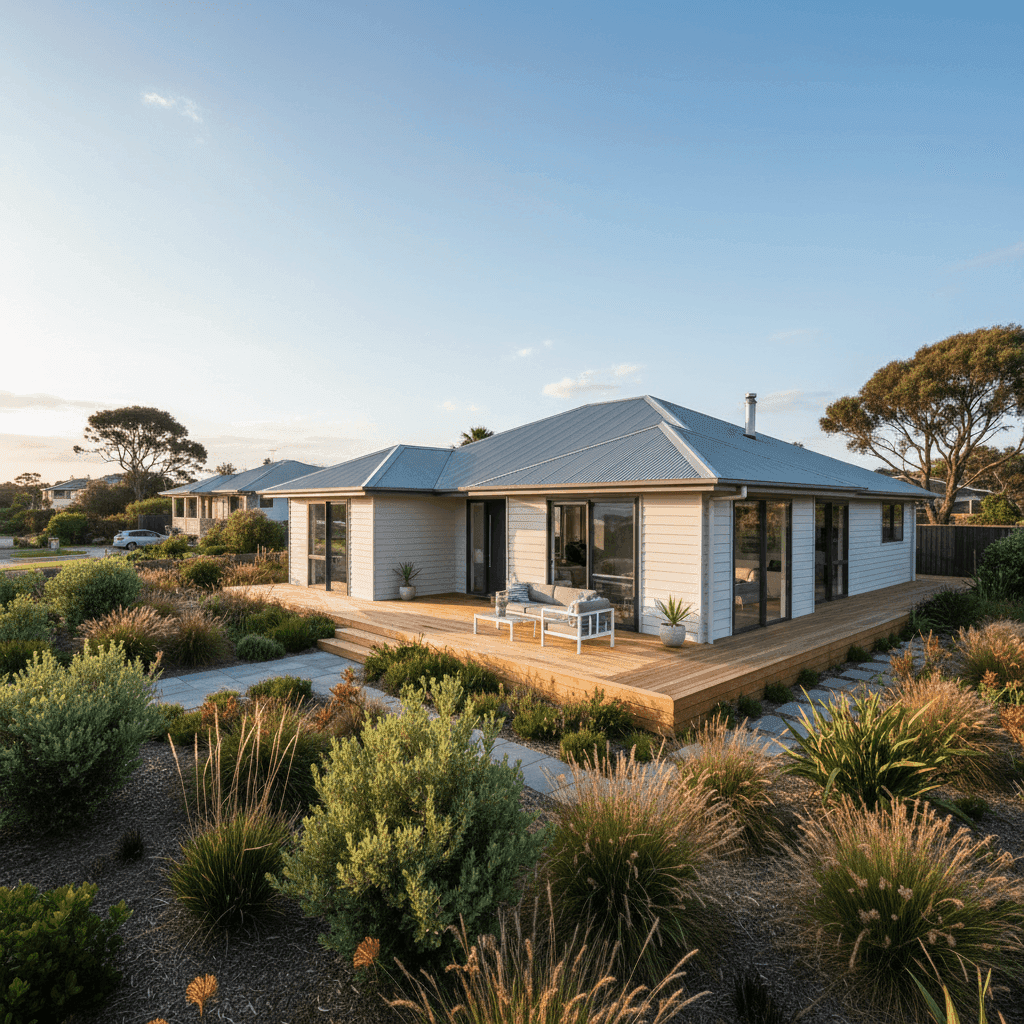
Blairgowrie is one of the Mornington Peninsula's most sought-after coastal communities — a relaxed seaside suburb that attracts both permanent residents and holiday homeowners. If you own a free standing home here, understanding what you should be paying for home and contents insurance is an important part of protecting what is likely your most valuable asset. This article breaks down a real insurance quote for a three-bedroom home in Blairgowrie (postcode 3942), compares it against local, state, and national benchmarks, and offers practical tips to help you get the best value cover.
---
Is This Quote Fair?
The quote in question comes to $1,682 per year (or around $164/month) for combined home and contents insurance, covering a building sum insured of $597,000 and $50,000 worth of contents. Both the building and contents excess are set at $1,000.
Our price rating for this quote is FAIR — Around Average, and the data backs that up. At $1,682 per year, this premium sits:
- Below the Blairgowrie suburb average of $1,961/yr
- Below the suburb median of $1,774/yr
- Above the suburb's 25th percentile of $1,556/yr (the cheapest quarter of quotes)
- Well below the suburb's 75th percentile of $2,351/yr
In plain terms, this homeowner is paying less than most of their neighbours for comparable cover — but there is still room to potentially find a cheaper option if they shop around. The quote lands comfortably in the middle of the market for Blairgowrie, which is exactly what a "Fair" rating reflects.
---
How Blairgowrie Compares
Zooming out beyond the suburb tells an even more encouraging story. Check out the full Blairgowrie insurance stats for a deeper look at local pricing trends.
| Benchmark | Annual Premium |
|---|---|
| This Quote | $1,682 |
| Blairgowrie Suburb Average | $1,961 |
| Blairgowrie Suburb Median | $1,774 |
| Mornington Peninsula LGA Average | $2,652 |
| VIC State Average | $3,000 |
| VIC State Median | $2,718 |
| National Average | $5,347 |
| National Median | $2,764 |
The Victorian state average of $3,000/yr is nearly 79% higher than this quote, which is a significant gap. Part of this is explained by the diversity of properties across Victoria — from high-risk bushfire zones in regional areas to flood-prone suburbs and dense urban centres, all of which push averages up considerably.
When you look at the national picture, the contrast is even starker. The national average of $5,347/yr is more than three times this quote. Much of that national figure is driven by premiums in Queensland and Northern Australia, where cyclone and flood risk dramatically inflate costs. Blairgowrie, by comparison, is not a cyclone risk area, which keeps premiums far more manageable.
Even within the Mornington Peninsula LGA, where the average sits at $2,652/yr, this quote comes in well below the local norm — suggesting the insurer has assessed this particular property favourably.
Note: Suburb comparisons are based on a sample of 14 quotes in postcode 3942, so averages should be treated as indicative rather than definitive.
---
Property Features That Affect Your Premium
Several characteristics of this property directly influence how insurers price the risk. Here's what stands out:
Construction Materials
The home features Hardiplank/Hardiflex external walls — a fibre cement cladding that is widely used in Australian residential construction. Insurers generally view fibre cement favourably because it is non-combustible, resistant to rot, and durable in coastal environments. This can work in the homeowner's favour compared to properties with timber weatherboard exteriors.
The steel/Colorbond roof is another positive signal. Colorbond is one of the most popular roofing materials in Australia for good reason — it handles coastal salt air well, is fire-resistant, and requires minimal maintenance. Insurers tend to price Colorbond roofs more competitively than older materials like terracotta tiles or fibrous cement sheeting.
Foundation Type
The home sits on stumps, which is common for homes built in the 1980s across Victoria. Stump foundations can be a slight risk flag for insurers if the stumps are ageing or showing signs of deterioration, as subsidence and structural movement can become a concern over time. However, a well-maintained stump foundation in a stable soil environment is generally not a significant premium driver.
Age of Construction
Built in 1980, this property is over 40 years old. Older homes can attract slightly higher premiums due to the potential for ageing wiring, plumbing, and structural components. That said, the materials used here — Hardiflex cladding and Colorbond roofing — suggest the home may have undergone updates over the decades, which helps.
Ducted Climate Control
The presence of ducted climate control is worth noting. This system adds to the replacement value of the home and may contribute modestly to the premium, as it represents a significant cost to repair or replace in the event of a claim.
No Pool or Solar Panels
The absence of a swimming pool and solar panels simplifies the risk profile. Pools and solar systems both introduce additional liability and replacement cost considerations, so their absence can keep premiums leaner.
Flooring
Timber and laminate flooring throughout is fairly standard and does not typically influence premiums significantly, though timber floors in older homes can be a consideration if water damage is a risk.
---
Tips for Homeowners in Blairgowrie
1. Review Your Building Sum Insured Regularly
At $597,000, the building sum insured needs to reflect the true cost of rebuilding your home from scratch — not its market value. Construction costs in coastal Victoria have risen sharply in recent years, so it's worth recalculating your sum insured annually using a building cost estimator to make sure you're not underinsured.
2. Maintain Your Stump Foundation
If your home is on stumps, have them inspected every few years by a licensed builder or pest inspector. Termite damage and timber rot are real risks in coastal environments. Proactive maintenance not only protects your home but also demonstrates due diligence to your insurer.
3. Consider Your Excess Level
This quote carries a $1,000 excess for both building and contents. Opting for a higher excess — say $2,000 — can meaningfully reduce your annual premium. If you have a solid emergency fund and are unlikely to make small claims, a higher excess is often a smart trade-off.
4. Bundle and Compare
Home and contents insurance is already bundled in this quote, which typically offers savings over purchasing them separately. However, bundling alone doesn't guarantee the best price. Use a comparison tool like CoverClub to check whether another insurer can offer equivalent cover at a lower premium — even a "Fair" quote can sometimes be improved upon.
---
Ready to Compare?
Whether you're a first-time buyer on the Mornington Peninsula or a long-time Blairgowrie local reviewing your existing policy, comparing quotes is one of the simplest ways to make sure you're not paying more than you need to. Head to CoverClub to get a personalised home insurance quote and see how your current premium stacks up against the market in minutes.