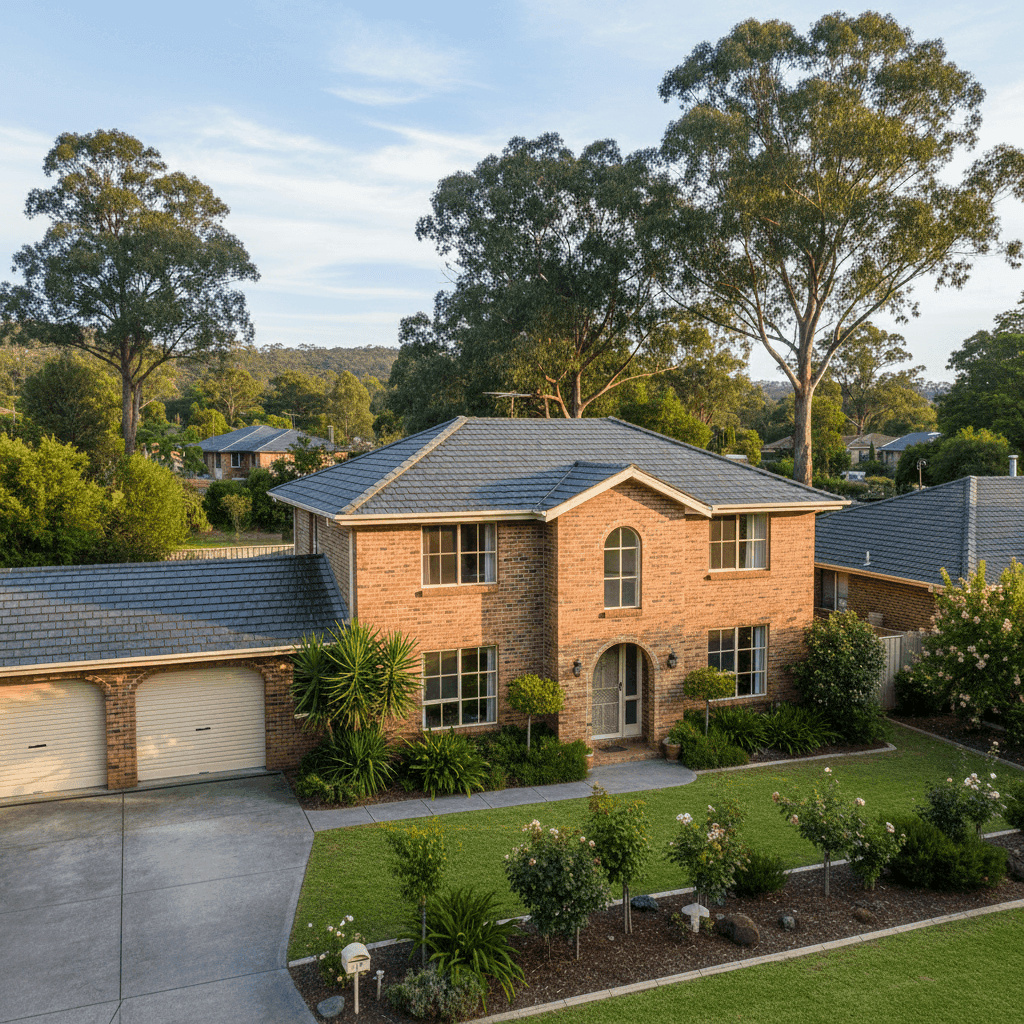
Blaxland is a well-established suburb nestled in the lower Blue Mountains region of New South Wales, known for its leafy streets, family-friendly atmosphere, and proximity to both the Great Western Highway and the natural beauty of the World Heritage-listed Blue Mountains National Park. For owners of a free standing home in this area, understanding what you should be paying for home and contents insurance is an important step in protecting one of your most valuable assets.
This article breaks down a recent insurance quote for a four-bedroom, two-bathroom brick veneer home in Blaxland (postcode 2774), built in 1999, with a building sum insured of $800,000 and contents cover of $205,000 — and puts that $3,358 annual premium into context.
---
Is This Quote Fair?
The short answer: yes, broadly speaking — but there's room to do better.
This quote has been rated Fair (Around Average), which means it sits in a reasonable range but isn't particularly competitive. At $3,358 per year (or $333/month), it comes in slightly above the suburb average of $3,240 and above the suburb median of $3,014. That said, it's well within the interquartile range for Blaxland — the middle 50% of quotes in this suburb fall between $2,401 and $4,197 — so you're not being gouged.
The building excess of $3,000 is on the higher side and is worth factoring into your value assessment. A higher excess typically reduces your premium, so if you were to lower the excess, you'd likely see the annual cost climb further. The contents excess of $1,000 is more standard.
The sum insured figures — $800,000 for the building and $205,000 for contents — are meaningful inputs here. A higher building sum insured naturally pushes the premium up, so it's worth ensuring your building replacement cost is accurate rather than over-estimated.
---
How Blaxland Compares
Understanding where your premium sits relative to broader benchmarks gives you real negotiating power. Here's how this quote stacks up:
| Benchmark | Annual Premium |
|---|---|
| This Quote | $3,358 |
| Blaxland (2774) Suburb Average | $3,240 |
| Blaxland (2774) Suburb Median | $3,014 |
| NSW State Average | $3,801 |
| NSW State Median | $3,410 |
| National Average | $2,965 |
| National Median | $2,716 |
| Blue Mountains LGA Average | $4,220 |
A few things stand out from this comparison. First, this quote is notably cheaper than the Blue Mountains LGA average of $4,220 — a significant saving of over $860 per year. This is partly because Blaxland sits at the lower-altitude, more accessible end of the Mountains, which typically carries less bushfire and storm risk than higher-elevation suburbs like Katoomba or Leura.
Second, the quote sits below the NSW state average, which is a positive sign. NSW as a whole is one of the more expensive states for home insurance, driven by flood, storm, and bushfire exposure across the state. Blaxland homeowners are faring better than many of their NSW counterparts.
Third, the quote is above the national average — but this is common for NSW properties, particularly those in or near bushland corridors. You can explore Blaxland suburb insurance statistics, NSW state-wide data, and national benchmarks on CoverClub to dig deeper into the numbers.
---
Property Features That Affect Your Premium
Every property is different, and insurers weigh up a range of construction and location factors when calculating your premium. Here's how the features of this particular home influence its cost:
- Brick Veneer Walls: Brick veneer is generally viewed favourably by insurers. It offers solid fire resistance compared to weatherboard or cladding, and is less susceptible to weather damage. This likely contributes to a more moderate premium.
- Tiled Roof: A tiled roof is considered a durable, low-risk roofing material. It performs well in storms and has a long lifespan, which insurers typically reward with lower premiums compared to corrugated iron or older materials.
- Slab Foundation: Concrete slab foundations are standard in homes of this era and are generally considered stable and low-risk, particularly in areas without significant soil movement or flood exposure.
- Construction Year (1999): A home built in 1999 benefits from relatively modern building codes, including improved structural standards. It's not new enough to attract any premium loading for experimental materials, but not old enough to raise concerns about aging infrastructure.
- 244 sqm Building Size: At 244 square metres, this is a sizeable home. Larger floor areas mean higher rebuild costs, which directly influences the building sum insured and, in turn, the premium.
- No Pool, Solar Panels, or Ducted Climate Control: The absence of these features simplifies the risk profile. Pools, solar systems, and ducted HVAC can all add to replacement costs and, in some cases, liability risk — so their absence keeps the premium more contained.
- Blue Mountains Proximity: While Blaxland is one of the less exposed suburbs in the LGA, its location near bushland means bushfire risk is still a consideration for insurers. This is reflected in the LGA average being considerably higher than the national average.
---
Tips for Homeowners in Blaxland
1. Check your building sum insured regularly Building costs have risen sharply in recent years. Make sure your $800,000 sum insured reflects current construction costs per square metre in the Blue Mountains region — not what it cost to build in 1999. Underinsurance is a common and costly mistake.
2. Consider your excess carefully The $3,000 building excess on this policy is high. While it reduces your premium, it means you're self-insuring for the first $3,000 of any building claim. If you have the savings to cover that comfortably, it's a reasonable trade-off — but if not, it may be worth comparing policies with a lower excess.
3. Review your contents coverage annually $205,000 in contents cover is a substantial amount. Take the time each year to update your contents list, especially if you've made significant purchases. Equally, if your circumstances have changed and you have fewer valuables, you may be able to reduce this figure and lower your premium.
4. Compare quotes before renewal Loyalty doesn't always pay in the insurance industry. Insurers frequently offer better rates to new customers than to long-standing policyholders. Before your policy renews, get a fresh quote through CoverClub to ensure you're still getting a competitive deal.
---
Compare Your Options with CoverClub
Whether you're reviewing an existing policy or shopping for cover for the first time, it pays to compare. CoverClub makes it easy to benchmark your premium against real quotes from across Blaxland and NSW, so you can walk into renewal negotiations — or switch insurers — with confidence. Start comparing home insurance quotes today and make sure your cover is working as hard as your home does.