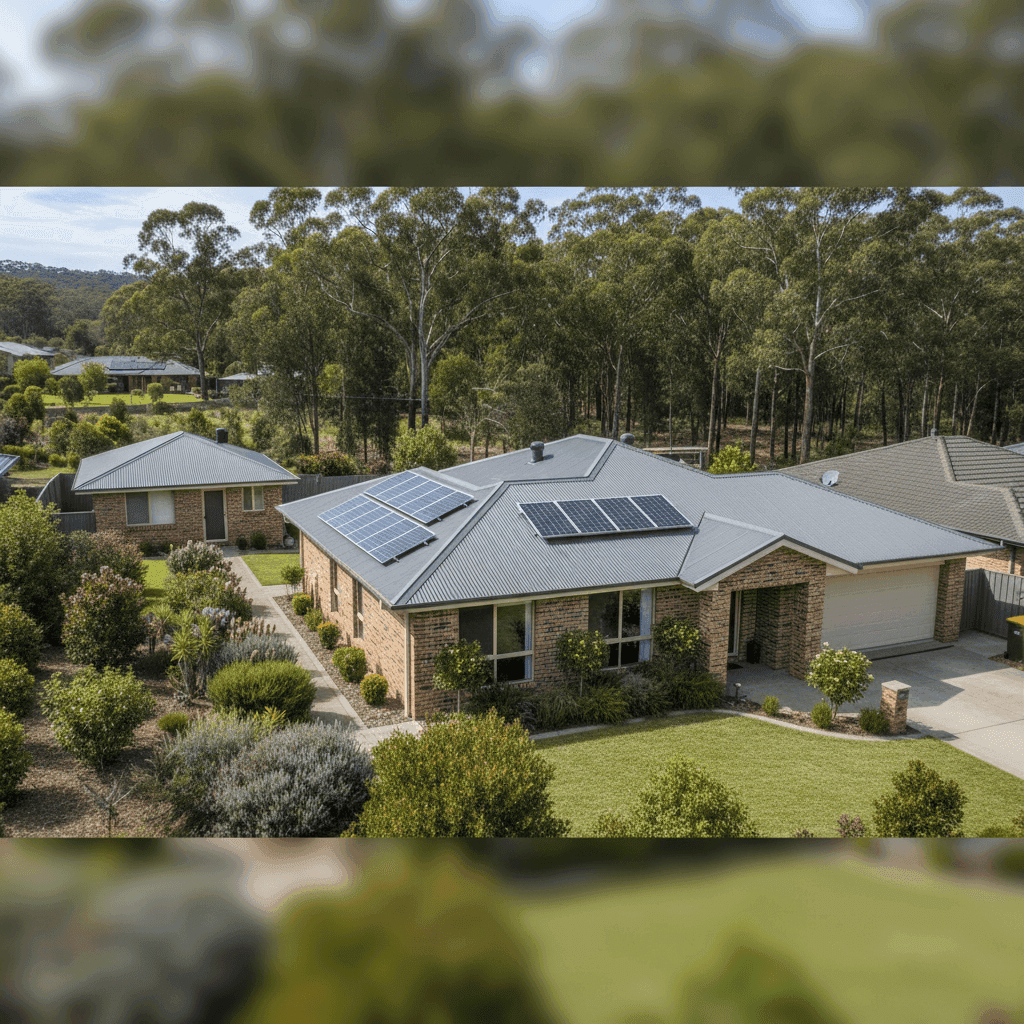
Blaxland is a well-established suburb nestled in the lower Blue Mountains of New South Wales, offering a relaxed lifestyle within commuting distance of Western Sydney. Properties here tend to be solid, character-filled homes — and this seven-bedroom free standing home is no exception. With a building sum insured of $1,020,000 and contents cover of $248,000, understanding whether the annual premium of $3,180 represents good value is an important question for any homeowner in the area.
---
Is This Quote Fair?
The short answer: yes, broadly speaking. This quote has been rated Fair (Around Average), which means it sits comfortably within the typical range for the suburb — not a standout bargain, but certainly not overpriced either.
At $3,180 per year (or $298 per month), this premium lands just above the suburb's 25th percentile of $3,106 and well below the 75th percentile of $4,054. That means roughly three-quarters of comparable quotes in Blaxland come in higher than this one. For a large seven-bedroom home with a granny flat, solar panels, and ducted climate control — all features that can nudge premiums upward — this result is genuinely reasonable.
The building and contents excess is set at $2,000 for each, which is on the higher side. A higher excess typically lowers your premium, so it's worth considering whether you'd be comfortable covering that out of pocket in the event of a claim. If cash flow is a concern, reducing the excess may be worth the additional cost.
---
How Blaxland Compares
To put this quote in proper context, it helps to look at the broader pricing landscape. You can explore full pricing data on the Blaxland suburb stats page, the NSW state stats page, and the national stats page.
| Benchmark | Average Premium | Median Premium |
|---|---|---|
| Blaxland (2774) | $3,509/yr | $3,587/yr |
| Blue Mountains LGA | $4,220/yr | — |
| NSW | $9,528/yr avg | $3,770/yr |
| National | $5,347/yr avg | $2,764/yr |
A couple of things stand out here. The NSW average premium of $9,528 looks alarming at first glance, but the median of $3,770 tells a more grounded story — a handful of very high-risk or high-value properties skew the average significantly. The same dynamic plays out nationally, where the average of $5,347 sits well above the median of $2,764.
This quote of $3,180 sits below both the NSW median and the Blaxland suburb average, which is a positive sign. It also comes in meaningfully below the Blue Mountains LGA average of $4,220 — suggesting this particular property profile is being priced competitively relative to the broader mountain region.
---
Property Features That Affect Your Premium
Several characteristics of this property have a direct bearing on what insurers charge. Here's how the key features stack up:
Brick Veneer Walls & Colorbond Roof Brick veneer is generally viewed favourably by insurers — it's durable, fire-resistant, and widely used in Australian construction. Colorbond steel roofing is similarly well-regarded: it handles weather extremes well, is low-maintenance, and resists ember attack better than some other materials. Together, these materials contribute to a more favourable risk profile.
Stump Foundation The home sits on stumps, which is common for properties built in the 1970s, particularly in hillside or semi-rural areas like the lower Blue Mountains. Stump foundations can be associated with higher maintenance requirements over time, and some insurers factor this into their pricing. It's worth ensuring your policy explicitly covers subfloor structures.
Timber and Laminate Flooring Timber floors add character but can be more costly to repair or replace following water damage or fire. This is reflected in the contents and building sum insured, and it's one reason ensuring adequate cover is so important.
Solar Panels Solar panels are a valuable asset — but they're also an insurable one. Many standard home insurance policies cover rooftop solar systems as part of the building, though it's worth confirming this with your insurer. Given the investment involved, you'll want to ensure the sum insured accounts for their replacement value.
Granny Flat The presence of a granny flat adds complexity to the insured risk. Whether it's used for family, rented out, or left vacant, insurers will want to know — and the use of the flat can affect your premium and the terms of your cover. Always disclose this accurately.
Ducted Climate Control Ducted systems are a significant fixed asset within the home. At replacement costs of several thousand dollars, they should be factored into your building sum insured to avoid being underinsured.
Construction Year: 1976 Homes built in the mid-1970s may have older electrical wiring, plumbing, and structural elements that haven't been updated. Insurers sometimes price older homes slightly higher to account for the increased likelihood of maintenance-related claims. If you've undertaken significant renovations or upgrades, it's worth mentioning this when obtaining quotes.
---
Tips for Homeowners in Blaxland
1. Review your sum insured annually With a building sum insured of $1,020,000 and contents at $248,000, it's important to revisit these figures each year. Construction costs and the price of household goods have risen considerably in recent years. Being underinsured can leave you significantly out of pocket after a major claim — a situation known as underinsurance, which affects a large proportion of Australian homeowners.
2. Clarify granny flat coverage If your granny flat is tenanted or used commercially in any way, standard home insurance may not fully cover it. Speak with your insurer about whether a landlord policy or an endorsement is needed for that portion of the property.
3. Confirm solar panel inclusion Ask your insurer directly: are the solar panels covered under the building policy, and for what amount? Panels can be damaged by storms, hail, or fire, and replacement costs can be substantial. Make sure they're explicitly listed.
4. Consider the bushfire context While this property isn't in a designated cyclone risk area, Blaxland and the broader Blue Mountains region do carry bushfire risk. Check whether your policy includes adequate cover for bushfire, and whether any BAL (Bushfire Attack Level) rating applies to your land. This can influence both your premium and the level of cover available.
---
Compare Your Options with CoverClub
Whether you're renewing your existing policy or shopping around for the first time, comparing quotes is the smartest way to ensure you're getting the right cover at a fair price. CoverClub makes it easy to see how your premium stacks up against others in your suburb and across NSW.
Get a home insurance quote today and find out if you could be paying less — or whether your current cover is actually better than you think.