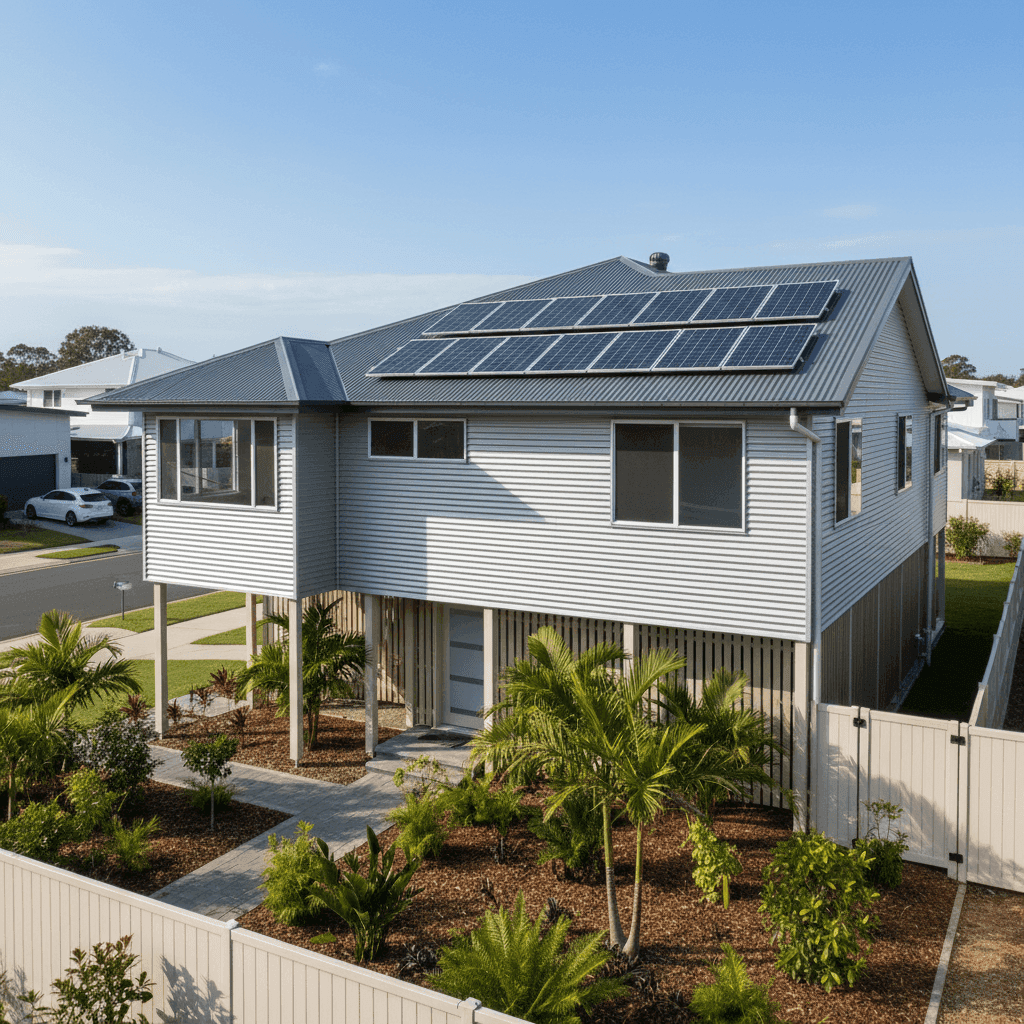
Bli Bli is a quiet residential suburb on Queensland's Sunshine Coast, sitting roughly midway between Maroochydore and Nambour. It's a popular spot for families drawn to its leafy streets, proximity to the Maroochy River, and relatively affordable housing compared to the coast's more glamorous beachside pockets. But "affordable" doesn't always extend to home insurance — and if you own a free standing home here, understanding what you're paying and why is well worth your time.
This article breaks down a real home and contents insurance quote for a four-bedroom, two-bathroom free standing home in Bli Bli, and benchmarks it against suburb, state, and national data to help you make sense of the numbers.
---
Is This Quote Fair?
The quote in question comes in at $3,634 per year (or $348 per month), covering both building and contents with a building sum insured of $798,000 and contents valued at $85,000. Both the building and contents excess are set at $1,000.
Our price rating for this quote is FAIR — Around Average, and the data backs that up. Based on 85 quotes collected for Bli Bli (postcode 4560), the suburb median premium sits at $3,173 per year, placing this quote comfortably within the middle of the range. The interquartile range — that is, the band covering the middle 50% of quotes — runs from $2,304/yr at the 25th percentile up to $4,037/yr at the 75th percentile. At $3,634, this quote falls solidly within that band, sitting closer to the upper-middle portion.
That's not a red flag. A higher building sum insured ($798,000 is substantial), combined with a generous contents value and the specific characteristics of this property, naturally pushes the premium toward the upper half of the range. If the quote were sitting above $4,037 without a clear explanation, that would warrant shopping around more aggressively. As it stands, the pricing appears reasonable for what's being covered.
---
How Bli Bli Compares
One number that jumps out immediately is the suburb average premium of $15,851 per year — a figure dramatically higher than the median. This kind of gap between mean and median typically signals a small number of very high-risk or very high-value properties pulling the average upward. The median is almost always the more useful benchmark for typical homeowners, and at $3,173, Bli Bli's median is actually quite manageable.
Here's how the suburb stacks up against broader benchmarks:
| Benchmark | Average Premium | Median Premium |
|---|---|---|
| Bli Bli (4560) | $15,851/yr | $3,173/yr |
| Sunshine Coast LGA | $7,249/yr | — |
| Queensland | $9,129/yr | $3,903/yr |
| National | $5,347/yr | $2,764/yr |
Compared to the Queensland state median of $3,903/yr, Bli Bli's median is actually slightly lower — a modest but welcome surprise for local homeowners. Against the national median of $2,764/yr, Queensland as a whole runs higher, which reflects the elevated risk profile of the Sunshine State: flooding, storms, and the general wear that a subtropical climate puts on buildings.
The Sunshine Coast LGA average of $7,249 is notably elevated, likely influenced by coastal properties with higher cyclone and storm surge exposure. Bli Bli, sitting a few kilometres inland, tends to benefit from a somewhat lower risk profile than beachfront or riverfront properties in the same LGA.
---
Property Features That Affect Your Premium
Every property tells its own story when it comes to insurance pricing. Here are the key features of this home and how they influence the premium:
Aluminium cladding and Colorbond roof — Both are considered durable, low-maintenance materials by insurers. Colorbond steel roofing in particular is well-regarded for its resistance to corrosion and its performance in high-wind events. Aluminium cladding is similarly resilient and non-combustible, which can work in your favour from a risk-assessment perspective.
Stump foundations — Homes built on stumps (also known as timber or concrete pier foundations) are common in Queensland, especially in properties built before the 1990s. This 1981-built home fits that profile. Stumped homes can be more vulnerable to underfloor moisture and termite activity, but they also tend to fare better in flood events because water can pass beneath the structure rather than through it. Insurers assess this differently depending on flood zone classifications.
Construction year: 1981 — Older homes often attract slightly higher premiums due to aging infrastructure — plumbing, wiring, and roofing materials that may be approaching end-of-life. A home built in 1981 is over 40 years old, and insurers may factor in the likelihood of claims related to wear and tear or building code compliance.
Solar panels — The presence of solar panels on the roof is noted in this property's profile. Panels add value to the property and can increase replacement costs in the event of storm or hail damage. It's important to confirm with your insurer that your solar system is explicitly covered under your building policy, as some policies treat it as a separate item.
305 sqm building size — At 305 square metres, this is a sizeable home. Building size directly influences the cost to rebuild, and a larger footprint means higher materials and labour costs — which is reflected in the $798,000 sum insured.
Standard fittings quality — Standard (rather than premium) fixtures and fittings keep the replacement cost estimate grounded, which helps avoid over-insurance without leaving you exposed.
---
Tips for Homeowners in Bli Bli
1. Review your sum insured annually Building costs in Queensland have risen significantly in recent years due to labour shortages and supply chain pressures. Your $798,000 sum insured should reflect the full cost to rebuild — not the market value of the property. Use a building cost estimator or ask a local builder to sanity-check your figure each year at renewal.
2. Confirm solar panel coverage explicitly Don't assume your panels are covered. Ask your insurer directly whether the solar system (panels, inverter, and mounting hardware) is included under the building definition, and whether storm, hail, or accidental damage is covered. If it's not clear in the PDS, get it in writing.
3. Check your flood and storm cover Bli Bli sits near the Maroochy River, and parts of the suburb have experienced flooding in past weather events. Review your policy's flood definition carefully — some policies distinguish between riverine flooding and storm-water inundation. Make sure you understand exactly what's covered and consider whether your excess is appropriate for a flood event.
4. Compare at renewal, not just at sign-up Insurance premiums can shift significantly from year to year, and loyalty doesn't always pay. Set a reminder to compare quotes before your renewal date — even if your current insurer's price seems reasonable, the market may have moved.
---
Get a Better Picture of Your Home Insurance
Whether you're a new homeowner in Bli Bli or you've been renewing with the same insurer for years, it pays to know where your premium sits relative to the market. CoverClub collects real insurance quotes across Australia so you can see exactly how your price stacks up — no guesswork, no jargon.
Compare home insurance quotes for your property at CoverClub and make sure you're getting a fair deal.