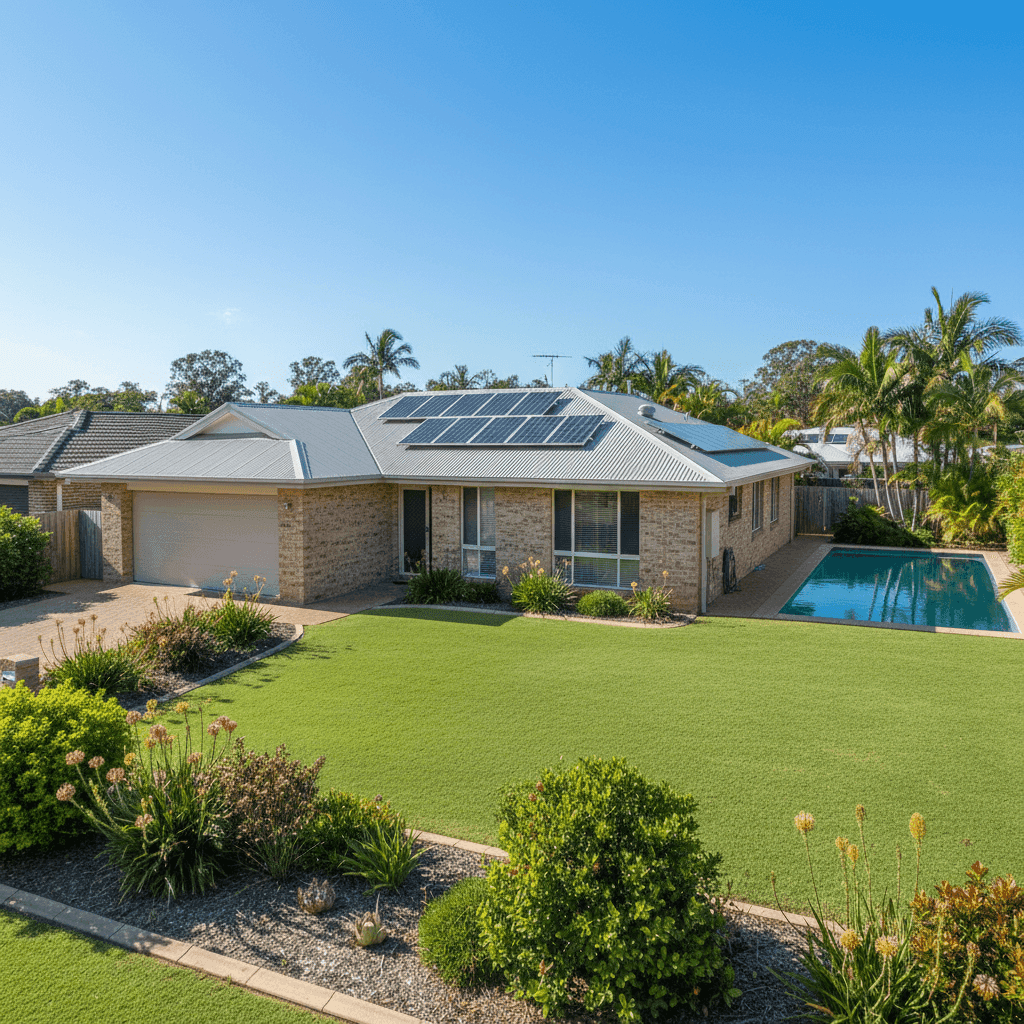
Bli Bli is a leafy residential suburb on Queensland's Sunshine Coast, sitting just inland from the Maroochy River and a short drive from the beach. It's become a popular choice for families seeking newer builds with space, and a 4-bedroom free-standing home here is a solid representation of what the suburb has to offer. If you own or are looking to insure a property like this, understanding what a fair premium looks like — and why — is an important step in protecting one of your biggest assets.
This article breaks down a real building insurance quote for a 4-bedroom, 2-bathroom free-standing home in Bli Bli, compares it against local, state, and national benchmarks, and offers practical tips to help you get the best value on your cover.
---
Is This Quote Fair?
The quote in question comes in at $1,752 per year (or $168/month) for building-only cover on a 268 sqm home insured for $600,000, with a $1,000 building excess. Our rating? Cheap — below average. That's a strong result for any homeowner.
To put it in perspective, the median home insurance premium across Bli Bli sits at $3,173 per year, meaning this quote is nearly 45% below the suburb median. It also sits well below the suburb's 25th percentile of $2,304 — in other words, it's cheaper than at least 75% of quotes recorded in the area. That's genuinely competitive pricing, not just marginally better than average.
A few factors likely contribute to this favourable outcome. The home was built in 2024, making it one of the newest properties in the area, and modern construction standards — particularly around cyclone tie-downs, waterproofing, and structural integrity — are reflected in lower risk assessments by insurers. The brick veneer walls and Colorbond steel roof are also materials that insurers tend to view positively, given their durability and resistance to weather damage.
---
How Bli Bli Compares
Home insurance premiums in Bli Bli, like much of Queensland, can vary enormously. The suburb average premium sits at $15,851 per year, which is heavily skewed by high-risk or high-value outlier properties — the median of $3,173 is a more reliable indicator of what most homeowners pay. The interquartile range (25th to 75th percentile) runs from $2,304 to $4,037, giving you a sense of the typical spread.
Zooming out to the state level, the Queensland average premium is $9,129 per year, with a median of $3,903. QLD consistently ranks as one of the most expensive states for home insurance in Australia, largely due to the prevalence of cyclone risk, flooding, and storm damage across the state. Even though Bli Bli is not classified as a cyclone risk area, being in Queensland still carries some pricing weight with many insurers.
At the national level, the average premium is $5,347/yr with a median of $2,764. This quote, at $1,752, sits below even the national median — a notable achievement for a Queensland property. Within the Sunshine Coast LGA, the average premium is $7,249/yr, making this quote look even more competitive within its immediate regional context.
| Benchmark | Premium |
|---|---|
| This Quote | $1,752/yr |
| Bli Bli Median | $3,173/yr |
| Bli Bli Average | $15,851/yr |
| QLD Median | $3,903/yr |
| QLD Average | $9,129/yr |
| National Median | $2,764/yr |
| National Average | $5,347/yr |
| Sunshine Coast LGA Average | $7,249/yr |
---
Property Features That Affect Your Premium
Several characteristics of this property work in the homeowner's favour from an insurance pricing perspective:
New Construction (2024) Brand-new homes are generally cheaper to insure because they're built to the latest Australian Standards, have no wear-and-tear history, and are less likely to have pre-existing defects. Insurers see newer builds as lower risk across the board.
Brick Veneer Walls Brick veneer is one of the most common and well-regarded wall materials in Australian residential construction. It offers good fire resistance and structural stability, both of which contribute to lower premiums compared to materials like weatherboard or lightweight cladding.
Steel/Colorbond Roof Colorbond roofing is highly regarded by insurers for its resistance to corrosion, fire, and wind. It's a durable, low-maintenance option that reduces the likelihood of weather-related claims.
Concrete Slab Foundation A slab foundation is considered one of the more stable and low-risk foundation types, particularly in Queensland's climate. It reduces the risk of subsidence and moisture-related damage.
Swimming Pool Pools add value to a property but can also increase the sum insured and, in some cases, the premium slightly — particularly if the pool equipment and surrounds are included in the building cover. It's worth confirming exactly what's covered under your policy.
Solar Panels Solar panels are increasingly common on Australian homes, but they're not always automatically covered under standard building policies. Check whether your panels are included in your building sum insured, and whether accidental damage or storm damage to panels is explicitly covered.
Ducted Climate Control Ducted air conditioning systems are fixed to the building structure and are typically covered under building insurance. However, they represent a meaningful portion of the rebuild cost, so it's important they're factored into your sum insured calculation.
No Cyclone Risk Bli Bli is not classified as a cyclone risk area, which is a meaningful pricing advantage over coastal and far-north Queensland properties. Cyclone risk premiums can add hundreds — sometimes thousands — of dollars to annual costs.
---
Tips for Homeowners in Bli Bli
1. Review your sum insured regularly Construction costs in Queensland have risen significantly in recent years. A $600,000 sum insured may be appropriate today, but it's worth reassessing annually to ensure it reflects current rebuild costs — not just the market value of your home. Underinsurance is one of the most common and costly mistakes homeowners make.
2. Confirm solar panels and pool equipment are covered These are two features that can fall into grey areas in standard building policies. Ask your insurer specifically whether solar panels, inverters, pool pumps, and filtration systems are included — and to what value.
3. Shop around at renewal Even if you're happy with your current premium, it pays to compare at renewal. Insurers regularly adjust their pricing models, and a quote that was competitive last year may not be the best available this year. Use a comparison tool like CoverClub to benchmark your renewal offer quickly.
4. Consider your excess level A $1,000 excess is fairly standard, but increasing your excess can reduce your annual premium. If you have a newer, well-built home with a low claims history, a higher excess might be a cost-effective trade-off — just make sure it's an amount you could comfortably cover in an emergency.
---
Compare Your Own Quote
Whether you're insuring a new build or reviewing an existing policy, it's always worth knowing where your premium sits relative to the market. CoverClub makes it easy to compare home insurance quotes from multiple providers and see real pricing data for your suburb. Get a quote today and find out if you're getting a fair deal — or paying more than you need to.