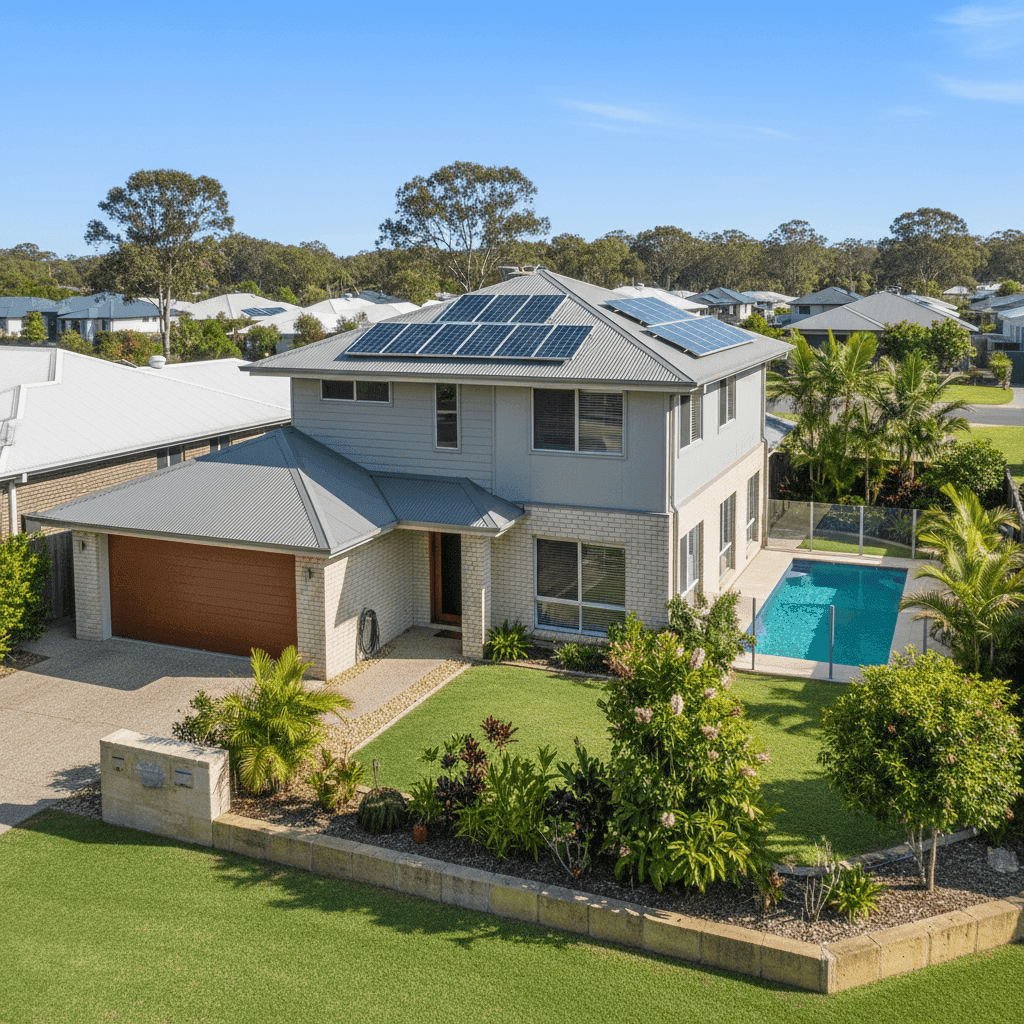
Bli Bli is a quiet residential suburb nestled in the Sunshine Coast hinterland, sitting just a short drive from the coast and the bustling Maroochydore town centre. It's an increasingly popular area for families, and newer builds — like this 2024-constructed, four-bedroom free standing home — are becoming a common sight across the suburb. If you're a homeowner in Bli Bli wondering whether your building insurance premium is reasonable, this analysis breaks down a real quote and puts it in context against local, state, and national benchmarks.
---
Is This Quote Fair?
The quote in question is $1,752 per year (or $168/month) for building-only cover on a four-bedroom, two-bathroom free standing home with a sum insured of $600,000 and a $1,000 building excess.
Based on data from CoverClub's national insurance statistics, this premium is rated CHEAP — below average across every meaningful benchmark we track. For a property in Queensland, where insurance costs have surged in recent years due to weather-related risks, landing a premium under $2,000 per year for a well-appointed modern home is a genuinely strong result.
The rating reflects not just the raw dollar figure, but how it sits relative to what other homeowners in the same suburb, state, and nationally are paying for comparable cover. In short: this is a competitive quote worth taking seriously.
---
How Bli Bli Compares
The pricing context here is striking — and worth understanding in detail.
| Benchmark | Premium |
|---|---|
| This quote | $1,752/yr |
| Bli Bli suburb median | $3,173/yr |
| Bli Bli suburb average | $15,851/yr |
| Bli Bli 25th percentile | $2,304/yr |
| Sunshine Coast LGA average | $7,249/yr |
| QLD state median | $3,903/yr |
| QLD state average | $9,129/yr |
| National median | $2,764/yr |
| National average | $5,347/yr |
A few things stand out immediately. First, the suburb average of $15,851 is extraordinarily high — well above the median of $3,173. This tells us that while most Bli Bli homeowners pay somewhere in the $2,300–$4,000 range, a segment of the market is paying extremely elevated premiums, likely driven by higher-risk properties or older construction. The average is being pulled upward by outliers.
This quote of $1,752 sits below the suburb's 25th percentile ($2,304), meaning it's cheaper than at least 75% of quotes recorded in the area. It's also well under the Queensland state median of $3,903 — impressive given that QLD premiums are themselves higher than the national median.
For a deeper look at how Bli Bli premiums are distributed, visit the Bli Bli suburb stats page.
---
Property Features That Affect Your Premium
Several characteristics of this property likely contribute to its favourable premium. Understanding these factors can help you make smarter decisions when reviewing your own cover.
Brand new construction (2024) Modern builds benefit enormously from current building codes, which mandate improved structural standards, fire resistance, and weather resilience. A home built in 2024 is far less likely to have ageing wiring, deteriorating plumbing, or outdated roofing — all of which can drive premiums higher for older properties.
Brick veneer walls Brick veneer is a well-regarded construction type from an insurer's perspective. It offers solid fire resistance and durability, and is generally viewed more favourably than lightweight cladding or weatherboard in risk assessments.
Steel/Colorbond roof Colorbond roofing is highly popular in Queensland for good reason — it's lightweight, durable, and performs well in high-wind events. Insurers tend to price it more competitively than terracotta or concrete tiles, which can crack or dislodge in storms.
Slab foundation A concrete slab foundation is considered low-risk from a subsidence and flooding perspective compared to elevated or suspended floor systems, and typically attracts no loading on premiums.
No cyclone risk designation Bli Bli sits outside the formal cyclone risk zone, which is a meaningful factor in QLD pricing. Properties further north — particularly in North Queensland — can face significant cyclone-related premium loadings. This property avoids that entirely.
Pool, solar panels, and ducted climate control These features add to the replacement value of the home and can increase the sum insured required. However, at $600,000 for a 268 sqm home with these inclusions, the sum insured appears well-calibrated. Underinsurance is a real risk in Australia — it's worth periodically reviewing whether your sum insured reflects current construction costs.
---
Tips for Homeowners in Bli Bli
1. Don't anchor to the suburb average The average premium in Bli Bli of $15,851 is heavily skewed by high-cost outliers. If you're currently paying significantly more than the median ($3,173), it's worth shopping around — you may find a much better rate without sacrificing cover quality.
2. Review your sum insured annually Construction costs in South East Queensland have risen sharply over recent years. A sum insured that was accurate in 2022 may now leave you underinsured. Use a building cost calculator or speak to a quantity surveyor to ensure your $600,000 (or equivalent) still reflects true replacement cost.
3. Consider the value of a higher excess If you're comfortable covering smaller claims out of pocket, opting for a higher excess (say, $2,500 instead of $1,000) can meaningfully reduce your annual premium. This strategy works well for newer homes with fewer maintenance-related claims.
4. Bundle strategically — but compare first Many insurers offer discounts when you combine building and contents cover under one policy. However, bundling doesn't always produce the best outcome. Use a comparison tool to check whether a combined policy beats two separate competitive quotes before committing.
---
Compare Your Own Quote
Whether you're buying, building, or simply due for a renewal, it pays to know where your premium sits relative to the market. CoverClub makes it easy to compare home insurance quotes from multiple insurers in one place — so you can see exactly what's available for your property in Bli Bli or anywhere else in Australia.