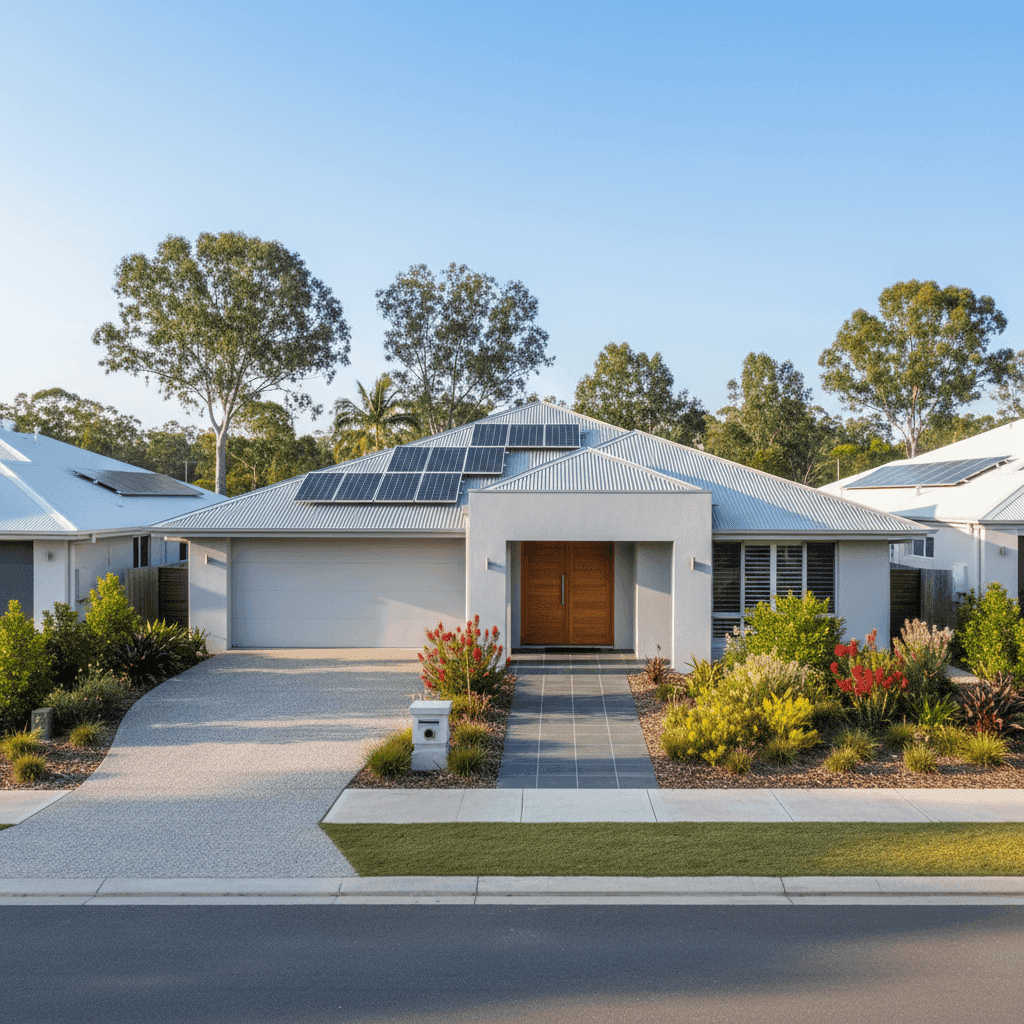
If you own a free standing home in Bluewater Park, QLD 4818, you already know that finding affordable home insurance in this part of North Queensland is no small feat. Sitting in the greater Townsville region, Bluewater Park is a coastal suburb that combines relaxed suburban living with some very real natural hazards — cyclones chief among them. So when a quote comes in well below the regional average, it's worth taking a closer look at what's driving that price and whether it truly represents good value.
This article breaks down a real home and contents insurance quote for a 3-bedroom, 1-bathroom free standing home in Bluewater Park, comparing it against suburb, state, and national benchmarks to help you understand what a fair premium looks like for your property.
---
Is This Quote Fair?
The quote in question comes in at $3,357 per year (or $324/month) for combined home and contents cover, with a building sum insured of $508,000 and contents valued at $80,000. The building excess sits at $3,000 and the contents excess at $1,000.
CoverClub rates this quote as CHEAP — below average — and the data backs that up convincingly.
To put it in context:
| Benchmark | Annual Premium |
|---|---|
| This quote | $3,357 |
| QLD state median | $3,903 |
| QLD state average | $9,129 |
| National median | $2,764 |
| National average | $5,347 |
| Townsville LGA average | $7,340 |
At $3,357, this premium sits below the Queensland median, well below the QLD state average, and comfortably below the Townsville LGA average of $7,340. It is slightly above the national median of $2,764, but that figure includes properties in far lower-risk areas across Australia — so the comparison is less meaningful for a cyclone-prone region like North Queensland.
For a property in a designated cyclone risk area, this is a genuinely competitive result.
---
How Bluewater Park Compares
Without suburb-level data available for Bluewater Park specifically, we can draw on the broader QLD state picture and the Townsville LGA figures to frame the comparison.
The Townsville LGA average of $7,340/year is a telling benchmark — it's more than double this quote. Queensland as a whole has some of the highest home insurance premiums in the country, driven by exposure to cyclones, flooding, and storm surge. The state average of $9,129 is nearly three times the national average, reflecting the elevated risk profile of properties across the Sunshine State.
Against this backdrop, a premium of $3,357 for a home in Bluewater Park represents meaningful savings. Homeowners in the Townsville region who haven't reviewed their policy recently may well be paying thousands more per year than necessary. You can explore how home insurance costs compare nationally to get a broader sense of where Queensland sits in the overall picture.
---
Property Features That Affect Your Premium
Several characteristics of this particular property are likely contributing to the competitive premium. Let's unpack the most significant ones.
Concrete External Walls
Concrete construction is highly regarded by insurers for its resilience against cyclonic winds and impact damage. Unlike timber or lightweight cladding, concrete walls offer superior structural integrity in high-wind events — a major consideration in North Queensland. This is one of the most premium-friendly building materials you can have in a cyclone risk area.
Steel / Colorbond Roof
Colorbond steel roofing is another tick in the insurer's favour column. It's lightweight, resistant to corrosion, and when properly installed and maintained, performs well in cyclonic conditions. Compared to older roofing materials like terracotta tiles or corrugated iron, Colorbond is generally viewed as a lower-risk roofing option.
Slab Foundation
A concrete slab foundation provides stability and reduces the risk of subsidence or movement — both of which can lead to costly structural claims. Insurers typically view slab foundations favourably compared to raised or timber stumped foundations.
Construction Year: 1999
Homes built in 1999 in Queensland were constructed under building codes that began incorporating more stringent cyclone-resistance requirements. While not as robust as post-2006 cyclone-rated standards, a 1999 build is still generally considered more resilient than older stock.
Solar Panels
The property includes solar panels, which add some value to the sum insured and can marginally affect premiums — solar systems need to be covered as part of the building or as a specified item. However, their presence here doesn't appear to have significantly inflated the quote.
Ducted Climate Control
Ducted air conditioning systems are a notable inclusion from an insurer's perspective, as they represent a significant asset that can be costly to repair or replace. This is factored into the building sum insured.
Standard Fittings
With standard-quality fittings throughout, the rebuild cost per square metre is kept reasonable. High-end or custom fittings can push rebuild estimates — and therefore premiums — considerably higher.
---
Tips for Homeowners in Bluewater Park
Whether you're reviewing an existing policy or shopping for the first time, here are some practical steps to make sure you're getting the best outcome.
1. Don't Underinsure Your Home
At $508,000 for a 130 sqm home, the building sum insured equates to roughly $3,908 per square metre — a reasonable estimate for a concrete home in regional Queensland. However, construction costs have risen sharply in recent years. It's worth getting a professional building valuation or using an online calculator to confirm your sum insured is still accurate.
2. Review Your Excess Settings
This policy carries a $3,000 building excess — higher than the standard $1,000–$2,000 range. A higher excess typically lowers your annual premium, which may be why this quote is competitive. Make sure you're comfortable covering that amount out of pocket in the event of a claim.
3. Check Your Cyclone-Specific Cover
In a designated cyclone risk area, always read the fine print around cyclone cover. Some policies include waiting periods (e.g., 72 hours after a cyclone watch is issued), exclusions for pre-existing damage, or separate cyclone excess provisions. Understanding these terms before disaster strikes is essential.
4. Compare Quotes Annually
The insurance market shifts constantly, and loyalty doesn't always pay. Given the significant gap between this quote and the Townsville LGA average, it's clear that premiums can vary enormously between providers for the same property. Make it a habit to compare quotes at CoverClub each year at renewal time.
---
Ready to See What You Could Be Paying?
Whether this quote reflects your own situation or you're simply curious about what home insurance should cost for a property like yours in Bluewater Park, the best next step is to compare. CoverClub makes it easy to benchmark your current premium against real market data and get quotes from multiple insurers in minutes. Enter your address at CoverClub and find out if you're paying a fair price — or if there's a better deal waiting for you.