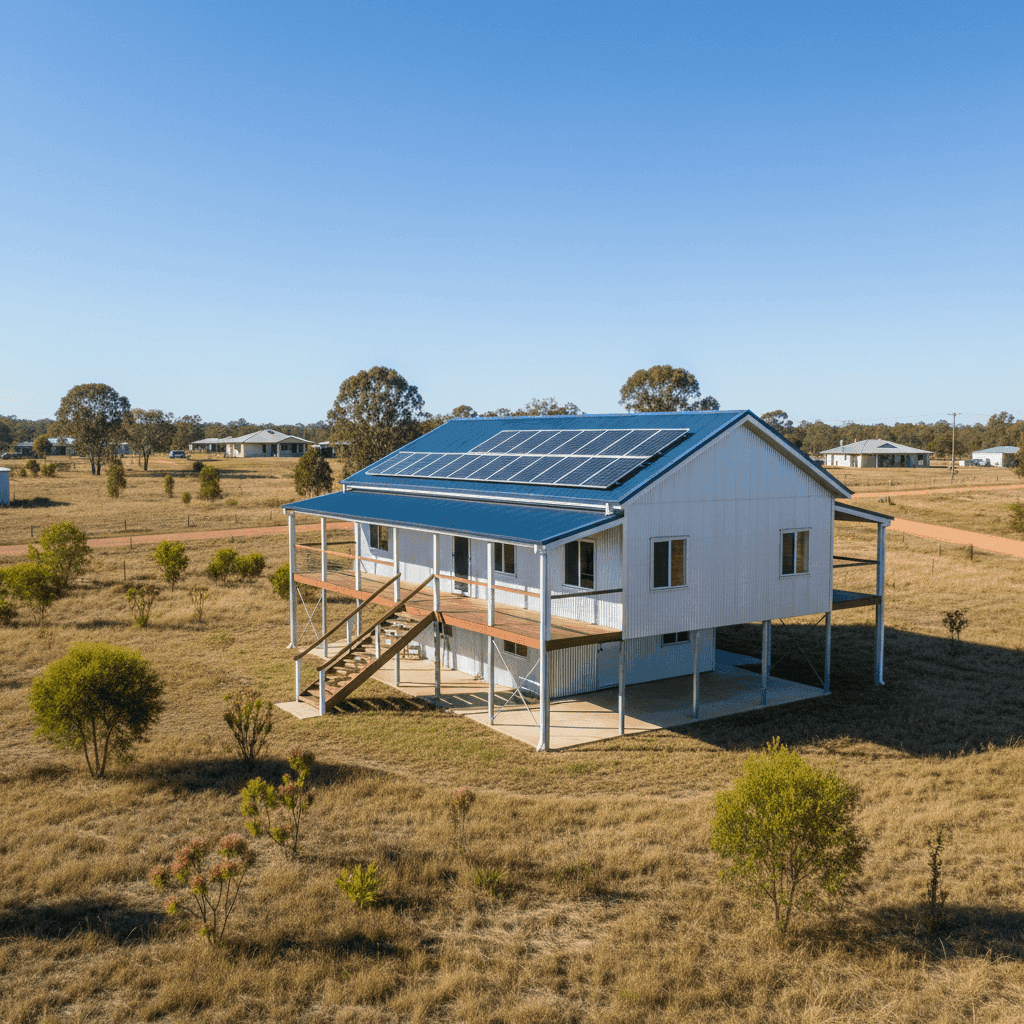
If you own a free standing home in Bluff, QLD 4702, you're probably no stranger to the question of whether your home insurance premium is fair value. Bluff is a small rural locality in the Central Highlands region of Queensland — a landscape that comes with its own set of insurance considerations, from older housing stock to the unique characteristics of regional construction. This article breaks down a real home and contents insurance quote for a four-bedroom, two-bathroom property in Bluff, compares it against state and national benchmarks, and offers practical tips to help you get the most out of your cover.
---
Is This Quote Fair?
The annual premium for this property came in at $2,407 per year (or $224 per month), covering both building (sum insured: $420,000) and contents ($100,000), each with a $500 excess.
Our price rating for this quote is CHEAP — below average — which is genuinely good news for the homeowner. To put that in context:
- The Queensland state average premium is $4,547/yr, and the median sits at $3,931/yr
- The national average is $2,965/yr, with a national median of $2,716/yr
This quote comes in 47% below the Queensland state average and 19% below the national average. Even compared to the national median — which tends to be a more conservative benchmark — this premium is still notably lower. For a home and contents policy covering $520,000 in total insured value, that's a strong result.
So yes — by any reasonable measure, this is a competitive quote.
---
How Bluff Compares
While suburb-level data for Bluff isn't available in our database (not surprising for a small regional locality), we can still draw meaningful comparisons using QLD state-wide data and national benchmarks.
Queensland is one of Australia's most expensive states for home insurance, largely driven by tropical weather events, flooding, and cyclone exposure in northern and coastal regions. The state average of $4,547/yr reflects the outsized risk premiums applied to higher-hazard postcodes — think Far North Queensland and coastal flood zones.
Bluff, sitting inland in the Central Highlands, doesn't carry the same cyclone or coastal flood risk that pushes premiums sky-high elsewhere in the state. That geographic advantage appears to be reflected in this quote. Inland Queensland properties — particularly those outside designated cyclone risk zones — often attract more moderate premiums, and this result is consistent with that pattern.
You can explore how Bluff compares to other Queensland suburbs and check the national picture to see where your property sits on the broader spectrum.
---
Property Features That Affect Your Premium
Every property has a unique combination of features that insurers weigh up when calculating risk. Here's how the key characteristics of this Bluff home likely influenced the quote:
Construction Year (1965)
At 60 years old, this is a well-aged home. Older properties can attract higher premiums due to the increased likelihood of wear in electrical wiring, plumbing, and structural components. However, if the home has been well-maintained or renovated over the decades, insurers may view it more favourably.
Aluminium External Walls
Aluminium cladding is relatively lightweight and resistant to corrosion — a practical choice in many regional Queensland settings. It's generally viewed as a moderate-risk material by insurers, neither as premium as brick nor as high-risk as some timber weatherboard configurations.
Steel/Colorbond Roof
Colorbond roofing is widely regarded as a durable, low-maintenance option that holds up well in Australian conditions. Insurers typically view steel roofing favourably compared to older materials like fibro or terracotta tiles, which can be more prone to storm damage or breakage.
Stump Foundation
Homes on stumps (also known as high-set or Queenslander-style foundations) are common in regional QLD. This construction style can offer advantages in flood-prone areas by elevating the living space, though it may introduce some vulnerability to underfloor damage if stumps deteriorate over time.
Solar Panels
This property has solar panels installed, which adds a modest amount to the insured value but also signals a well-maintained, modernised home. Insurers generally factor in the replacement cost of solar systems within the building sum insured — it's worth confirming your policy explicitly covers them.
Standard Fittings, Carpet Flooring
Standard-quality fittings and carpet flooring keep the rebuild and replacement cost estimates grounded. High-end fixtures and premium flooring materials can push contents and building valuations — and therefore premiums — higher.
No Pool, No Ducted Climate Control
The absence of a pool removes a common liability and maintenance risk factor. No ducted air conditioning also simplifies the building's mechanical systems, which can be a positive from an insurer's perspective.
---
Tips for Homeowners in Bluff
1. Review Your Building Sum Insured Regularly
Construction costs have risen sharply across regional Queensland in recent years. A sum insured of $420,000 for a 214 sqm home works out to roughly $1,963/sqm — make sure this reflects current rebuild costs in your area, not just the original purchase price or an outdated estimate.
2. Confirm Solar Panel Coverage
Solar panels are a valuable asset, but not all policies cover them automatically or comprehensively. Check whether your policy covers both the panels themselves and any inverter or battery storage systems, and whether damage from storms or power surges is included.
3. Check Your Stump and Underfloor Condition
Homes on stumps require periodic inspection to ensure the foundation remains sound. Insurers may not cover damage resulting from gradual deterioration or neglect, so staying on top of maintenance protects both your home and your claim eligibility.
4. Compare Quotes Before Renewal
Even if your current premium is below average, that doesn't mean it's the best available deal. Insurers reprice policies regularly, and loyalty doesn't always pay. Comparing quotes at renewal time — especially for a property with this profile — could yield further savings or better coverage terms.
---
Ready to Compare?
Whether you're happy with your current insurer or just curious about what else is out there, it pays to see the full picture. Get a home insurance quote at CoverClub and compare options tailored to your property in Bluff. With premiums varying dramatically across Queensland, a few minutes of comparison could make a real difference to what you pay.