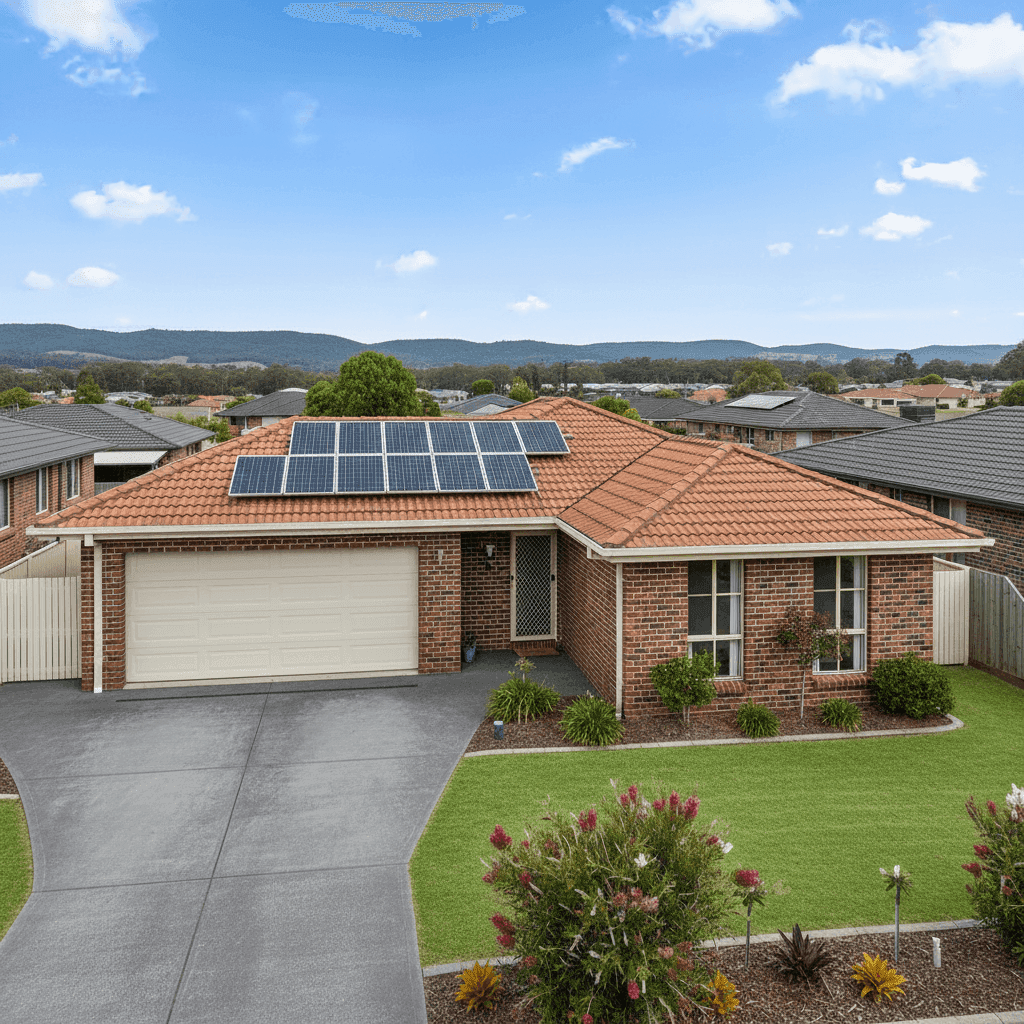
Boambee East is a well-established residential suburb on the mid-north coast of New South Wales, sitting just south of Coffs Harbour. It's a popular choice for families and retirees alike, offering a relaxed lifestyle close to beaches, schools, and local amenities. For homeowners in the area, understanding what you should be paying for home insurance — and whether your current quote is competitive — can make a real difference to your household budget.
This article examines a recent home and contents insurance quote for a three-bedroom, brick veneer free standing home in Boambee East (postcode 2452), and puts that figure into context against local, state, and national benchmarks.
---
Is This Quote Fair?
The annual premium for this property came in at $1,265 per year (or approximately $129 per month), covering both building (sum insured: $381,000) and contents ($50,000). Based on our pricing data, this quote is rated CHEAP — meaning it sits well below the average for the suburb.
To put that in perspective: the suburb average for Boambee East is $2,459 per year, and the median sits even higher at $2,584 per year. This quote is roughly 49% below the suburb average, which is a significant saving. Even compared to the cheapest quarter of quotes in the area (25th percentile: $2,223/yr), this premium is still considerably lower.
For a homeowner budgeting carefully, that's a potential saving of over $1,000 annually compared to what many neighbours may be paying. Of course, it's always worth checking what's included — particularly the excess levels. This quote carries a $3,000 building excess and a $1,000 contents excess, which are on the higher side and contribute to the lower premium. Higher excesses mean you'll pay more out of pocket when making a claim, so it's worth weighing that trade-off carefully.
---
How Boambee East Compares
When you zoom out beyond the suburb, the picture becomes even more interesting. Here's how this quote stacks up across different geographic benchmarks:
| Benchmark | Average Premium |
|---|---|
| This Quote | $1,265/yr |
| Boambee East (2452) Suburb Average | $2,459/yr |
| Boambee East Suburb Median | $2,584/yr |
| Coffs Harbour LGA Average | $3,228/yr |
| NSW State Average | $9,528/yr |
| NSW State Median | $3,770/yr |
| National Average | $5,347/yr |
| National Median | $2,764/yr |
A few things stand out here. The NSW state average of $9,528 per year looks startling at first glance, but it's heavily skewed by high-risk and high-value properties across the state — the median of $3,770 is a more representative figure. Similarly, the national average of $5,347 is pulled upward by cyclone-prone regions in Queensland and Western Australia.
Boambee East, by comparison, is a relatively moderate-risk area. It's not in a designated cyclone zone, and while coastal NSW does see storm and flood events, the suburb's elevation and geography keep it out of the highest-risk brackets. This goes a long way towards explaining why premiums in the area are more affordable than much of the state.
---
Property Features That Affect Your Premium
Several characteristics of this particular property work in favour of a lower premium:
Brick veneer construction is well regarded by insurers. It offers good resistance to fire and general weathering, and tends to attract lower premiums compared to timber-framed or clad homes. Combined with a tiled roof, this home presents a solid, durable profile that most underwriters view favourably.
Slab foundation is standard for homes built in this era and region, and doesn't introduce the added complexity of subfloor spaces that can be vulnerable to moisture or pest damage.
The home was built in 1998, placing it in a relatively modern bracket. Homes from this period generally comply with building codes that introduced improved standards for structural integrity and cyclone resistance (even in non-cyclone zones), which can positively influence premiums.
Solar panels are present on this property. While they add value to the home, they can sometimes nudge premiums slightly upward — insurers need to account for the replacement cost of panels and potential roofing complications during installation or repair. It's worth confirming with your insurer that solar panels are explicitly covered under your policy.
The standard fittings quality and carpet flooring keep the contents and internal replacement costs at a manageable level, which helps contain the overall premium. Homes with premium finishes or high-end appliances typically attract higher contents valuations and, consequently, higher premiums.
Notably, this property has no pool and no ducted climate control — both of which can add complexity and cost to a policy. Their absence here is a minor but meaningful factor keeping things straightforward.
---
Tips for Homeowners in Boambee East
Whether you're reviewing an existing policy or shopping around for the first time, here are some practical steps to make sure you're getting the right cover at the right price:
- Review your sum insured regularly. Building costs in regional NSW have risen significantly in recent years. Make sure your $381,000 building sum insured still reflects what it would genuinely cost to rebuild your home from scratch — not just its market value. Underinsurance is one of the most common and costly mistakes homeowners make.
- Understand your excess trade-off. A $3,000 building excess is quite high. While it helps lower your annual premium, it means smaller claims may not be worth lodging. Consider whether you'd be comfortable covering that amount out of pocket in the event of storm damage or a burst pipe.
- Check that your solar panels are covered. Not all standard home insurance policies automatically include solar panel systems. Ask your insurer directly, and check whether coverage extends to the panels themselves, inverter, and any damage caused during panel-related roof work.
- Compare quotes at renewal time. Insurance loyalty rarely pays off in Australia. Premiums can vary dramatically between providers for the same property — as this comparison clearly shows. Using a comparison tool like CoverClub at renewal time takes just a few minutes and could save you hundreds of dollars a year.
---
Ready to Compare?
Whether you're a homeowner in Boambee East or anywhere else in Australia, it pays to shop around. CoverClub makes it easy to compare home and contents insurance quotes in minutes, so you can see exactly how your premium stacks up — and whether there's a better deal waiting for you. Get a quote today at CoverClub and find out what you should really be paying.