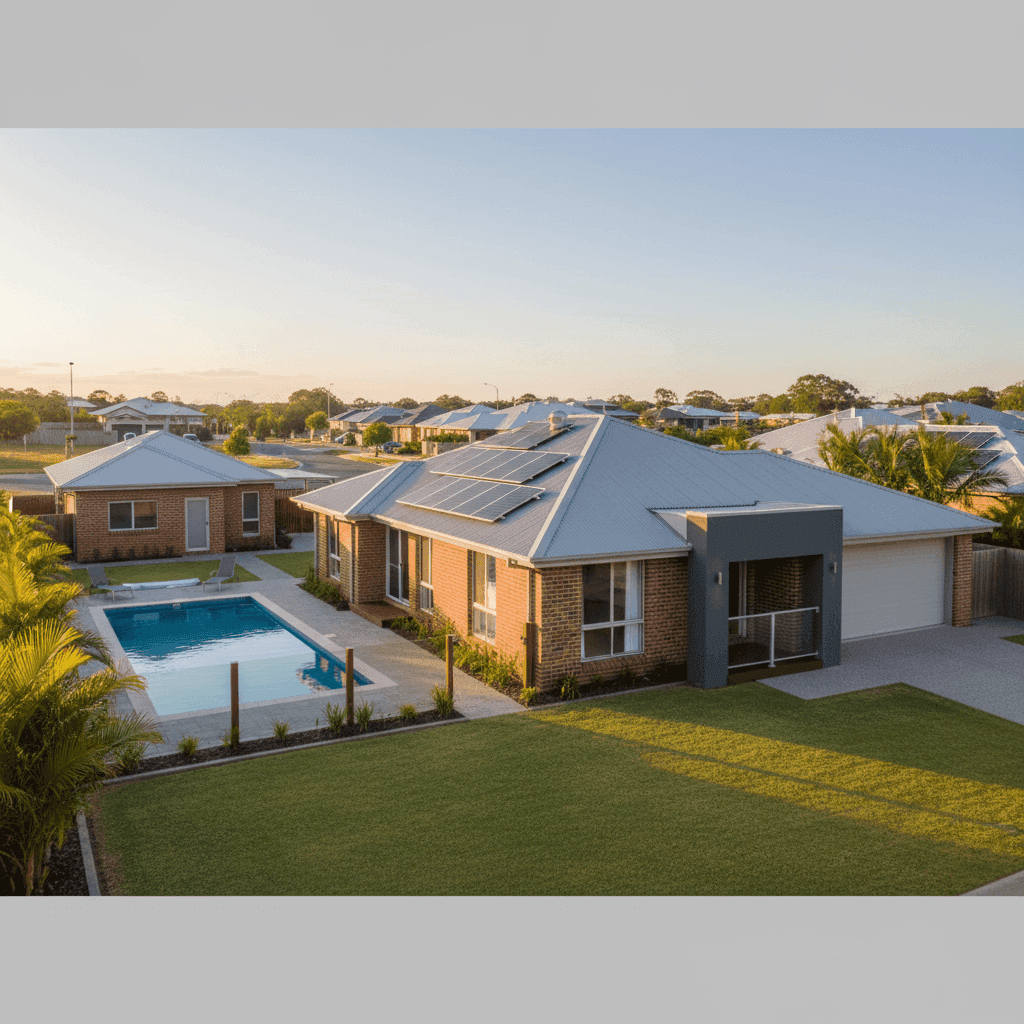
If you own a free standing home in Bogangar, NSW 2488, you're living in one of the Northern Rivers' most relaxed coastal communities — but that lifestyle comes with its own insurance considerations. This article breaks down a real home and contents insurance quote for a four-bedroom, two-bathroom brick veneer home in the suburb, and puts the numbers in context so you can judge whether you're getting a fair deal.
---
Is This Quote Fair?
The quote in question comes in at $3,675 per year (or $359/month) for combined home and contents cover, with a building sum insured of $950,000 and contents valued at $80,000. Both the building and contents excess are set at $5,000.
Our analysis rates this quote as Expensive (Above Average). That label doesn't necessarily mean it's the wrong policy — excess levels, inclusions, and insurer reputation all matter — but it does mean this premium sits above what most comparable properties in the area are paying.
To put it plainly: at $3,675/yr, this quote is $800 above the Bogangar suburb average of $2,875/yr, and $1,186 above the suburb median of $2,489/yr. That's a meaningful gap worth investigating before you sign on the dotted line.
That said, it's worth noting the quote falls below the NSW state average of $3,801/yr and the Tweed LGA average of a striking $5,645/yr — so while it's on the higher end locally, it's not out of step with broader regional pricing trends.
---
How Bogangar Compares
Understanding where your premium sits within the wider market helps you make a more informed decision. Here's how the numbers stack up:
| Benchmark | Annual Premium |
|---|---|
| This Quote | $3,675 |
| Bogangar Suburb Average | $2,875 |
| Bogangar Suburb Median | $2,489 |
| Bogangar 25th Percentile | $1,921 |
| Bogangar 75th Percentile | $3,634 |
| NSW State Average | $3,801 |
| NSW State Median | $3,410 |
| National Average | $2,965 |
| National Median | $2,716 |
| Tweed LGA Average | $5,645 |
A few things stand out here. First, the Tweed LGA average of $5,645/yr is dramatically higher than the suburb-level figures — this likely reflects a wide mix of property types and risk profiles across the broader Tweed region, including areas with greater flood or storm exposure. Bogangar's own suburb median of $2,489/yr suggests that many homeowners in the area are finding more competitive pricing.
Second, this quote sits just above the suburb's 75th percentile ($3,634/yr), meaning it's pricier than roughly three-quarters of comparable quotes in the postcode. That's a signal worth acting on.
You can explore the full pricing data for the area on our Bogangar suburb stats page, or compare it against NSW-wide insurance trends and national benchmarks.
---
Property Features That Affect Your Premium
Several characteristics of this property directly influence what insurers charge. Understanding them helps explain the premium — and may reveal opportunities to reduce it.
Brick Veneer Walls & Colorbond Roof
Brick veneer construction is generally viewed favourably by insurers. It's durable, fire-resistant, and widely understood by assessors. The steel Colorbond roof is similarly well-regarded — it's lightweight, long-lasting, and performs well in high-wind conditions. Together, these materials typically attract more competitive premiums compared to, say, weatherboard or fibrous cement cladding.
Slab Foundation & Tiled Flooring
A concrete slab foundation is a solid base (literally) for insurance purposes. It's less susceptible to subsidence and termite damage than timber stumps. Tiled flooring is also a low-risk material — easy to repair and resistant to water damage. Both features are likely working in this homeowner's favour.
Swimming Pool
A pool adds value to a property but also introduces liability considerations. Most insurers factor in the presence of a pool when calculating premiums, particularly around public liability cover. It's worth confirming your policy explicitly covers pool-related incidents and structures.
Solar Panels
Solar panels are an increasingly common feature on Australian homes, but they do add complexity for insurers. They increase the rebuild cost and can be a source of claims if damaged by storms or hail. Ensure your building sum insured accounts for the full replacement value of your solar system — a common oversight that leaves homeowners underinsured.
Granny Flat
The presence of a granny flat is a significant factor. Additional dwellings on a property increase the insurable value of the site and can affect how claims are assessed. Some insurers treat granny flats as a separate structure requiring additional cover, while others include them under the main building policy — always confirm which applies.
1993 Construction & Standard Fittings
A home built in 1993 is well past the 30-year mark, which can lead some insurers to apply age-related loading. Standard fittings keep the replacement cost calculation relatively straightforward, which is a positive. However, it's worth reviewing whether your $950,000 sum insured accurately reflects current construction costs, including the granny flat and any upgrades made since the original build.
High Excess
Both the building and contents excess are set at $5,000 — which is on the higher end. A higher excess typically reduces your premium, so the fact that this quote is still rated expensive despite a $5,000 excess suggests the base risk pricing is elevated. If you're comfortable with the excess, this may be a lever to pull further; if not, a lower excess could cost you even more.
---
Tips for Homeowners in Bogangar
1. Shop around — seriously With this quote sitting above the suburb's 75th percentile, there's a real chance a comparable policy is available for less. Use a comparison service like CoverClub to get multiple quotes side by side and identify where you can save without sacrificing cover.
2. Review your sum insured carefully At $950,000, the building sum insured is substantial — but make sure it reflects the true cost of rebuilding your home from scratch, including the granny flat, solar panels, pool infrastructure, and any renovations. Underinsurance is a common and costly mistake; overinsurance means you're paying more than necessary.
3. Check what your policy says about the granny flat and solar panels These two features are frequent sources of claims disputes. Ask your insurer directly: Is the granny flat covered as part of the main dwelling or separately? Are solar panels covered for storm and hail damage? Get the answers in writing before you commit.
4. Consider whether a lower excess makes sense for you A $5,000 excess means you'll cover the first $5,000 of any claim out of pocket. For a property with a pool, solar panels, and a granny flat — all of which carry their own risk profiles — it's worth modelling whether a lower excess (say, $1,000–$2,500) provides better value overall, especially if you've had claims in the past.
---
Ready to Compare?
If this quote has you wondering whether you're overpaying, the best next step is simple: compare. CoverClub makes it easy to benchmark your premium against real quotes from multiple insurers — all in one place, with no obligation. Get started with your address here and see what Bogangar homeowners like you are actually paying.