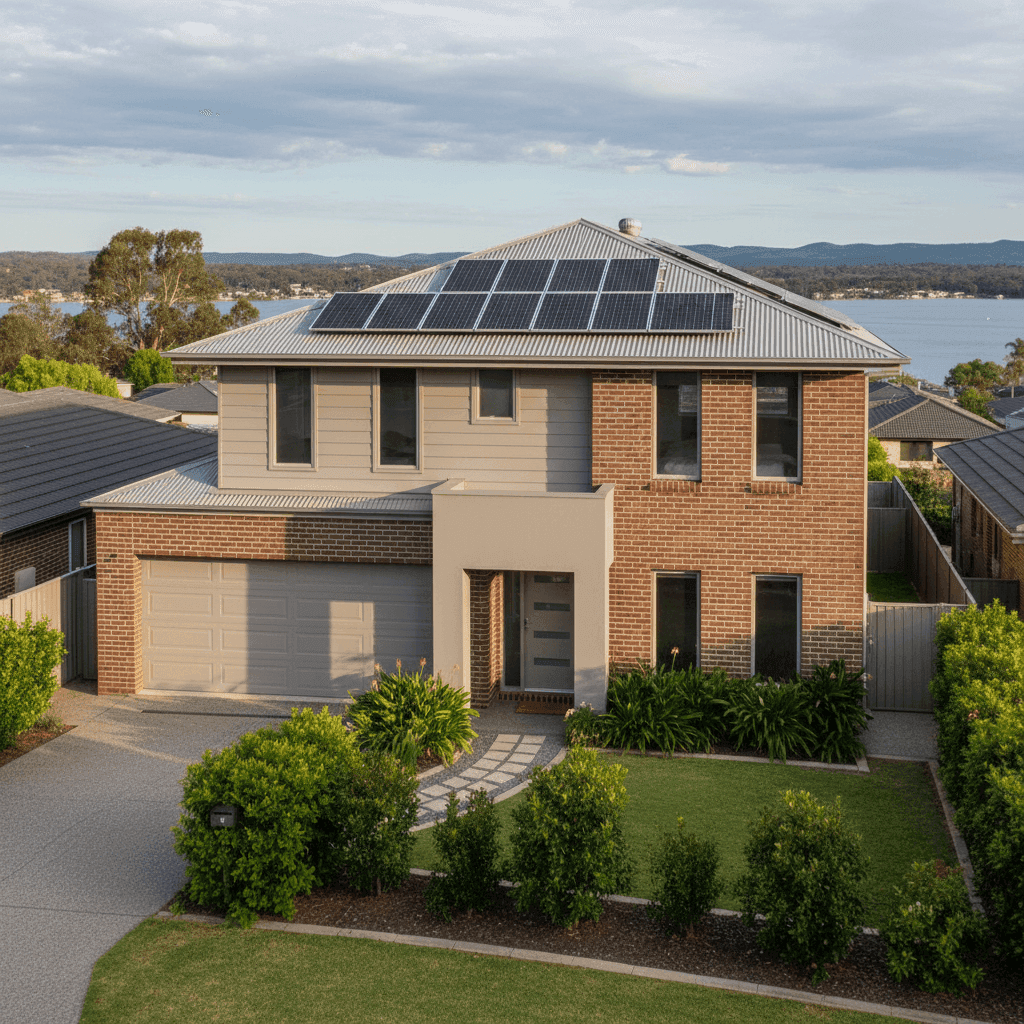
If you own a free standing home in Bonnells Bay, NSW 2264, you're likely no stranger to the joys of lakeside living on the shores of Lake Macquarie. But with the perks of the location come real questions about the cost of protecting your property. This article breaks down a recent home and contents insurance quote for a four-bedroom home in the area, compares it against suburb, state, and national benchmarks, and offers practical advice for getting better value on your cover.
---
Is This Quote Fair?
The quote in question comes in at $3,502 per year (or $336/month) for a combined home and contents policy, covering a building sum insured of $990,000 and contents valued at $10,000, each with a $1,000 excess.
Our price rating for this quote is EXPENSIVE — Above Average.
To put that in perspective, the suburb average for Bonnells Bay sits at just $2,143/year, with a median of $1,861/year. That means this quote is roughly 63% above the suburb average and nearly 88% above the median. Even comparing against the suburb's 75th percentile — $2,776/year — this quote still comes in higher.
So what's driving the cost up? A few factors are likely at play. The building sum insured of $990,000 is substantial for the area, and that figure alone will have a significant bearing on the premium. The property also sits on stumps (a raised foundation), which can be flagged as a higher-risk construction type by some insurers. Timber and laminate flooring, while common, can also attract a slightly higher rebuild cost in the event of water or fire damage.
That said, it's worth noting that a single quote from one insurer doesn't tell the whole story. Premiums can vary dramatically between providers for the same property — sometimes by hundreds or even thousands of dollars.
---
How Bonnells Bay Compares
Understanding where your suburb sits in the broader landscape can help you gauge whether you're being asked to pay a fair price.
| Benchmark | Average Premium | Median Premium |
|---|---|---|
| Bonnells Bay (2264) | $2,143/yr | $1,861/yr |
| NSW State | $9,528/yr | $3,770/yr |
| National | $5,347/yr | $2,764/yr |
| Lake Macquarie LGA | $11,064/yr | — |
Based on CoverClub quote data. [View NSW stats](https://coverclub.com.au/stats/NSW) or [national stats](https://coverclub.com.au/stats/national).
At first glance, the NSW state average of $9,528/year looks alarming — but that figure is heavily skewed by high-risk coastal and flood-prone postcodes across the state. The median of $3,770/year is a far more representative number for typical NSW homeowners.
Similarly, the Lake Macquarie LGA average of $11,064/year is strikingly high, likely pulled upward by flood-exposed suburbs around the lake's lower-lying fringes. Bonnells Bay's suburb-level figures are considerably more modest, which suggests the area is viewed as relatively lower risk compared to many of its LGA neighbours.
On a national basis, the median premium of $2,764/year is close to what Bonnells Bay homeowners are typically paying — suggesting the suburb sits around the middle of the national risk spectrum.
Given all of this, the $3,502 quote analysed here is above what most Bonnells Bay homeowners are paying, though it's worth remembering the high building sum insured is a significant contributor.
---
Property Features That Affect Your Premium
Several characteristics of this property are worth examining when thinking about insurance costs.
Brick veneer construction is generally well-regarded by insurers. It offers solid fire resistance and durability, and tends to attract more competitive premiums compared to full-timber or weatherboard homes.
Steel/Colorbond roofing is another positive from an insurer's perspective. Colorbond is lightweight, durable, and performs well in high-wind events — making it a preferred roofing material across much of regional NSW.
Stump foundations, however, can be a double-edged sword. While they allow for good underfloor ventilation (particularly important in humid lakeside environments), they can also be associated with higher repair costs if subfloor damage occurs, and some insurers price this risk accordingly.
Timber and laminate flooring adds to the rebuild cost calculation. These materials are more expensive to replace than concrete slab finishes, which can push the estimated sum insured — and therefore the premium — higher.
Solar panels are an increasingly common feature and are typically covered under home insurance, but they do add to the overall replacement value of the home. It's worth confirming with your insurer that your panels are explicitly included in your building sum insured.
Ducted climate control is another high-value fixed asset that contributes to the building replacement cost. Systems like these can cost tens of thousands of dollars to replace, so ensuring your sum insured accounts for this is important.
With a building sum insured of $990,000, this property is insured at a level that reflects its size (235 sqm), quality of fittings, and these additional features. Underinsuring to reduce premiums can be a costly mistake — but it's equally worth verifying that the sum insured is accurate and not inflated beyond what a full rebuild would actually cost.
---
Tips for Homeowners in Bonnells Bay
1. Compare multiple quotes before renewing The single biggest thing you can do to reduce your premium is shop around. Our data shows significant variation between insurers for identical properties in the same suburb. A quote that seems standard from your current provider could be 30–50% higher than a competitor's offer for equivalent cover. Use CoverClub to compare quotes side by side.
2. Review your sum insured carefully Make sure your building sum insured reflects the actual cost to rebuild — not the market value of your home. Overinsuring means you're paying a higher premium than necessary, while underinsuring leaves you exposed at claim time. Consider using a professional building cost estimator or speaking with a local builder for a realistic figure.
3. Ask about discounts for security and safety features Many insurers offer discounts for homes with monitored alarms, deadbolts, and smoke detectors. If your home has these features and you haven't declared them, you could be leaving money on the table.
4. Consider a higher excess to lower your premium If you're financially comfortable absorbing a larger out-of-pocket cost in the event of a claim, increasing your excess from $1,000 to $2,000 or more can meaningfully reduce your annual premium. Just make sure the trade-off makes sense for your situation.
---
Find a Better Deal with CoverClub
Whether you're renewing your existing policy or shopping for cover on a new purchase, CoverClub makes it easy to see what's available in your area. Our free comparison tool lets you get a home insurance quote in minutes, so you can see exactly where your premium sits against the suburb average — and find out if you're paying more than you should be.