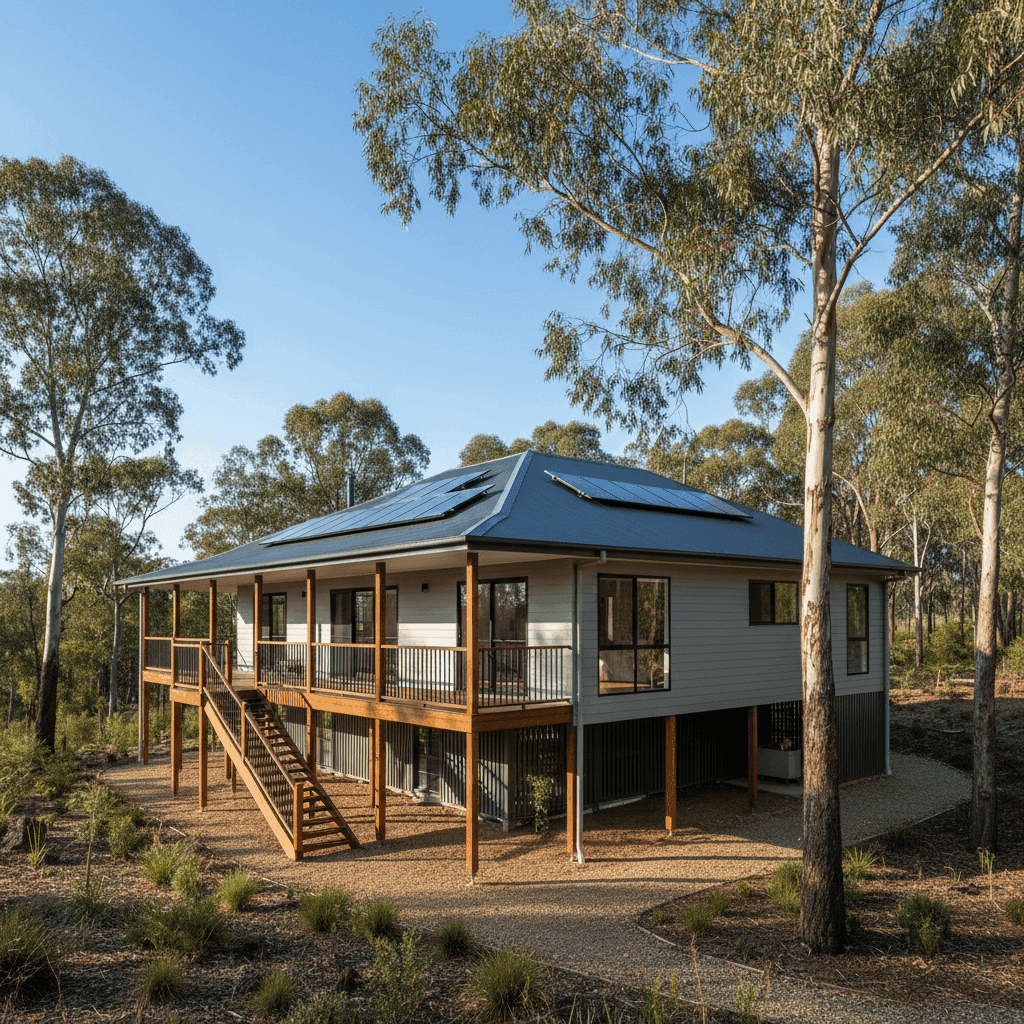
If you own a four-bedroom free standing home in Bonnie Doon, VIC 3720, you've probably noticed that home insurance isn't cheap — and a recent quote of $4,071 per year (or around $417/month) for combined home and contents cover is a good reminder of just how much this cost can vary. Bonnie Doon is a small lakeside town in the Mansfield region of Victoria, best known for its proximity to Lake Eildon. It's a beautiful place to live, but its rural and semi-bushland setting comes with unique risks that insurers factor carefully into their pricing.
In this article, we break down whether this quote represents fair value, how it compares to local and national benchmarks, and what property features are likely driving the premium — plus some practical tips to help you manage costs.
---
Is This Quote Fair?
The short answer: this quote is rated as expensive — above average for the area.
At $4,071 per year, this premium sits well above both the Bonnie Doon suburb average of $2,667/yr and the suburb median of $2,333/yr. In fact, it's more than double the suburb's 25th percentile ($1,853/yr), meaning at least a quarter of comparable properties in the area are being insured for less than half this amount. Even the 75th percentile sits at $3,063/yr — still comfortably below this quote.
That said, context matters. The sum insured for the building is set at $891,000, which is a substantial rebuild value and likely reflects the property's 244 sqm footprint, quality construction, and modern fittings. The contents are covered for $40,000. A higher sum insured naturally pushes the premium up, so it's worth asking whether your building's replacement value is calibrated correctly — over-insuring is a common driver of unnecessarily high premiums.
The building excess of $4,000 is also on the higher side, which typically acts to reduce the base premium somewhat. If this quote is still coming in expensive despite that elevated excess, it suggests the underlying risk profile of the property is a significant factor.
---
How Bonnie Doon Compares
To put this quote in perspective, here's how it stacks up across different benchmarks:
| Benchmark | Annual Premium |
|---|---|
| This Quote | $4,071 |
| Bonnie Doon Suburb Average | $2,667 |
| Bonnie Doon Suburb Median | $2,333 |
| Bonnie Doon 75th Percentile | $3,063 |
| Mansfield LGA Average | $3,529 |
| VIC State Average | $3,000 |
| VIC State Median | $2,718 |
| National Average | $5,347 |
| National Median | $2,764 |
A few things stand out here. While this quote exceeds the suburb and state averages, it's notably below the national average of $5,347/yr — a figure heavily influenced by high-risk regions in Queensland and Western Australia. It also sits above the Mansfield LGA average of $3,529/yr, suggesting this particular property carries additional risk factors beyond what's typical for the broader council area.
The suburb sample size is relatively small (20 quotes), so the local averages should be interpreted with some caution — there's less data to smooth out outliers compared to larger urban areas.
---
Property Features That Affect Your Premium
Several characteristics of this property are likely influencing the premium, both upward and downward:
🏠 Construction: Hardiplank / Hardiflex Walls & Colorbond Roof
Fibre cement cladding like Hardiplank and Hardiflex is generally well-regarded by insurers for its fire resistance and durability. Similarly, a steel Colorbond roof is considered a low-maintenance, resilient choice. These materials can have a moderating effect on premiums compared to, say, timber weatherboard or tile roofs.
🏗️ Stumped Foundation & Elevated Design
The home sits on stumps and is elevated by less than one metre. Elevated homes can be more vulnerable to wind uplift and sub-floor damage, which some insurers price accordingly. On the flip side, a slight elevation can offer some protection against surface water flooding — a relevant consideration near Lake Eildon.
☀️ Solar Panels
The presence of solar panels adds replacement cost to the building sum insured and can be a minor premium driver. It's worth confirming with your insurer that your panels are explicitly covered under the building policy, as coverage varies.
❄️ Ducted Climate Control
Ducted heating and cooling systems are a meaningful inclusion in the building's replacement value. They're expensive to reinstall and are typically covered under the building component of a home and contents policy.
🌳 Bushfire Proximity
Bonnie Doon and the broader Mansfield region sit within a high bushfire risk zone. This is arguably the single most significant factor pushing premiums above the national median for properties in this area. Insurers assess Bushfire Attack Level (BAL) ratings when pricing policies, and homes in regional Victoria near forested areas routinely attract loading for this risk.
---
Tips for Homeowners in Bonnie Doon
1. Review Your Sum Insured Annually
Building costs change every year. Use a reputable building cost calculator (many insurers offer one) to check whether $891,000 accurately reflects your home's current rebuild cost — not its market value. Over-insuring is surprisingly common and directly inflates your premium.
2. Shop Around — Seriously
With only 20 quotes in the local dataset, there's meaningful variation between insurers for properties in this area. A quote that's expensive with one provider may be average with another. Use a comparison tool like CoverClub to see multiple quotes side by side without having to ring around.
3. Consider Bushfire Mitigation Measures
Some insurers offer discounts or more favourable pricing if you can demonstrate active bushfire risk reduction — such as maintaining a defendable space around the home, installing ember guards on vents, or using bushfire-rated materials. Check with your insurer whether any of these steps could reduce your premium.
4. Weigh Up Your Excess Settings
The building excess on this quote is $4,000 — that's a significant out-of-pocket cost if you need to claim. While a higher excess generally lowers your premium, make sure it's a figure you could genuinely afford in an emergency. If cashflow is a concern, it may be worth comparing quotes with a lower excess to understand the trade-off.
---
Ready to Compare?
Whether you think this quote is fair or feels too high, the best way to find out is to compare. CoverClub makes it easy to benchmark your home insurance premium against real quotes from across Australia. Enter your address and get started today — it takes just a few minutes and could save you hundreds.
You can also explore local pricing data for Bonnie Doon, browse Victoria-wide insurance statistics, or see how your premium stacks up against national benchmarks.