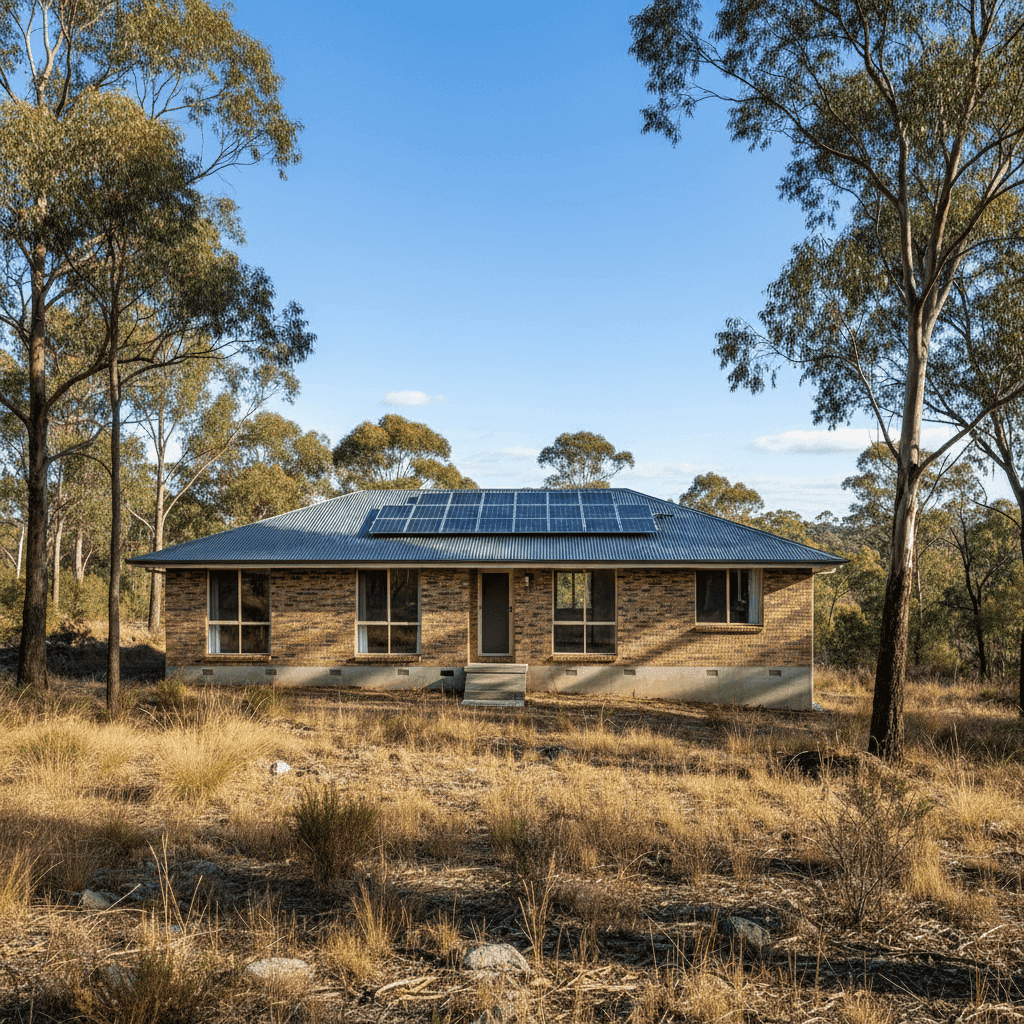
If you own a free standing home in Bonnie Doon, VIC 3720, you're likely no stranger to the unique mix of lifestyle appeal and environmental considerations that come with living in the Mansfield region. Nestled near Lake Eildon in the Victorian High Country foothills, Bonnie Doon is a popular destination for holiday homes and permanent residents alike — but its semi-rural setting and bushfire-prone landscape mean home insurance is anything but an afterthought.
This article breaks down a real home and contents insurance quote for a 4-bedroom, 2-bathroom free standing home in Bonnie Doon, comparing it against local, state and national benchmarks to help you understand whether you're getting a fair deal.
---
Is This Quote Fair?
The quote in question comes in at $3,858 per year (or $370 per month) for combined home and contents cover, with a building sum insured of $526,000 and contents valued at $150,000. The building excess is $2,000 and the contents excess is $1,000.
Our price rating for this quote is Expensive — Above Average.
To put that in context: the suburb average for Bonnie Doon sits at $2,667 per year, with a median of $2,333. This quote is roughly 45% above the suburb average and sits well above the 75th percentile of $3,063 — meaning it's more expensive than at least three-quarters of comparable quotes in the area.
That said, the sum insured here is substantial. A $526,000 building cover for a 139 sqm double brick home built in 1985 is on the higher end, and the $150,000 contents value adds meaningful weight to the total premium. If the sum insured is accurate and well-justified, the premium may reflect appropriate coverage rather than simply poor value — but it's still worth shopping around.
---
How Bonnie Doon Compares
Understanding where your premium sits relative to broader benchmarks is key to making an informed decision.
| Benchmark | Annual Premium |
|---|---|
| This Quote | $3,858 |
| Bonnie Doon Suburb Average | $2,667 |
| Bonnie Doon Suburb Median | $2,333 |
| LGA (Mansfield) Average | $3,529 |
| VIC State Average | $3,000 |
| VIC State Median | $2,718 |
| National Average | $5,347 |
| National Median | $2,764 |
Based on 20 quotes sampled in the Bonnie Doon area.
A few things stand out here. First, the Mansfield LGA average of $3,529 is notably higher than the broader Victorian state average of $3,000 — a clear signal that insurers price this region with elevated risk in mind, almost certainly reflecting bushfire exposure. This quote at $3,858 exceeds even the LGA average, which is worth querying with your insurer.
On the national scale, this quote is actually below the national average of $5,347, which is skewed heavily by high-risk coastal and cyclone-prone regions in Queensland and Western Australia. The more meaningful comparison is the national median of $2,764, against which this quote looks considerably more expensive.
For a full picture of how Victorian premiums stack up, you can explore the VIC state insurance stats.
---
Property Features That Affect Your Premium
Several characteristics of this particular property have a meaningful influence on what insurers charge.
Double Brick Construction Double brick walls are generally viewed favourably by insurers — they're durable, fire-resistant, and less susceptible to storm damage than timber or clad alternatives. This construction type can work in your favour when it comes to pricing.
Steel/Colorbond Roof Colorbond roofing is another positive from an insurer's perspective. It's lightweight, resistant to ember attack, and handles the temperature extremes of inland Victoria well. It's considered a lower-risk roofing material compared to older terracotta or concrete tiles that can crack or dislodge.
Built in 1985 A home approaching 40 years old introduces some underwriting caution. Older homes may have ageing electrical wiring, plumbing, or structural elements that increase the likelihood of a claim. Some insurers apply age-related loadings, which could be contributing to the above-average premium here.
Solar Panels The presence of solar panels adds replacement cost to the building sum insured. Panels are typically covered under building insurance, but they do increase the overall insured value — and in bushfire-prone areas, they represent an additional asset at risk.
Ducted Climate Control Ducted heating and cooling systems are a meaningful inclusion in the building's replacement value. These systems can cost tens of thousands of dollars to replace, and their presence in the sum insured calculation is appropriate and expected.
Elevated Less Than 1 Metre A slight elevation can assist with drainage and reduce flood risk, though at under one metre it provides limited protection against significant inundation. It's unlikely to have a major premium impact either way.
Bushfire Proximity While not listed as a specific property feature above, Bonnie Doon's location near Lake Eildon and surrounding bushland means most properties in the area carry a bushfire risk rating. This is almost certainly a primary driver of the elevated premiums seen across the Mansfield LGA.
---
Tips for Homeowners in Bonnie Doon
1. Review Your Sum Insured Carefully At $526,000, the building sum insured is the single biggest lever on your premium. Make sure this figure reflects the actual cost to rebuild — not the market value of the property. Overinsuring can be just as costly as underinsuring. Use a building cost calculator or consult a quantity surveyor to validate the figure.
2. Compare Multiple Quotes This quote sits above the suburb average and the LGA average. That doesn't mean it's wrong for your circumstances, but it does mean you should be comparing. Get a quote through CoverClub to see how other insurers price your specific property.
3. Ask About Bushfire Mitigation Discounts Some insurers offer premium reductions for proactive bushfire preparation — things like ember guards on vents, cleared gutters, maintained asset protection zones, and BAL (Bushfire Attack Level) compliance upgrades. It's worth asking your insurer directly whether any of these measures could reduce your loading.
4. Consider Your Excess Settings The building excess on this quote is $2,000. Opting for a higher voluntary excess can reduce your annual premium, though it means more out-of-pocket cost if you do need to claim. For a well-maintained home where you're less likely to make smaller claims, a higher excess strategy can make financial sense.
---
Ready to Compare?
Whether this quote reflects the right cover for your home or you suspect there's a better deal out there, the smartest move is to compare. CoverClub makes it easy to benchmark your premium against real quotes from across Australia.
Get a home insurance quote for your Bonnie Doon property →
You can also explore detailed Bonnie Doon suburb insurance statistics to see how premiums in your area have trended over time.
---
Premium data is based on quotes sampled in the Bonnie Doon area (postcode 3720). Individual premiums vary based on insurer, coverage level, property characteristics, and risk profile. This article is general in nature and does not constitute financial advice.