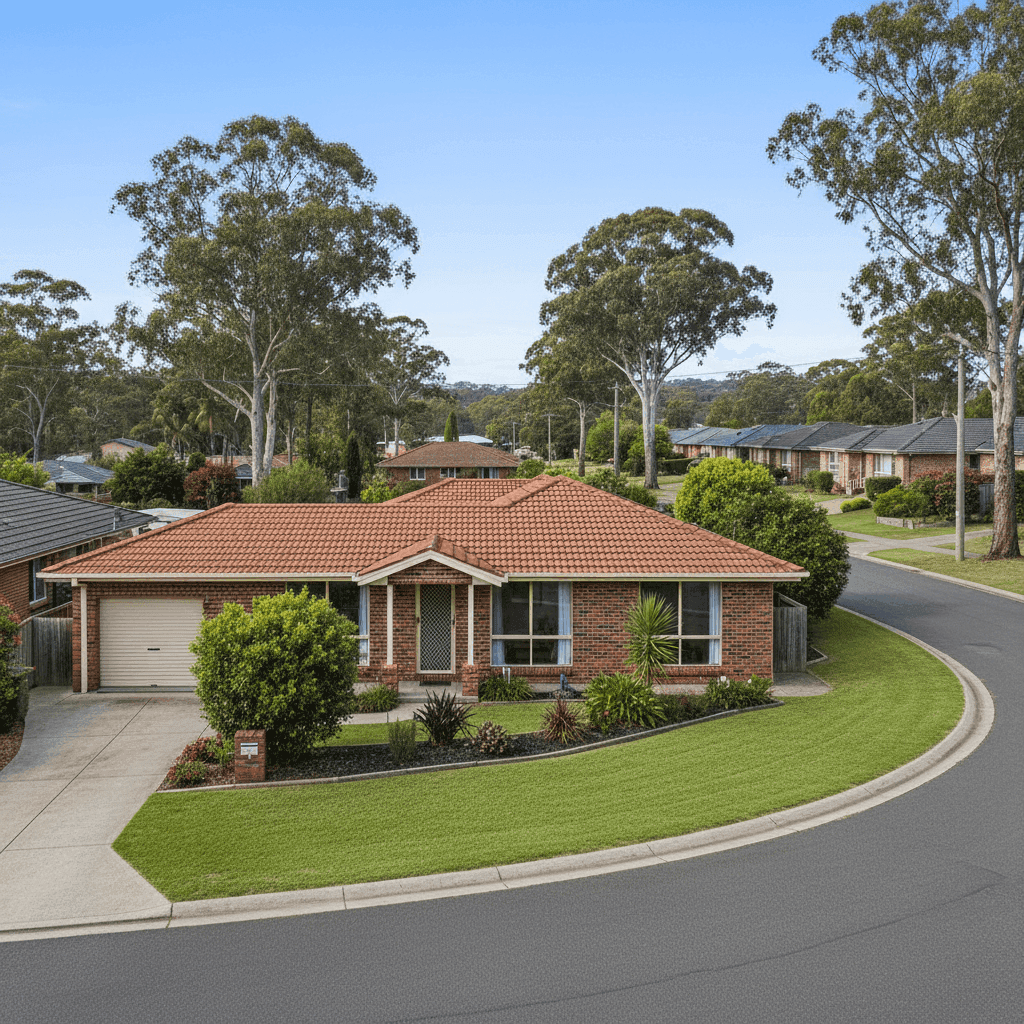
If you own a free standing home in Bonny Hills, NSW 2445, you've probably noticed that insurance premiums can vary wildly depending on who you ask. This article breaks down a real home and contents insurance quote for a three-bedroom, two-bathroom brick veneer home in the area — and puts it into context against suburb, state, and national benchmarks so you can judge whether you're getting a fair deal.
---
Is This Quote Fair?
The quote in question comes in at $3,507 per year (or $366/month) for combined home and contents cover, with a building sum insured of $572,000 and contents valued at $50,000. The building excess is set at $3,000, while the contents excess sits at a more modest $500.
Our price rating for this quote is EXPENSIVE — above average for the Bonny Hills area.
To understand why, it helps to look at the numbers in context. Based on data from 47 quotes collected for Bonny Hills (postcode 2445), the suburb average premium is $3,480/yr and the median sits at $2,901/yr. This quote lands just above both of those figures, and nudges past the 75th percentile threshold of $3,487/yr — meaning it's more expensive than roughly three-quarters of comparable quotes in the suburb.
That said, "expensive" is relative. The quote is not wildly out of range, and the higher building sum insured ($572,000) and combined cover type both contribute to a higher base premium. Still, there's a reasonable chance a comparable policy could be found at a lower price point, which is worth exploring.
---
How Bonny Hills Compares
Zooming out reveals some interesting context. While this quote may be above the local average, Bonny Hills is actually a relatively affordable area to insure compared to broader benchmarks.
| Benchmark | Average Premium | Median Premium |
|---|---|---|
| Bonny Hills (2445) | $3,480/yr | $2,901/yr |
| Port Macquarie-Hastings LGA | $7,001/yr | — |
| NSW State | $9,528/yr | $3,770/yr |
| National | $5,347/yr | $2,764/yr |
The NSW state average of $9,528/yr is dramatically higher than what Bonny Hills residents typically pay — largely because that figure is skewed by high-risk coastal and flood-prone areas across the state. Even the national average of $5,347/yr sits well above the local suburb median.
What's particularly striking is the Port Macquarie-Hastings LGA average of $7,001/yr. Bonny Hills falls within this local government area, yet premiums in the suburb trend considerably lower — suggesting that while the broader region carries elevated risk in the eyes of insurers, Bonny Hills itself fares comparatively well. This could be due to its elevation, proximity to services, or lower historical claims frequency in the immediate area.
The wide spread between the 25th percentile ($1,529/yr) and the 75th percentile ($3,487/yr) in Bonny Hills also tells a story: there's significant variation in what people pay locally, which means shopping around can genuinely make a difference.
---
Property Features That Affect Your Premium
Several characteristics of this particular property influence what insurers are willing to charge.
Brick veneer construction is generally viewed favourably by insurers. It offers solid fire resistance and structural durability compared to timber-framed or clad exteriors, which can translate to lower premiums. Combined with a tiled roof, this property sits in a relatively low-risk construction category — tiles are more resilient than Colorbond in some hail scenarios and are a standard, well-understood material for insurers to price.
The slab foundation is another neutral-to-positive factor. While slab homes can be more vulnerable to certain types of ground movement, they're a common and well-documented construction type in coastal NSW and don't typically attract loading from insurers.
At 139 sqm, this is a modestly sized home, which keeps rebuild costs — and therefore the sum insured — from ballooning. The $572,000 building sum insured reflects a reasonable replacement cost estimate for a 1986-era brick veneer home of this size, including demolition, materials, and labour in regional NSW.
The 1986 construction year is worth noting. Homes of this era can carry slightly higher risk profiles due to ageing plumbing, wiring, and roofing materials. Insurers may factor this in, particularly if the property hasn't had documented upgrades. Ensuring your policy accurately reflects any renovations or upgrades can sometimes help.
The absence of a pool, solar panels, and ducted climate control simplifies the risk profile — fewer high-value assets to insure and fewer potential liability or mechanical failure scenarios.
---
Tips for Homeowners in Bonny Hills
1. Review your sum insured carefully. A $572,000 building sum insured is significant, and it's worth verifying this figure against a current building cost estimate. Over-insuring inflates your premium unnecessarily, while under-insuring can leave you exposed at claim time. Tools like the Cordell Sum Sure calculator can help you arrive at a more accurate figure.
2. Consider adjusting your excess to manage your premium. The building excess on this quote is $3,000 — on the higher end. While a higher excess does reduce your annual premium, make sure it's an amount you could comfortably cover in an emergency. If cash flow allows, experimenting with different excess levels when comparing quotes can reveal meaningful savings.
3. Shop around — the local spread is wide. With a 25th percentile of $1,529/yr and a 75th of $3,487/yr in Bonny Hills, there's clearly a broad range of pricing in the market. The same property and cover level can attract very different premiums from different insurers, so comparing multiple quotes is one of the most effective ways to reduce your costs.
4. Ask about discounts for home security and maintenance. Some insurers offer premium reductions for homes with monitored alarm systems, deadlocks, or smoke detectors. Given the age of this property (1986), demonstrating that electrical and plumbing systems have been updated may also support a more competitive quote from certain providers.
---
Compare Your Options with CoverClub
Whether this quote reflects good value for your situation depends on your cover needs, risk tolerance, and what else is available in the market. The best way to find out is to compare. At CoverClub, you can enter your property details and see how quotes stack up — giving you the data you need to make a confident decision. Don't pay more than you need to for the cover your home deserves.