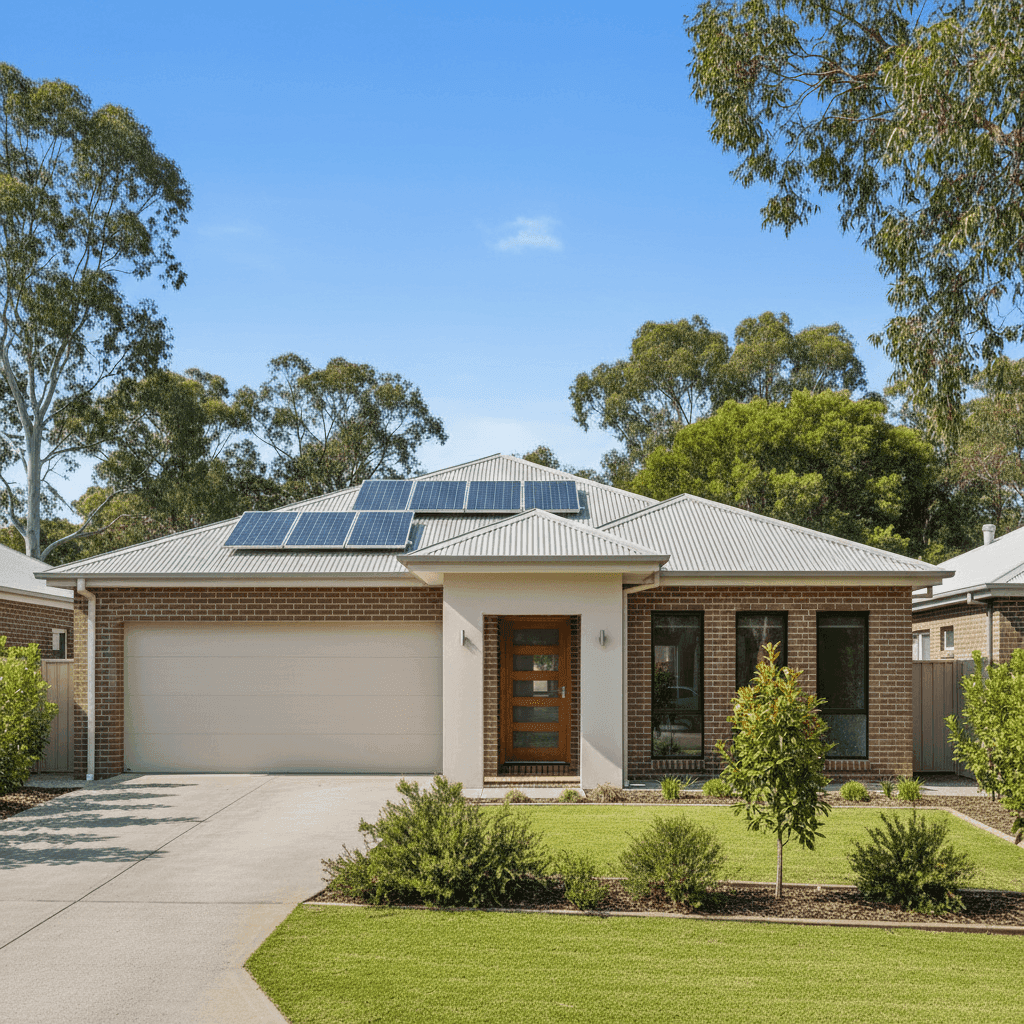
Home insurance costs can vary enormously depending on where you live, what your property is made of, and how much cover you're after. To help Australian homeowners make more informed decisions, we regularly publish real quote data from properties across the country. In this article, we take a close look at a home and contents insurance quote for a four-bedroom, free standing home in Bonny Hills, NSW 2445 — a relaxed coastal community on the Mid North Coast, just south of Port Macquarie.
---
Is This Quote Fair?
The annual premium for this property came in at $3,364 per year (or $349 per month), covering a building sum insured of $963,000 and contents valued at $100,000. The building excess is $3,000, and the contents excess is $2,000.
Our price rating for this quote is FAIR — Around Average, and the data backs that up.
When compared against other quotes collected for Bonny Hills, this premium sits very close to the suburb average of $3,480 per year — just $116 below it. It also falls comfortably within the interquartile range for the suburb, which runs from $1,529 (25th percentile) to $3,487 (75th percentile). In other words, this quote is right near the top of what most Bonny Hills homeowners are paying, but it's not an outlier.
For a property of this size — 214 square metres, built in 2011 with a relatively high building sum insured — a premium in this range is broadly reasonable. That said, "fair" doesn't necessarily mean you can't do better. There's always value in comparing multiple insurers before committing.
---
How Bonny Hills Compares
To put this quote in context, it helps to zoom out and look at the broader picture.
| Benchmark | Premium |
|---|---|
| This quote | $3,364/yr |
| Bonny Hills suburb average | $3,480/yr |
| Bonny Hills suburb median | $2,901/yr |
| Port Macquarie-Hastings LGA average | $7,001/yr |
| NSW state average | $9,528/yr |
| NSW state median | $3,770/yr |
| National average | $5,347/yr |
| National median | $2,764/yr |
A few things stand out here. First, the NSW state average of $9,528 per year is dramatically higher than what homeowners in Bonny Hills are typically paying. This is largely because NSW encompasses a wide range of risk profiles — from flood-prone inland areas to bushfire-exposed rural properties — which can skew the average significantly upward.
Second, the Port Macquarie-Hastings LGA average of $7,001 per year is also well above the Bonny Hills suburb average of $3,480. This suggests that Bonny Hills, as a specific suburb, may attract more favourable risk assessments than other parts of the LGA — potentially due to its construction era, proximity to the coast without being in a high-cyclone zone, or other localised factors.
Compared to the national average of $5,347, this quote looks quite competitive. Even the national median of $2,764 isn't dramatically lower than what's on offer here, especially when you factor in the relatively large building sum insured of nearly $1 million.
The suburb sample size of 47 quotes gives us a reasonable degree of confidence in these local benchmarks — it's not a huge dataset, but it's sufficient to draw meaningful comparisons.
---
Property Features That Affect Your Premium
Insurance premiums aren't calculated in a vacuum — every detail of your property plays a role. Here's how the features of this particular home are likely influencing the quote:
Brick Veneer Walls & Colorbond Roof Brick veneer is generally viewed favourably by insurers. It's durable, fire-resistant, and widely used in Australian residential construction. Paired with a steel Colorbond roof — which is lightweight, resistant to corrosion, and performs well in high-wind conditions — this combination typically attracts a more competitive premium than, say, weatherboard cladding or terracotta tiles.
Slab Foundation & Tiled Flooring A concrete slab foundation is a solid base that reduces the risk of subsidence and pest-related damage. Tiled flooring is similarly low-maintenance and resistant to water damage, both of which are positives from an insurer's perspective.
Construction Year: 2011 A property built in 2011 benefits from relatively modern building codes, which introduced improvements in structural integrity, fire safety, and energy efficiency. Newer builds are generally cheaper to insure than older homes that may have outdated wiring, plumbing, or materials.
Solar Panels This property has solar panels installed, which is worth noting. Solar panels add to the replacement cost of a home and should be specifically accounted for in your building sum insured. Some insurers include solar panels automatically under building cover; others treat them as an optional add-on. It's worth confirming your policy wording to ensure your system is fully covered.
Ducted Climate Control Ducted air conditioning is a significant fixed asset that forms part of the building. As with solar panels, it's important this is reflected in your building sum insured to avoid being underinsured in the event of a total loss.
No Pool, No Cyclone Risk Zone The absence of a swimming pool removes a common source of liability and maintenance-related claims. And while Bonny Hills is a coastal town, it falls outside designated cyclone risk areas — a meaningful factor that keeps premiums lower than they might otherwise be for coastal NSW properties.
---
Tips for Homeowners in Bonny Hills
1. Review your building sum insured regularly At $963,000, the building sum insured here is substantial — and rightly so for a 214 sqm home with solar panels and ducted climate control. However, construction costs have risen sharply in recent years. Make sure your sum insured reflects current rebuild costs, not just the original purchase price or an outdated estimate. Underinsurance is one of the most common and costly mistakes homeowners make.
2. Don't overlook your contents cover $100,000 in contents cover is a reasonable starting point, but it's easy to underestimate the value of everything inside your home. Go room by room and add up the replacement cost of furniture, appliances, clothing, electronics, and valuables. Many homeowners are surprised to find their contents are worth significantly more than they assumed.
3. Compare quotes before renewing Insurers don't always reward loyalty — in fact, many increase premiums at renewal without a corresponding increase in risk. Use a comparison platform like CoverClub to benchmark your renewal quote against the market each year. Even a modest saving of a few hundred dollars annually adds up over time.
4. Ask about discounts for security and safety features Some insurers offer discounts for homes with monitored alarm systems, deadbolts, or smoke detectors. If your home has any of these features, make sure your insurer knows about them — it could reduce your premium without reducing your cover.
---
Ready to Compare Home Insurance in Bonny Hills?
Whether you're renewing an existing policy or shopping for cover for the first time, it pays to compare. Get a home insurance quote through CoverClub and see how your premium stacks up against real data from properties in your suburb and across NSW. You can also explore detailed Bonny Hills insurance statistics to better understand what your neighbours are paying.