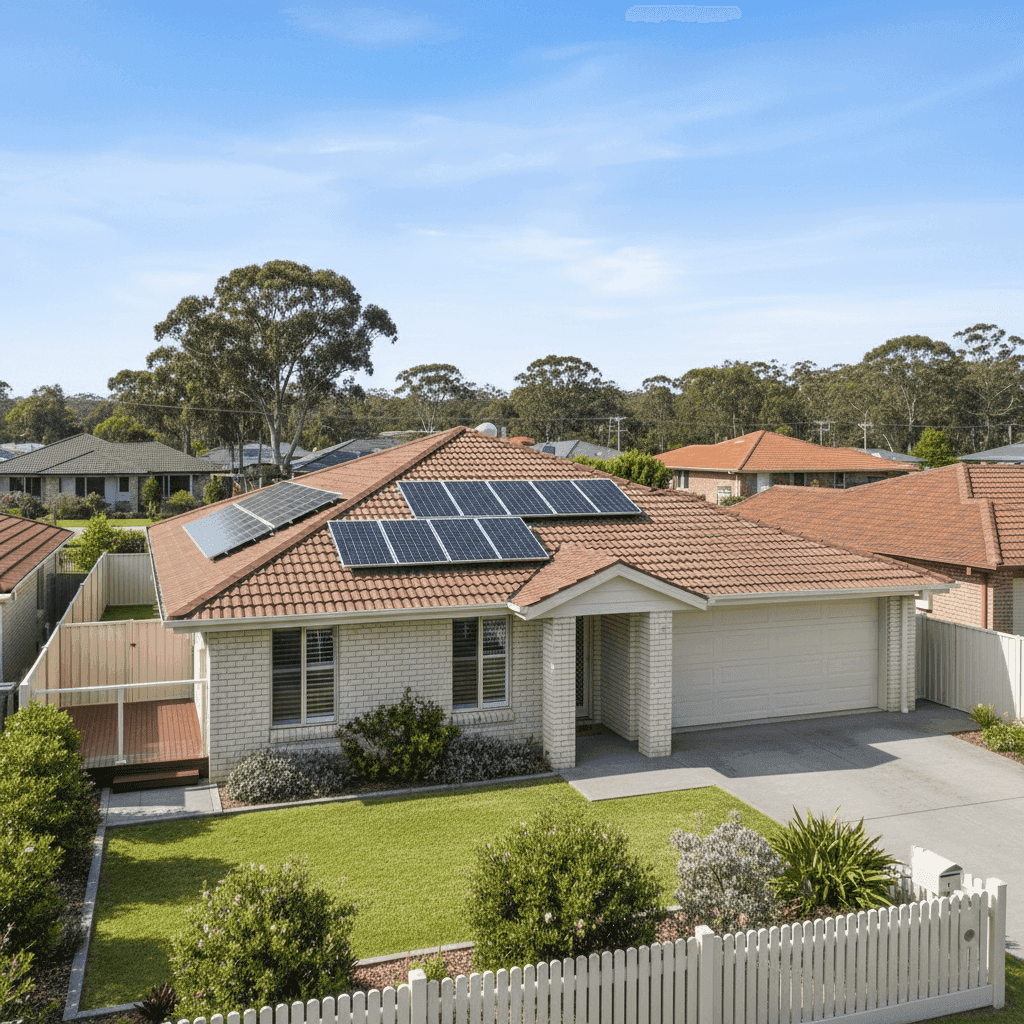
Bonny Hills is a relaxed coastal community on the Mid North Coast of New South Wales, sitting just south of Port Macquarie. It's the kind of suburb where brick veneer homes with tiled roofs line quiet streets, and many owners have already made the switch to solar. If you own a free standing home here, understanding what you should expect to pay for building insurance — and why — is an important part of protecting your most valuable asset.
This article breaks down a real building-only insurance quote for a 3-bedroom, 2-bathroom free standing home in Bonny Hills, comparing it against local, state, and national benchmarks to help you make sense of the numbers.
---
Is This Quote Fair?
The annual premium for this quote comes in at $2,133 per year (or $188/month), covering building-only insurance with a $5,000 excess on a home insured for $689,000.
Our price rating for this quote is FAIR — Around Average, which is a reasonable outcome for a property of this type in this area. It sits comfortably within the mid-range of what Bonny Hills homeowners are paying, neither the cheapest available nor the most expensive by any stretch.
To put it in perspective: the suburb's 25th percentile sits at $1,529/yr, meaning roughly a quarter of comparable quotes come in below that mark. The 75th percentile reaches $3,487/yr. At $2,133, this quote lands between the suburb median ($2,901/yr) and the lower quartile — which is actually a better position than "average" might suggest. It's below the suburb average of $3,480/yr, indicating the homeowner is not overpaying relative to their neighbours.
---
How Bonny Hills Compares
To understand whether this premium represents good value, it helps to zoom out and look at the broader picture. Here's how Bonny Hills stacks up:
| Benchmark | Average Premium | Median Premium |
|---|---|---|
| Bonny Hills (NSW 2445) | $3,480/yr | $2,901/yr |
| Port Macquarie-Hastings LGA | $7,001/yr | — |
| NSW State | $9,528/yr | $3,770/yr |
| National | $5,347/yr | $2,764/yr |
(Based on [Bonny Hills suburb data](https://coverclub.com.au/stats/NSW/2445/bonny-hills) from 47 quotes, [NSW state data](https://coverclub.com.au/stats/NSW), and [national benchmarks](https://coverclub.com.au/stats/national).)
A few things stand out here. The Port Macquarie-Hastings LGA average of $7,001/yr is significantly higher than the Bonny Hills suburb average of $3,480/yr, which suggests that other parts of the LGA — potentially areas with higher flood, storm, or bushfire exposure — are pulling that figure up considerably. Bonny Hills itself appears to be a relatively more insurable part of the region.
The NSW state average of $9,528/yr looks alarming at first glance, but it's heavily influenced by high-risk and high-value properties across the state. The NSW median of $3,770/yr is a more representative figure for typical homes, and this quote comes in below that too.
Nationally, the median sits at $2,764/yr — slightly below this quote — but the national average of $5,347/yr is again skewed by expensive markets and high-risk zones. On balance, $2,133/yr for a well-built brick veneer home in Bonny Hills is a competitive outcome.
---
Property Features That Affect Your Premium
Insurers assess a wide range of property characteristics when calculating your premium. Here's how the specifics of this home likely influenced the final figure:
Brick Veneer Walls & Tiled Roof Brick veneer construction is generally viewed favourably by insurers. It offers solid fire resistance and structural durability compared to lightweight cladding or weatherboard. Combined with a tiled roof — which performs well in moderate weather conditions — this home presents a relatively low-risk construction profile.
Slab Foundation A concrete slab foundation is a standard and stable choice for homes built in coastal NSW. It doesn't carry the same moisture or pest risk that older raised timber stumps might, which can translate to lower premiums.
Construction Year: 2001 A home built in 2001 benefits from post-1990s building codes, which introduced improved standards for structural integrity and cyclone tie-downs. It's also young enough that major structural components are unlikely to be at end-of-life, which reduces the insurer's perceived risk.
Solar Panels This property has solar panels installed, which adds modest replacement value to the building sum insured. Most building policies cover fixed solar panel systems as part of the structure, so it's worth confirming this is reflected in your $689,000 sum insured figure.
No Pool, No Ducted Climate Control The absence of a swimming pool removes a meaningful liability and maintenance risk factor. No ducted climate control also means fewer mechanical systems that could fail or cause water damage — both of which can nudge premiums upward when present.
Standard Fittings Standard-quality fittings (as opposed to premium or high-end finishes) keep the rebuild cost estimate more predictable and generally result in a more modest premium than homes with luxury inclusions.
169 sqm Building Size At 169 sqm, this is a mid-sized home. The $689,000 sum insured works out to roughly $4,077 per sqm — a reasonable estimate for a brick veneer home in regional coastal NSW when factoring in current construction costs, though it's always worth reviewing your sum insured annually as building costs fluctuate.
---
Tips for Homeowners in Bonny Hills
1. Review your sum insured regularly Construction costs across Australia have risen sharply in recent years. A sum insured set two or three years ago may no longer reflect the true cost to rebuild your home from scratch. Check your figure annually and use a building cost calculator to verify it's still adequate.
2. Consider your excess carefully This policy carries a $5,000 building excess — higher than many standard policies. While a higher excess typically reduces your premium, make sure you're comfortable covering that amount out of pocket in the event of a claim. If cash flow is a concern, it may be worth comparing quotes with a lower excess to see the premium difference.
3. Confirm solar panels are covered If your solar system was installed after the original policy was taken out, double-check that it's explicitly included in your building cover. Some policies require you to notify the insurer of significant additions to avoid a shortfall at claim time.
4. Compare quotes before renewal Insurance loyalty rarely pays off. Premiums can shift significantly from year to year, and the market in Bonny Hills shows a wide spread — from $1,529/yr at the 25th percentile to $3,487/yr at the 75th. Shopping around at renewal time could save you hundreds of dollars without reducing your cover.
---
Ready to Compare Home Insurance in Bonny Hills?
Whether you're reviewing an existing policy or shopping for cover for the first time, comparing quotes is the single most effective way to ensure you're not overpaying. CoverClub makes it easy to see how your premium stacks up against real data from your suburb and beyond.
Get a home insurance quote today at CoverClub and find out where your premium sits in the market — in minutes.