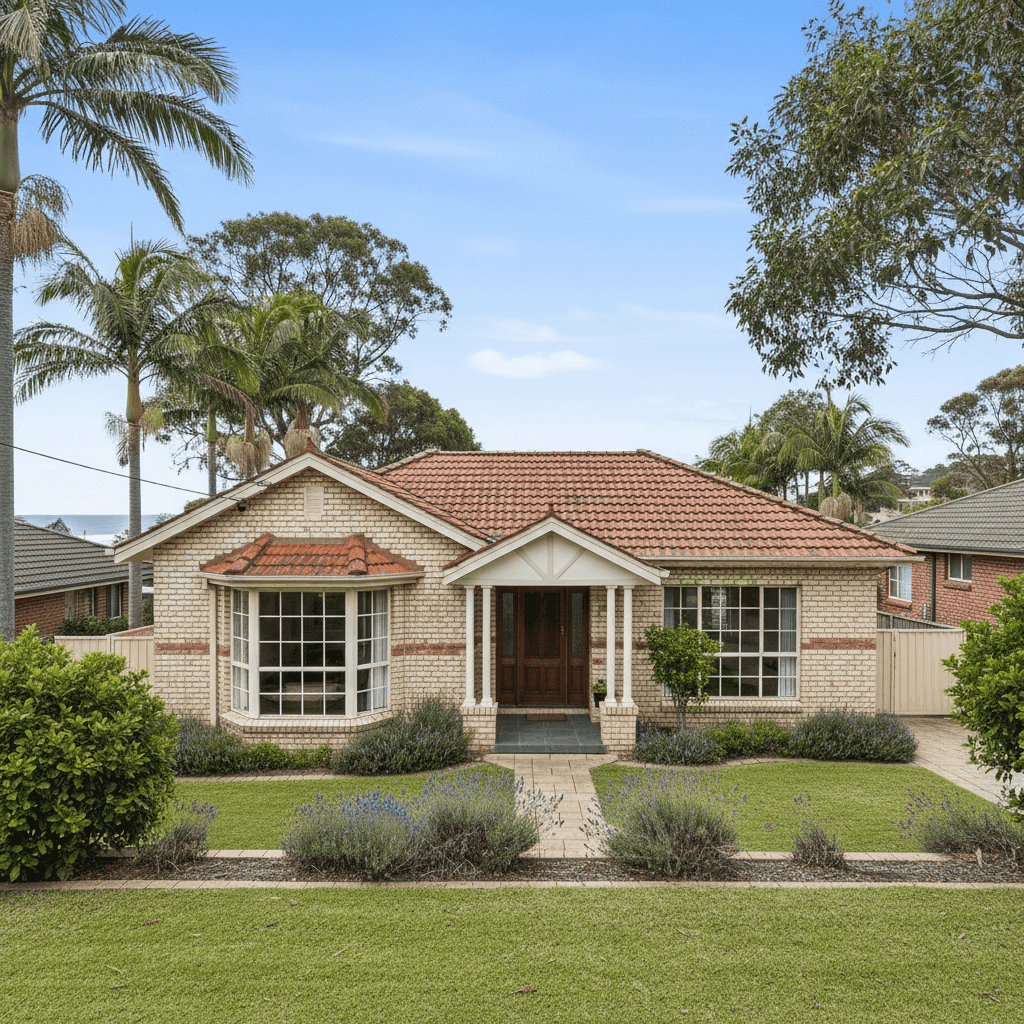
Bonny Hills is a relaxed coastal community on the Mid North Coast of New South Wales, sitting just south of Port Macquarie. With its proximity to the beach, bushland surroundings, and a mix of established and newer homes, it's a popular lifestyle destination — but those same characteristics can make home insurance a little more nuanced than in your average suburban postcode. This article breaks down a real building insurance quote for a four-bedroom free standing home in Bonny Hills (NSW 2445), rated Expensive (Above Average), and helps you understand what's driving the cost.
---
Is This Quote Fair?
The quote in question sits at $4,057 per year (or $389/month) for building-only cover, with a $1,000 building excess and a sum insured of $686,000. Based on data from CoverClub's Bonny Hills suburb statistics, this premium is rated Expensive — Above Average for the area.
Here's how it stacks up against local benchmarks:
| Benchmark | Premium |
|---|---|
| This Quote | $4,057/yr |
| Suburb Average | $3,480/yr |
| Suburb Median | $2,901/yr |
| Suburb 75th Percentile | $3,487/yr |
The quote lands above the 75th percentile for Bonny Hills — meaning it's pricier than at least three-quarters of comparable quotes in the postcode. That's a meaningful signal. While no two properties are identical, a gap of roughly $570 above the suburb average (and over $1,150 above the median) is worth investigating before simply accepting the premium at face value.
That said, "expensive" doesn't automatically mean "wrong." The sum insured of $686,000 for a 214 sqm home built in 2001 is not unreasonable given current construction costs, and the coverage scope (building only) is straightforward. But it does suggest there may be room to find a more competitive rate without sacrificing quality cover.
---
How Bonny Hills Compares
Zooming out to a broader picture, Bonny Hills actually fares quite favourably compared to the rest of New South Wales and the nation as a whole.
| Geography | Average Premium | Median Premium |
|---|---|---|
| Bonny Hills (2445) | $3,480/yr | $2,901/yr |
| Port Macquarie-Hastings LGA | $7,001/yr | — |
| NSW | $9,528/yr | $3,770/yr |
| National | $5,347/yr | $2,764/yr |
The LGA average of $7,001 is a striking figure — nearly double the Bonny Hills suburb average — which suggests significant variation in risk and pricing across the Port Macquarie-Hastings council area. Bonny Hills itself appears to be a relatively more affordable pocket within the LGA.
When compared to NSW-wide data, the suburb average of $3,480 is well below the state average of $9,528, though NSW averages are heavily skewed by high-risk and high-value properties in flood-prone and coastal areas. The national median of $2,764 is actually slightly lower than Bonny Hills' median, which aligns with the area's coastal and bushfire-adjacent risk profile.
The sample size of 47 quotes for this suburb provides a reasonable (though not large) dataset — enough to draw meaningful comparisons, but worth keeping in mind when interpreting the figures.
---
Property Features That Affect Your Premium
Several characteristics of this property have a direct bearing on what insurers charge. Understanding them can help you have a more informed conversation when comparing policies.
Brick veneer construction with a tiled roof is generally viewed favourably by insurers. Brick veneer offers solid weather resistance and is less susceptible to fire spread than timber-framed cladding, while tiles provide durable, low-maintenance roofing. This combination typically attracts more competitive premiums than, say, weatherboard walls or a metal deck roof.
Slab foundation is another positive. Homes on concrete slabs tend to be more stable and less prone to subsidence or pest-related damage than those on stumps or piers, which can translate to lower risk in the eyes of underwriters.
Ducted climate control is worth noting as an inclusion. Ducted systems are expensive to repair or replace, and they're covered under building insurance (as a fixed installation). Their presence likely contributes to the higher sum insured and, in turn, the premium.
Built in 2001, the home is in a middle-ground age bracket — newer than homes that might have outdated wiring or plumbing, but old enough that some components (roof tiles, waterproofing, HVAC systems) may be approaching the end of their service life. Insurers factor this in when assessing risk.
Coastal proximity is perhaps the most significant environmental factor. Bonny Hills sits close to the ocean and within a bushland-adjacent corridor, both of which elevate exposure to storm, wind, and bushfire risk. Even without a formal cyclone rating, coastal NSW properties can face elevated premiums due to storm surge and wind event exposure.
---
Tips for Homeowners in Bonny Hills
If you're looking to get better value on your home insurance without cutting corners on cover, here are four practical steps worth considering.
1. Shop around — seriously. The gap between the 25th percentile ($1,529/yr) and the 75th percentile ($3,487/yr) in this suburb is enormous. That range reflects how differently insurers price the same postcode. Using a comparison platform like CoverClub to run multiple quotes simultaneously is one of the most effective ways to identify whether you're overpaying.
2. Review your sum insured annually. Construction costs have risen sharply in recent years, but so has the risk of being over-insured. Make sure your sum insured reflects the actual cost to rebuild — not the market value of the property. An independent quantity surveyor's report can be a worthwhile investment.
3. Consider your excess strategically. The $1,000 excess on this policy is relatively standard. Opting for a higher excess (say, $2,500 or $5,000) can meaningfully reduce your annual premium — provided you're comfortable covering that amount out of pocket in the event of a claim.
4. Maintain your property proactively. Insurers reward lower-risk properties. Keeping gutters clear, maintaining your roof tiles, trimming overhanging branches, and ensuring your ducted system is regularly serviced can reduce the likelihood of a claim — and may support a better risk profile at renewal.
---
Compare Your Home Insurance Today
Whether you're reviewing an existing policy or shopping for the first time, CoverClub makes it easy to see how your quote stacks up. We aggregate real premium data from across Australia so you can benchmark your price and make a confident, informed decision. Get a quote and compare — it takes just a few minutes and could save you hundreds of dollars a year.