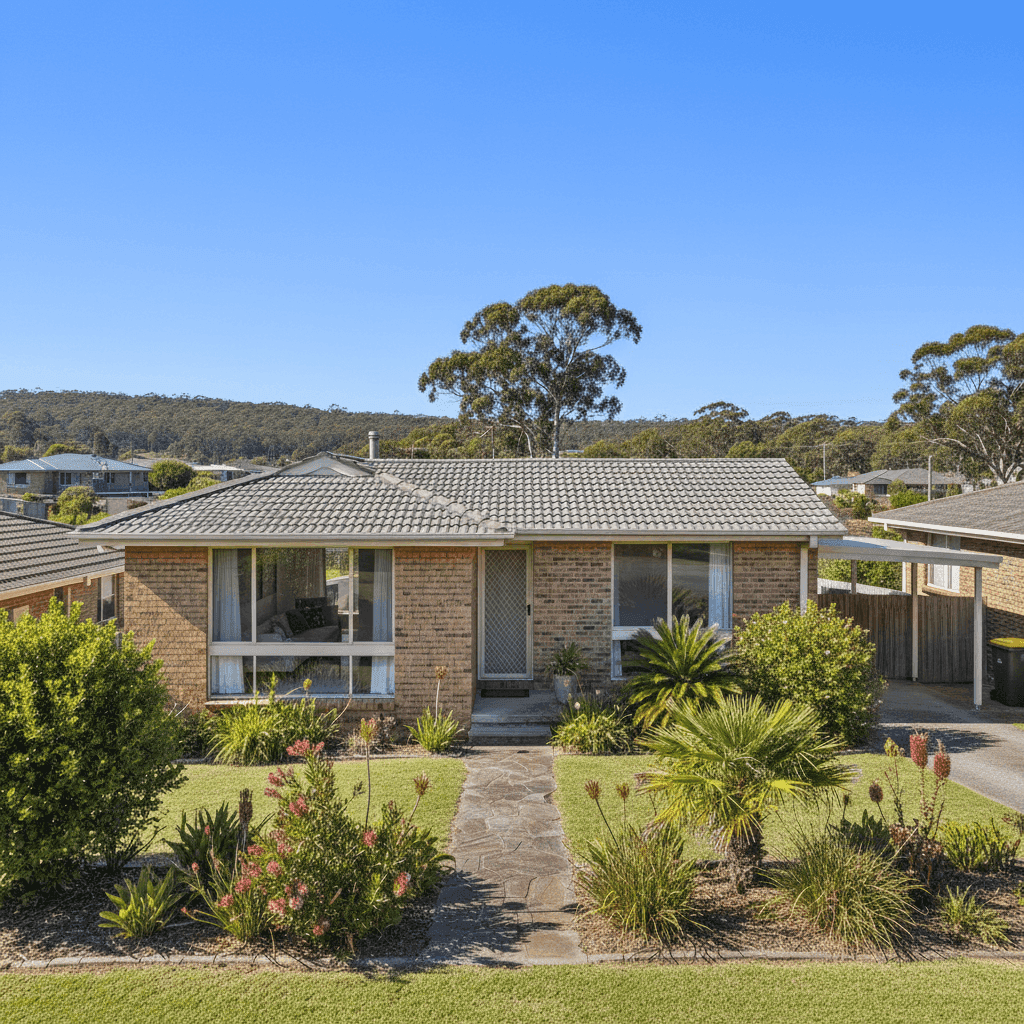
Bonny Hills is a relaxed coastal village sitting just south of Port Macquarie on the Mid North Coast of New South Wales. With its proximity to the beach, bushland, and the laid-back lifestyle that draws so many sea-changers, it's easy to see why the area is popular — but that coastal charm can come with some strings attached when it comes to home insurance. This article breaks down a real home and contents insurance quote for a three-bedroom, free-standing home in Bonny Hills (postcode 2445), and puts it in context against local, state, and national benchmarks.
---
Is This Quote Fair?
The quote in question sits at $4,821 per year (or $462 per month) for combined home and contents cover, with a building sum insured of $809,000 and contents valued at $85,000. Both the building and contents excess are set at $2,000.
Our price rating for this quote is Expensive — above average for the suburb.
To put that in perspective: the suburb average annual premium across Bonny Hills quotes on CoverClub is $3,480, and the median sits at $2,901. This quote comes in roughly 38% above the suburb average and 66% above the suburb median — a meaningful gap that's worth investigating before simply accepting the renewal or first-time quote at face value.
That said, context matters. The building sum insured of $809,000 is on the higher end, which will naturally push the premium up compared to homes insured for less. The $85,000 contents value is also a factor. If your home genuinely requires that level of cover, a higher premium is expected — but it's still worth shopping around to ensure you're not overpaying for the same level of protection.
---
How Bonny Hills Compares
Understanding where your premium sits relative to broader benchmarks is one of the most useful tools a homeowner has. Here's how this quote stacks up:
| Benchmark | Annual Premium |
|---|---|
| This Quote | $4,821 |
| Bonny Hills suburb average | $3,480 |
| Bonny Hills suburb median | $2,901 |
| Bonny Hills 25th percentile | $1,529 |
| Bonny Hills 75th percentile | $3,487 |
| Port Macquarie-Hastings LGA average | $7,001 |
| NSW state average | $9,528 |
| NSW state median | $3,770 |
| National average | $5,347 |
| National median | $2,764 |
A few things stand out here. While the quote is above the Bonny Hills suburb average, it actually sits well below the Port Macquarie-Hastings LGA average of $7,001 and is also below the NSW state average of $9,528. Against national benchmarks, the quote is slightly below the national average of $5,347 but above the national median of $2,764.
This tells an interesting story: Bonny Hills itself tends to attract relatively competitive premiums compared to the broader LGA and state — likely because it avoids some of the more extreme risk factors seen in other parts of the region. However, this particular quote is on the pricier end within the suburb, suggesting there may be room to find a better deal with a different insurer.
You can explore the full breakdown of NSW home insurance statistics and Bonny Hills-specific data on CoverClub to see how premiums vary across different property types and cover levels.
---
Property Features That Affect Your Premium
Every home is different, and insurers weigh up a range of property characteristics when calculating your premium. Here's how the features of this particular property are likely influencing the cost:
Brick Veneer Walls Brick veneer is one of the more common external wall types in Australian homes built from the 1970s through to the 1990s. It offers reasonable fire resistance and durability, which insurers generally view favourably. It's not as robust as full double-brick construction, but it's typically treated more favourably than lightweight cladding materials.
Concrete Tile Roof Concrete roofing is generally considered a solid, low-maintenance option that holds up well in coastal and semi-rural environments. Insurers tend to rate it positively compared to older materials like asbestos or corrugated iron, though it's worth noting that a roof built in 1985 is now approaching 40 years old — age and condition can influence how an insurer assesses risk.
Stump Foundation Homes on stumps (also known as pier-and-beam foundations) are common in older coastal and regional NSW properties. While they allow for good ventilation and are practical in certain terrain, they can be associated with higher subsidence or moisture-related risks in some areas. This may be a contributing factor to the premium level.
Timber and Laminate Flooring Timber and laminate floors are popular choices but can be more susceptible to water damage than tiles or concrete. In a coastal environment like Bonny Hills, this is worth keeping in mind — and it may subtly influence how insurers price contents cover in particular.
Construction Year: 1985 At nearly 40 years old, this home predates many modern building standards. Older properties can attract slightly higher premiums due to the increased likelihood of wear-related claims, particularly around plumbing, electrical systems, and roofing.
No Pool, Solar Panels, or Ducted Climate Control The absence of a pool, solar system, and ducted air conditioning keeps things relatively straightforward from an insurer's perspective. These features, when present, can add complexity and cost to a policy — so their absence here is a mild premium-reducing factor.
---
Tips for Homeowners in Bonny Hills
If you're a homeowner in Bonny Hills looking to get more value from your home insurance, here are some practical steps worth considering:
1. Review Your Sum Insured Carefully At $809,000, the building sum insured is substantial. Make sure this figure reflects the actual cost to rebuild your home (not its market value), using a building cost calculator or a quantity surveyor's estimate. Over-insuring can unnecessarily inflate your premium, while under-insuring leaves you exposed at claim time.
2. Compare Quotes from Multiple Insurers The gap between the 25th percentile ($1,529) and this quote ($4,821) in Bonny Hills is significant. While some of that difference reflects varying levels of cover, it also highlights just how much premiums can vary between insurers for similar properties. Getting a fresh quote through CoverClub takes only a few minutes and could reveal meaningfully cheaper options.
3. Consider Your Excess Level Both the building and contents excess on this policy are set at $2,000. Opting for a higher excess — say $2,500 or $3,000 — can reduce your annual premium. If you're unlikely to make small claims, this trade-off often makes financial sense over the long run.
4. Check for Coastal and Bushfire Risk Disclosures Bonny Hills sits in a coastal and semi-rural environment, meaning properties in the area may be assessed for both coastal erosion risk and bushfire proximity. Ensuring your insurer has accurate information about your property's specific location and risk profile — and that you're not being incorrectly rated for risks that don't apply — is an important step that many homeowners overlook.
---
Find a Better Deal with CoverClub
Whether you're reviewing an existing policy or shopping around for the first time, comparing quotes is the single most effective way to make sure you're not paying more than you need to. CoverClub makes it easy to see how your premium stacks up and explore alternatives — all in one place. Start comparing home insurance quotes today and see what Bonny Hills homeowners are actually paying for cover like yours.