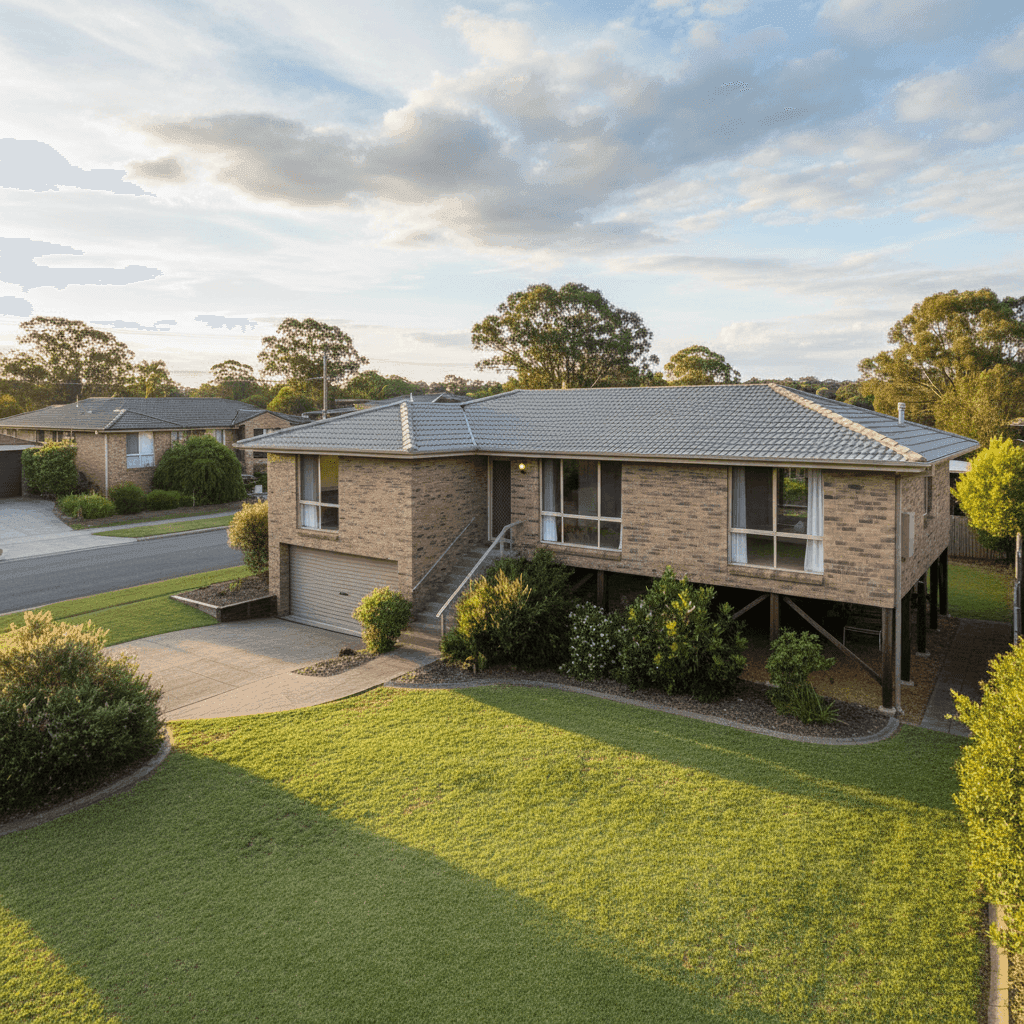
Bonny Hills is a relaxed coastal village nestled between Port Macquarie and Taree on the Mid North Coast of New South Wales — and it's no secret that homes here are increasingly sought after. But with lifestyle appeal comes the responsibility of protecting your property. This article breaks down a real home and contents insurance quote for a three-bedroom, free-standing home in Bonny Hills (NSW 2445), helping you understand whether the price stacks up and what you can do to make sure you're not overpaying.
---
Is This Quote Fair?
The quote in question comes in at $4,782 per year (or $458/month) for combined home and contents cover, with a building sum insured of $809,000 and contents valued at $78,000. Both the building and contents excess are set at $2,000.
Our price rating for this quote is Expensive — above the suburb average.
To put that in context: the average home and contents premium among the 47 quotes we've collected for Bonny Hills sits at $3,480 per year, and the suburb median is a notably lower $2,901 per year. This quote lands well above both figures — roughly 37% above the suburb average and 65% above the median. That's a meaningful gap, and it's worth understanding why before simply accepting the renewal or switching on autopilot.
That said, context matters. The building sum insured of $809,000 is on the higher end for a 214 sqm home, and the combined cover type naturally attracts a higher premium than building-only policies. Still, the size of the gap relative to local peers makes this worth scrutinising.
---
How Bonny Hills Compares
Understanding where Bonny Hills sits within the broader insurance landscape helps frame whether a premium is reasonable or inflated.
| Benchmark | Average Premium | Median Premium |
|---|---|---|
| Bonny Hills (NSW 2445) | $3,480/yr | $2,901/yr |
| Port Macquarie-Hastings LGA | $7,001/yr | — |
| NSW State | $9,528/yr | $3,770/yr |
| National | $5,347/yr | $2,764/yr |
A few things stand out here. First, the NSW state average of $9,528 per year is dramatically high — driven largely by high-value properties and elevated risk areas across the state. Bonny Hills sits comfortably below both the state average and the national average of $5,347/yr, which is a positive sign for the suburb overall.
Interestingly, the Port Macquarie-Hastings LGA average of $7,001/yr is considerably higher than the Bonny Hills suburb average of $3,480/yr — suggesting that Bonny Hills may benefit from relatively lower risk characteristics compared to other parts of the LGA (such as flood-prone or high-bushfire-risk areas).
The quote being analysed here, at $4,782/yr, does exceed the Bonny Hills suburb average but remains well below the LGA and state averages. Whether it's "fair" ultimately depends on the specific insurer, the level of cover, and the property's individual risk profile.
---
Property Features That Affect Your Premium
Every property tells its own insurance story. Here's how the key characteristics of this home are likely influencing the premium:
Brick Veneer Walls Brick veneer is one of the more common and insurer-friendly wall materials in Australia. It offers solid fire resistance and durability, which generally keeps premiums more manageable compared to timber-framed or weatherboard homes.
Concrete Tile Roof Concrete roofs are typically viewed favourably by insurers — they're durable, fire-resistant, and less susceptible to storm damage than some alternatives. However, a roof installed in 1985 is now over 40 years old, and age can be a factor. Older roofs may attract scrutiny at claim time if maintenance hasn't been kept up.
Stump Foundation The home sits on stumps, which is common for older properties in coastal and regional NSW. While stumps can be practical in areas with reactive soil or moisture, they can also introduce vulnerabilities — particularly around subsidence, pest ingress, and storm uplift — which some insurers price accordingly.
Timber and Laminate Flooring Timber and laminate floors are susceptible to water damage, which can be a significant claims driver in coastal areas. This may subtly influence the contents or building premium, particularly given Bonny Hills' proximity to the ocean.
Construction Year: 1985 At approximately 40 years old, this home predates many modern building codes. Older homes can carry higher rebuild costs per square metre (due to non-standard materials or configurations) and may present greater risk of wear-related damage. The $809,000 building sum insured reflects this — ensuring adequate cover for a full rebuild is essential.
No Pool, Solar Panels, or Ducted Climate Control The absence of these features actually works in the homeowner's favour. Pools, solar systems, and ducted air conditioning all add complexity and cost to a policy. Their absence here keeps the risk profile relatively straightforward.
---
Tips for Homeowners in Bonny Hills
1. Review your sum insured carefully At $809,000 for a 214 sqm home, the building sum insured is substantial. Make sure this figure reflects the actual cost to rebuild — not the market value. Overcovering can inflate your premium unnecessarily, while undercovering leaves you exposed at claim time. Tools like the Cordell Sum Sure calculator can help you arrive at an accurate figure.
2. Shop around — especially if you're above the suburb average With this quote sitting above the local average, it's a clear signal to compare. Insurers price risk differently, and the same property can attract wildly different premiums across providers. Get a quote through CoverClub to see how your current premium stacks up against the market.
3. Consider your excess strategically Both the building and contents excess are set at $2,000. Opting for a higher excess can meaningfully reduce your annual premium — but only if you're confident you could cover that amount out of pocket in the event of a claim. For many homeowners, a $2,500 or $3,000 excess can unlock worthwhile savings.
4. Maintain your roof and stumps Given the age of this property, keeping on top of roof maintenance and periodic stump inspections is both good practice and good insurance hygiene. Insurers can deny claims related to wear and tear or lack of maintenance, so documenting upkeep can protect you when it matters most.
---
Compare Your Quote with CoverClub
Whether you're a long-time Bonny Hills local or new to the area, it pays to know where your premium sits relative to your neighbours. CoverClub aggregates real quote data from across Australia so you can make informed decisions — not just accept whatever lands in your inbox at renewal time.
Compare home insurance quotes for Bonny Hills and find out if you're getting a fair deal. It takes just a few minutes, and the savings could be well worth it.