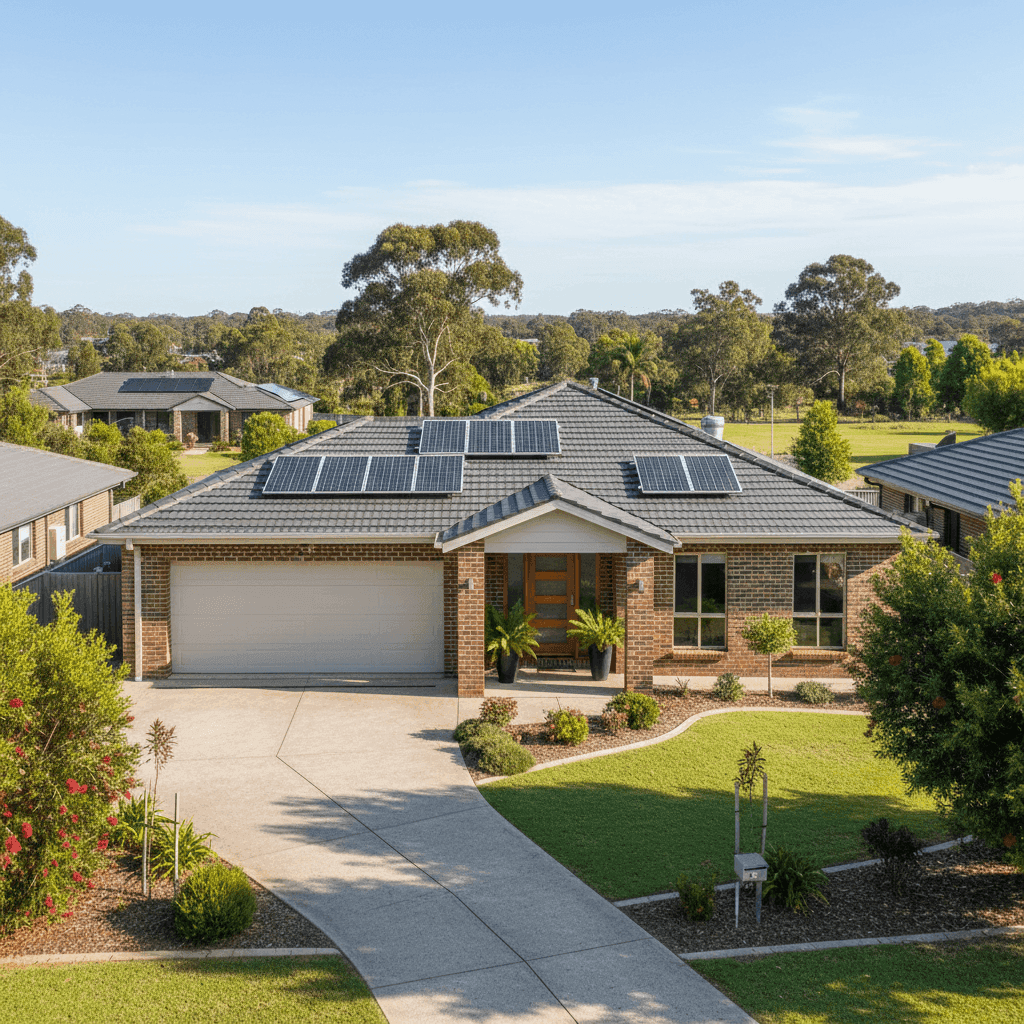
If you own a free standing home in Bonny Hills, NSW 2445, you've probably wondered whether you're paying a fair price for building insurance — or whether there's a better deal out there. This article breaks down a real building-only insurance quote for a three-bedroom, two-bathroom brick veneer home in Bonny Hills, and puts it in context against suburb, state, and national benchmarks so you can make a more informed decision.
---
Is This Quote Fair?
The quote in question comes in at $2,259 per year (or $217 per month) for building-only cover with a $2,000 building excess and a $500,000 sum insured. Our price rating for this quote is FAIR — Around Average.
That "fair" rating isn't a consolation prize — it actually reflects a reasonably competitive position in the market. Based on 47 quotes collected for the Bonny Hills area, the suburb average sits at $3,480/yr and the median at $2,901/yr. This quote comes in well below both of those figures, landing closer to the 25th percentile of $1,529/yr than the upper end of $3,487/yr.
In other words, roughly half of homeowners in Bonny Hills are paying more than $2,901 a year for similar cover — so sitting at $2,259 puts this policy in a solid position without being the cheapest option on the market.
---
How Bonny Hills Compares
To really understand whether this quote represents good value, it helps to zoom out and look at the broader picture.
| Benchmark | Average Premium | Median Premium |
|---|---|---|
| Bonny Hills (2445) | $3,480/yr | $2,901/yr |
| NSW | $9,528/yr | $3,770/yr |
| National | $5,347/yr | $2,764/yr |
| Port Macquarie-Hastings LGA | $7,001/yr | — |
A few things stand out here. The NSW state average of $9,528/yr is dramatically higher than what Bonny Hills homeowners typically pay — a reflection of the enormous variation in risk profiles across the state, from flood-prone inland areas to high-value coastal suburbs. The LGA average for Port Macquarie-Hastings is also elevated at $7,001/yr, suggesting that some pockets of the region carry significantly higher premiums than Bonny Hills itself.
Interestingly, the national median of $2,764/yr is actually slightly below the Bonny Hills median, which tells us that while Bonny Hills isn't the cheapest place to insure a home, it's broadly in line with what Australians pay across the country. The quote of $2,259/yr sits just below the national median — a reassuring sign.
---
Property Features That Affect Your Premium
Every home is different, and insurers weigh up a range of property characteristics when calculating your premium. Here's how the features of this particular home likely influence the price:
Brick Veneer Walls & Tiled Roof Brick veneer construction paired with a tiled roof is generally viewed favourably by insurers. These materials are durable, fire-resistant, and relatively straightforward to repair or replace. Compared to weatherboard or fibrous cement cladding, brick veneer tends to attract lower premiums.
Slab Foundation A concrete slab foundation is common in homes built around the early 2000s and is considered a stable, low-risk foundation type. It's less susceptible to subsidence and pest damage than older pier-and-beam constructions, which can help keep premiums in check.
Solar Panels This home has solar panels installed, which adds some complexity to building cover. Solar panels are typically covered under building insurance, but they do increase the replacement cost of the structure. It's worth confirming with your insurer that your sum insured of $500,000 adequately accounts for the cost of replacing your solar system in the event of a total loss.
Ducted Climate Control Ducted air conditioning systems are a significant built-in fixture and are generally included in building cover. Like solar panels, they contribute to the overall replacement value of the home and should be factored into your sum insured calculation.
No Pool The absence of a swimming pool removes one variable that can add to premiums — both in terms of liability and the cost of replacement. It also simplifies the policy scope slightly.
Construction Year: 2001 A home built in 2001 is relatively modern by Australian standards, meaning it was likely constructed under updated building codes that improved structural resilience. This generally works in your favour when it comes to pricing.
---
Tips for Homeowners in Bonny Hills
1. Review your sum insured annually With solar panels and ducted climate control already factored into this home's value, it's important to revisit your sum insured each year — especially as construction costs rise. Underinsurance is one of the most common and costly mistakes homeowners make. Use a building calculator or speak to a quantity surveyor if you're unsure.
2. Consider the impact of your excess This policy carries a $2,000 building excess, which is on the higher end. While a higher excess typically lowers your premium, it also means more out-of-pocket costs when you make a claim. Think about whether that trade-off suits your financial situation — particularly for smaller claims.
3. Compare quotes before renewal Even if your current premium feels reasonable, the insurance market shifts constantly. Insurers reprice based on claims data, reinsurance costs, and risk modelling. Running a fresh comparison at renewal time — even if you ultimately stick with your current provider — ensures you're not paying more than you need to. Get a building insurance quote at CoverClub to see what's available for your home.
4. Check for coastal and weather-related risk disclosures Bonny Hills sits on the NSW Mid North Coast, a region that can experience heavy rainfall, storms, and occasional flooding. While this property is not in a designated cyclone risk area, it's worth reviewing your policy's storm and flood definitions carefully. Not all policies treat these the same way, and exclusions can catch homeowners off guard at claim time.
---
Compare Your Home Insurance Today
Whether you're reviewing an existing policy or shopping for cover for the first time, having the right data makes all the difference. CoverClub aggregates real quote data from across Australia so you can see exactly how your premium stacks up against your neighbours and the broader market.
Run a free home insurance comparison at CoverClub and find out if there's a better deal waiting for your Bonny Hills home.