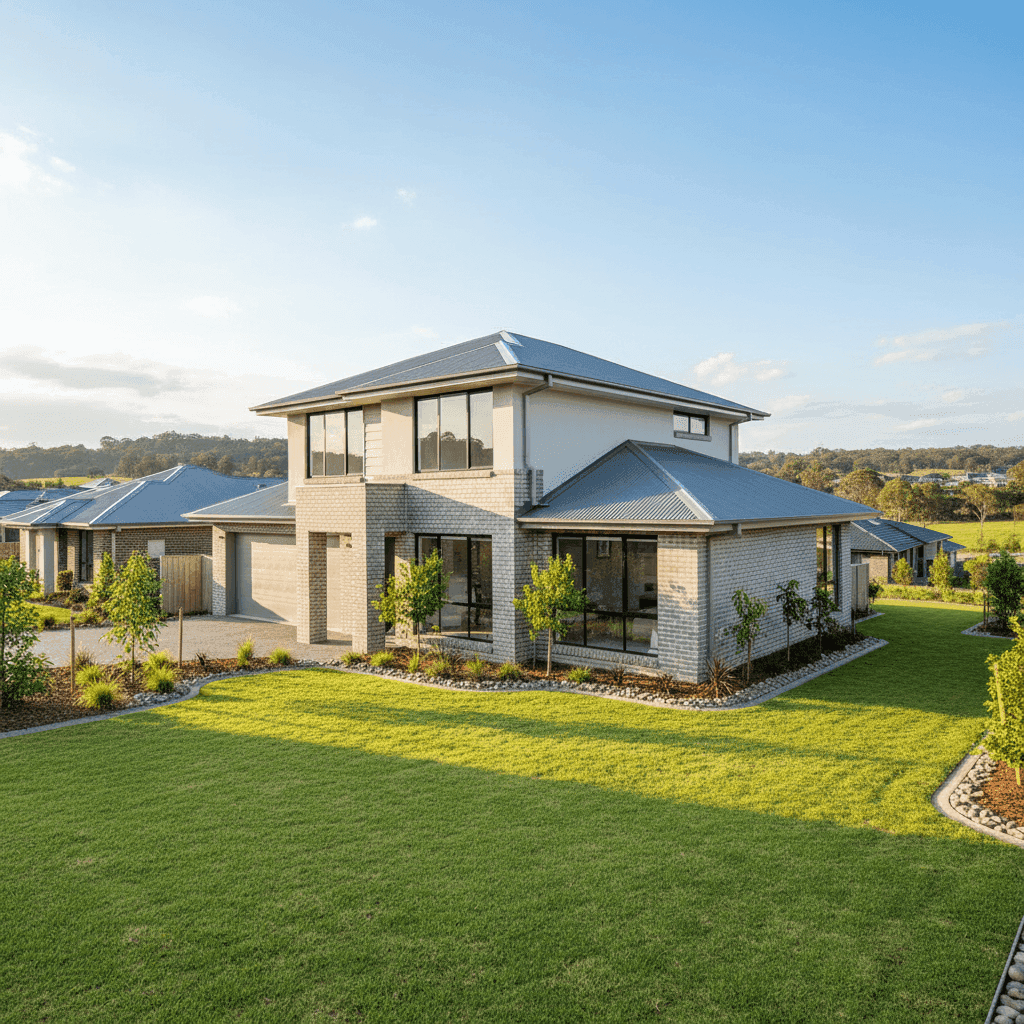
Bonville is a quiet semi-rural locality on the New South Wales Mid North Coast, sitting just south of Coffs Harbour in the Clarence Valley local government area. It's an attractive place to put down roots — but like anywhere in regional NSW, understanding what you'll pay for home insurance is an important part of owning property here. This article breaks down a real home and contents insurance quote for a five-bedroom free standing home in Bonville (postcode 2450), helping you understand whether the price stacks up and what factors are driving it.
---
Is This Quote Fair?
The quote in question comes in at $3,139 per year (or $294 per month) for combined home and contents cover, with a $600,000 building sum insured and $40,000 in contents cover. Both the building and contents excess are set at $1,000.
Our price rating for this quote is FAIR — Around Average, and the data backs that up. Against the Bonville suburb average of $3,039/yr, this quote sits just $100 above the mean — a negligible difference. It's slightly higher than the suburb median of $2,876/yr, but well within the typical range: the 25th percentile sits at $2,154/yr and the 75th percentile at $3,852/yr. At $3,139, this quote lands comfortably in the middle of the pack for the area.
In other words, you're not being overcharged, but there may be room to do better with some targeted shopping around.
---
How Bonville Compares
To put this quote in proper context, it's worth zooming out and looking at the broader pricing landscape.
| Benchmark | Average Premium | Median Premium |
|---|---|---|
| Bonville (2450) | $3,039/yr | $2,876/yr |
| NSW State | $3,801/yr | $3,410/yr |
| National | $2,965/yr | $2,716/yr |
| Clarence Valley LGA | $6,052/yr | — |
A few things stand out here. First, Bonville premiums are notably lower than the NSW state average — about 20% below the state mean. This is a meaningful difference and suggests that, relative to many parts of New South Wales, Bonville is reasonably affordable to insure. You can explore NSW-wide insurance data here.
Second, Bonville sits slightly above the national average of $2,965/yr — but only marginally. Compared to national benchmarks, homeowners in Bonville are paying close to what the typical Australian household pays for home insurance.
The most striking figure, however, is the Clarence Valley LGA average of $6,052/yr — nearly double the Bonville suburb average. This wide gap is likely driven by higher-risk pockets within the broader LGA, including flood-prone and coastal areas. Bonville's relatively favourable positioning within the LGA appears to work in homeowners' favour here.
It's worth noting that the suburb sample size for Bonville is 23 quotes, which is a reasonably small dataset. Averages can shift as more data comes in, so it's always wise to check the latest Bonville stats before making decisions.
---
Property Features That Affect Your Premium
Several characteristics of this particular property influence how insurers price the risk — and in this case, most of them are working in the homeowner's favour.
New construction (2025): A brand-new home is one of the strongest positive signals for insurers. New builds comply with current Australian building codes, use modern materials, and carry far less risk of hidden structural issues or outdated wiring. Insurers typically reward this with more competitive premiums.
Brick veneer external walls: Brick veneer is one of the most common and well-regarded wall materials in Australian residential construction. It offers solid fire resistance and durability, and insurers generally view it favourably compared to timber-framed or cladded alternatives.
Steel/Colorbond roof: Colorbond is a popular roofing choice across regional NSW, and for good reason. It's lightweight, highly durable, resistant to corrosion and bushfire ember attack, and requires minimal maintenance. From an insurance perspective, it's considered a low-risk roofing material.
Concrete slab foundation: Slab-on-ground construction is straightforward to assess and insure. It avoids the complications associated with suspended timber floors or subfloor spaces, which can be prone to moisture damage and pest activity.
Tile flooring: Hard flooring like tiles is generally seen as lower risk than carpet or timber, particularly in terms of water damage claims. It's a minor factor but contributes to the overall risk profile.
Ducted climate control: The presence of ducted air conditioning adds to the replacement value of the home's fixtures and fittings, which is factored into the building sum insured. It's a worthwhile inclusion to ensure you're not underinsured.
No pool, no solar panels: Both of these features can add complexity and cost to a home insurance policy. Their absence keeps the risk profile clean and straightforward.
No cyclone risk: Bonville is not classified as a cyclone risk area, which is a significant premium advantage compared to properties in Far North Queensland or parts of Western Australia where cyclone loading can dramatically increase costs.
---
Tips for Homeowners in Bonville
1. Make sure your building sum insured reflects true rebuild costs. With a new 2025 build, your $600,000 sum insured should be regularly reviewed as construction costs continue to rise across regional NSW. Underinsurance is one of the most common — and costly — mistakes homeowners make. Use a building cost calculator or speak with a quantity surveyor to validate your figure annually.
2. Don't overlook contents cover. A $40,000 contents value is on the lower end for a five-bedroom home. Take stock of your furniture, appliances, electronics, clothing, and valuables — many households find their contents are worth significantly more than initially estimated. Underinsuring your contents can leave you out of pocket after a claim.
3. Compare quotes at renewal, every year. Insurance pricing changes constantly, and loyalty doesn't always pay. Even if your current quote is rated as fair, running a fresh comparison at renewal could reveal meaningfully cheaper options. Get a new quote at CoverClub to see what's available for your address.
4. Consider your excess strategically. Both the building and contents excess on this policy are set at $1,000. Opting for a higher excess can reduce your annual premium — a worthwhile trade-off if you have the financial buffer to cover a larger out-of-pocket amount in the event of a claim. Conversely, if cash flow is a concern, a lower excess might be worth the slightly higher premium.
---
Ready to Compare?
Whether you're reviewing your current policy or shopping for cover on a new property, CoverClub makes it easy to see how your quote stacks up. We aggregate real insurance pricing data from across Australia so you can make an informed decision — not just take the first quote you're offered. Start comparing home insurance quotes today and find out what a fair price looks like for your home in Bonville.