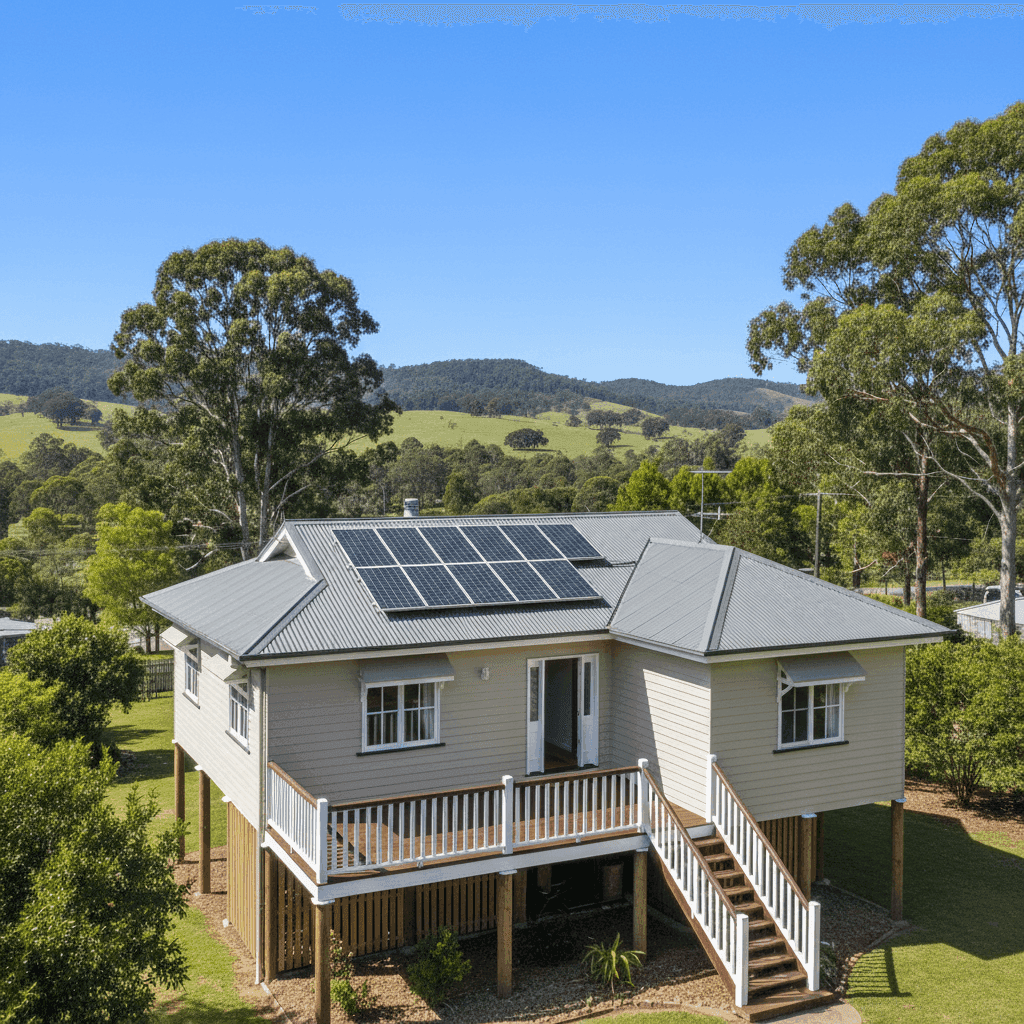
If you own a free standing home in Booie, QLD 4610, you're probably wondering whether what you're paying for building insurance is reasonable — or whether there's a better deal out there. This article breaks down a real building-only insurance quote for a three-bedroom, weatherboard home in Booie, compares it against local, state and national benchmarks, and offers practical tips to help you get the most value from your cover.
---
Is This Quote Fair?
The quote in question comes in at $2,641 per year (or $257 per month) for building-only cover on a free standing home with a sum insured of $550,000 and a building excess of $2,000.
Our price rating for this quote is FAIR — Around Average.
That assessment holds up when you look at the numbers. The suburb average premium for Booie sits at $2,224 per year, and the median is $2,021 per year, based on 58 quotes collected for the area. At $2,641, this quote is above both the average and the median, landing it in the upper half of the local pricing range — but still comfortably below the 75th percentile of $2,889 per year. In other words, roughly a quarter of homeowners in Booie are paying more than this.
So while it's not the cheapest quote on the block, it's far from the most expensive. The "fair" rating reflects a premium that's higher than typical for the suburb, but not unreasonably so given the specific characteristics of the property.
---
How Booie Compares to the Rest of Queensland and Australia
One of the most striking things about this quote is just how affordable Booie is relative to the broader Queensland insurance market.
The QLD state average premium is $9,129 per year — more than three times what this homeowner is paying. Even the state median of $3,903 per year is significantly higher than the Booie suburb average of $2,224. This reflects the enormous variation in insurance costs across Queensland, where cyclone-prone coastal and far-north regions can push premiums to eye-watering levels.
Compared to national figures, the picture is similarly favourable. The national average sits at $5,347 per year, and the national median is $2,764 per year. Booie's suburb average of $2,224 is well below both.
Within the South Burnett LGA, the average premium is $2,940 per year, which means Booie actually tracks cheaper than the broader local government area — a good sign for homeowners in the suburb.
| Benchmark | Annual Premium |
|---|---|
| This Quote | $2,641 |
| Booie Suburb Average | $2,224 |
| Booie Suburb Median | $2,021 |
| South Burnett LGA Average | $2,940 |
| QLD State Average | $9,129 |
| National Average | $5,347 |
The takeaway? Booie homeowners are in a relatively low-risk, affordable insurance zone compared to much of Queensland and the country. That said, there's still meaningful variation within the suburb itself — the gap between the 25th percentile ($1,279) and the 75th percentile ($2,889) is considerable, which means shopping around can genuinely pay off.
---
Property Features That Affect Your Premium
Every property is different, and insurers weigh up a range of factors when calculating your premium. Here's how the key features of this particular home are likely influencing the cost:
Weatherboard timber walls are a common construction type in regional Queensland, but they do carry a higher fire risk than brick or rendered masonry. Insurers typically price this in, which can push premiums up slightly compared to brick homes.
Steel/Colorbond roofing is generally viewed favourably by insurers. It's durable, low-maintenance, and performs well in storms and high winds — a significant consideration in Queensland. This is likely helping to keep the premium in check.
Elevated on stumps (at least 1 metre) is a classic Queenslander-style feature and can be a double-edged sword for insurance. On the positive side, elevation provides excellent flood resilience, keeping the living areas well above ground-level water ingress. On the other hand, the subfloor space and the stumps themselves add to the rebuild cost and complexity, which is reflected in the sum insured.
Timber and laminate flooring can be more susceptible to water damage than tiles, which may factor into the insurer's risk assessment.
Solar panels are installed on this property. While solar panels themselves are a relatively modest addition to insured value, they do need to be accounted for in the sum insured to ensure you're fully covered in the event of a total loss.
No pool, no ducted climate control, and outside a cyclone risk zone — these all work in the homeowner's favour. The absence of a cyclone risk designation is particularly significant in Queensland, where cyclone exposure is one of the biggest drivers of elevated premiums in the state.
The $550,000 sum insured for a 139 sqm home built in 1994 is on the higher end for the area, and this will naturally be a key driver of the premium. It's worth periodically reviewing your sum insured to make sure it accurately reflects current rebuild costs — neither under-insuring nor over-insuring.
---
Tips for Homeowners in Booie
1. Shop around — the range is wide With a spread of over $1,600 between the 25th and 75th percentile in Booie, there's real money to be saved by comparing multiple insurers. Don't assume your renewal price is the best available. Get a quote at CoverClub to see how your current premium stacks up.
2. Review your sum insured regularly Building costs have risen significantly in recent years. Make sure your sum insured reflects what it would actually cost to rebuild your home from scratch today — including demolition, debris removal, and professional fees. Under-insurance is a common and costly mistake. Equally, if your sum insured is set too high, you may be paying more premium than necessary.
3. Consider your excess carefully This quote carries a $2,000 building excess. Opting for a higher excess is one of the most straightforward ways to reduce your annual premium. If you have savings to cover a larger out-of-pocket cost in the event of a claim, raising your excess could meaningfully lower what you pay each year.
4. Maintain your home to reduce risk Weatherboard homes require regular upkeep — particularly painting and sealing to protect against moisture. Keeping your home well-maintained not only preserves its value but can also support your claims if you ever need to make one. Some insurers also reward proactive maintenance with better pricing at renewal.
---
Compare Your Home Insurance Today
Whether you're reviewing an existing policy or shopping for cover for the first time, CoverClub makes it easy to compare home insurance quotes tailored to your property in Booie. Check out the Booie suburb stats to see how your premium compares to your neighbours, or get a personalised quote in minutes. A few minutes of comparison could save you hundreds of dollars a year.