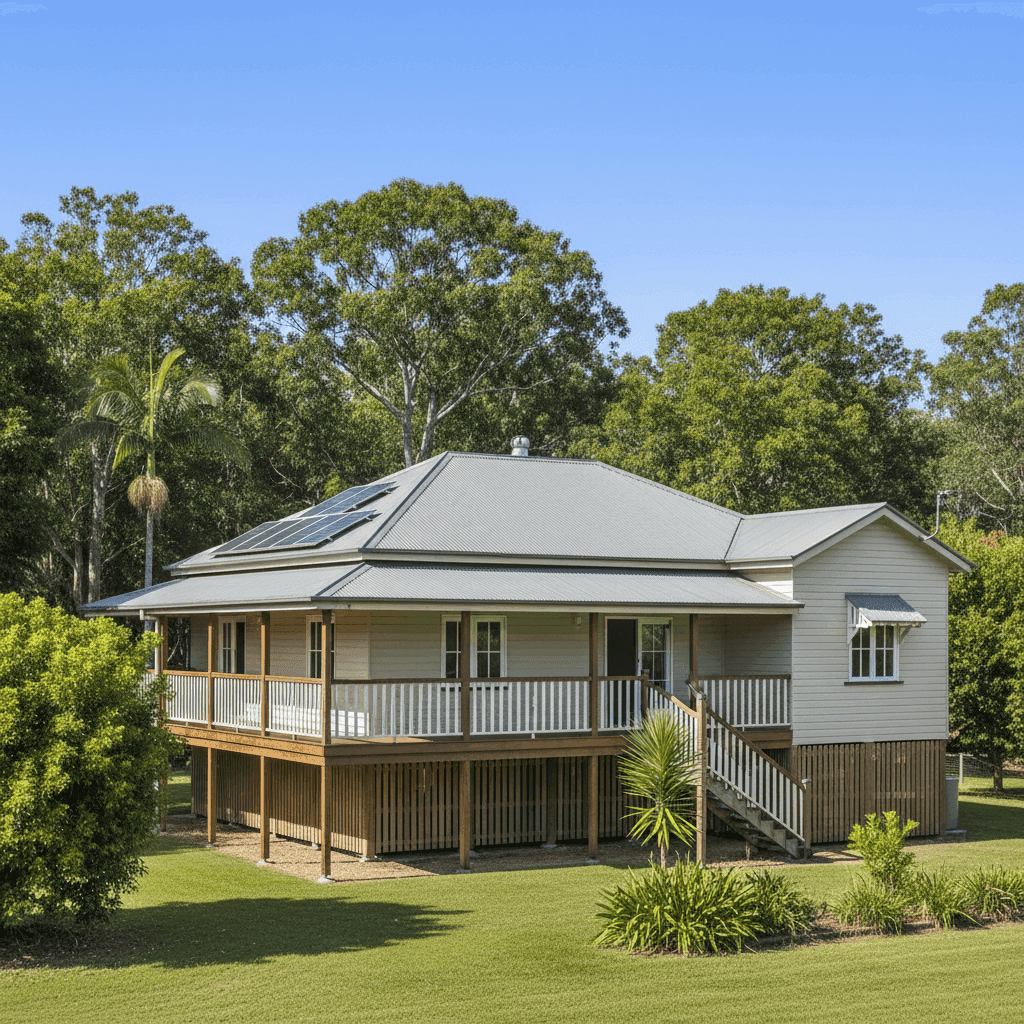
If you own a free standing home in Booie, QLD 4610, you might be wondering whether your home insurance premium stacks up against what your neighbours are paying — or whether you're leaving money on the table. This article breaks down a real home and contents insurance quote for a three-bedroom, one-bathroom weatherboard home in Booie, compares it against suburb, state, and national benchmarks, and offers practical tips to help you get better value on your cover.
---
Is This Quote Fair?
The quote in question comes in at $2,426 per year (or $232/month) for combined home and contents cover, with a building sum insured of $502,000 and contents valued at $25,000. Both the building and contents excess are set at $2,000.
Our pricing analysis rates this quote as FAIR — Around Average. That's a reasonable outcome for a property in this part of Queensland, though it's worth understanding exactly what "average" means in context.
Compared to the suburb average of $2,224/yr, this quote sits about $202 above the mean — roughly 9% higher. However, it's comfortably below the 75th percentile of $2,889/yr, meaning at least a quarter of Booie homeowners are paying more. The suburb median sits at $2,021/yr, so while this quote isn't the sharpest price in the postcode, it's far from the most expensive either.
The higher-than-median figure is likely influenced by the elevated building sum insured ($502,000), which is a significant coverage amount for a 139 sqm home. A larger sum insured naturally lifts the premium, even if the base risk profile of the property is unremarkable.
---
How Booie Compares
One of the most striking things about this quote is how favourably Booie compares to the broader Queensland market. Queensland's average home insurance premium sits at a hefty $9,129/yr, driven largely by high-risk coastal and cyclone-prone regions in the north of the state. The state median is more moderate at $3,903/yr — but even that is significantly above what most Booie homeowners are paying.
At the national level, the average premium is $5,347/yr, with a median of $2,764/yr. Again, this quote at $2,426/yr comes in below the national median — a positive sign for Booie property owners.
Within the South Burnett LGA, the average premium is $2,940/yr, meaning this quote is actually around $514 cheaper than the local government area average. That's a meaningful difference and suggests Booie itself may carry a slightly lower risk profile than some other parts of the South Burnett region.
You can explore the full breakdown of insurance pricing trends for Booie and surrounding suburbs here.
| Benchmark | Premium |
|---|---|
| This Quote | $2,426/yr |
| Booie Suburb Average | $2,224/yr |
| Booie Suburb Median | $2,021/yr |
| South Burnett LGA Average | $2,940/yr |
| QLD State Average | $9,129/yr |
| National Average | $5,347/yr |
| National Median | $2,764/yr |
---
Property Features That Affect Your Premium
Every property tells its own story when it comes to insurance pricing. Here's how the specific features of this Booie home influence the premium:
Weatherboard Timber Walls
Weatherboard wood construction is one of the most common wall types in regional Queensland, particularly in older homes. While timber is charming and well-suited to the climate, it does carry a higher fire risk than brick or fibre cement, which can push premiums up slightly. Insurers factor in both the replaceability and the vulnerability of the material.
Steel/Colorbond Roof
Colorbond roofing is generally viewed favourably by insurers. It's durable, low-maintenance, and performs well in high winds and heavy rain — all relevant considerations in Queensland. This is likely a neutral-to-positive factor in the premium calculation.
Elevated on Stumps (At Least 1 Metre)
The home is elevated by at least one metre on stumps — a classic Queensland design that offers real practical benefits. Elevation can reduce flood and inundation risk by keeping the living areas above ground-level water, which may help moderate the premium compared to a slab-on-ground property in the same area. That said, elevated homes can also be more vulnerable to wind uplift, so the net effect depends on the insurer's risk model.
Timber and Laminate Flooring
Timber flooring is a premium material that can be costly to repair or replace after events like flooding or fire. Insurers consider the cost of reinstatement when pricing cover, so this is worth keeping in mind if you're reviewing your sum insured.
Solar Panels
The property has solar panels installed. Many homeowners don't realise that solar panels should be specifically covered under their home insurance policy. It's worth confirming with your insurer that your panels — including inverters and mounting hardware — are included in your building sum insured.
No Pool, No Ducted Climate Control
The absence of a pool removes one common liability risk and potential maintenance concern. Similarly, no ducted climate control system means fewer complex mechanical components that could require costly repair or replacement.
Not in a Cyclone Risk Zone
Booie is not classified as a cyclone risk area, which is a significant factor given how dramatically cyclone exposure inflates premiums in northern Queensland. This is one of the primary reasons Booie's premiums are so much lower than the Queensland state average.
---
Tips for Homeowners in Booie
1. Review Your Building Sum Insured Carefully
At $502,000, the building sum insured on this policy is substantial for a 139 sqm home. Make sure this figure reflects the actual cost to rebuild your home from scratch — including demolition, professional fees, and current construction costs — rather than its market value. Overinsuring can mean unnecessarily high premiums, while underinsuring can leave you seriously out of pocket after a claim.
2. Confirm Solar Panels Are Covered
Solar panels are a meaningful asset and, in many cases, are not automatically included in standard building cover without explicit mention. Check your Product Disclosure Statement (PDS) to confirm your system is covered for damage from storms, hail, fire, and accidental breakage.
3. Consider Adjusting Your Excess
This policy carries a $2,000 excess on both building and contents. A higher excess typically results in a lower annual premium. If you're financially comfortable absorbing a larger out-of-pocket cost in the event of a claim, increasing your excess further could meaningfully reduce what you pay each year.
4. Shop Around Annually
The home insurance market is competitive, and premiums can vary significantly between insurers for the same property and coverage level. With 58 quotes in the Booie sample, there's clearly a wide spread of pricing in this postcode — from $1,279/yr at the 25th percentile to $2,889/yr at the 75th. Comparing quotes each year at renewal is one of the simplest ways to avoid paying more than you need to.
---
Find a Better Deal with CoverClub
Whether you're happy with your current cover or suspect you might be overpaying, it always pays to compare. CoverClub makes it easy to benchmark your premium against real data from your suburb and get quotes tailored to your property. Start comparing home insurance quotes today — it takes just a few minutes and could save you hundreds of dollars a year.