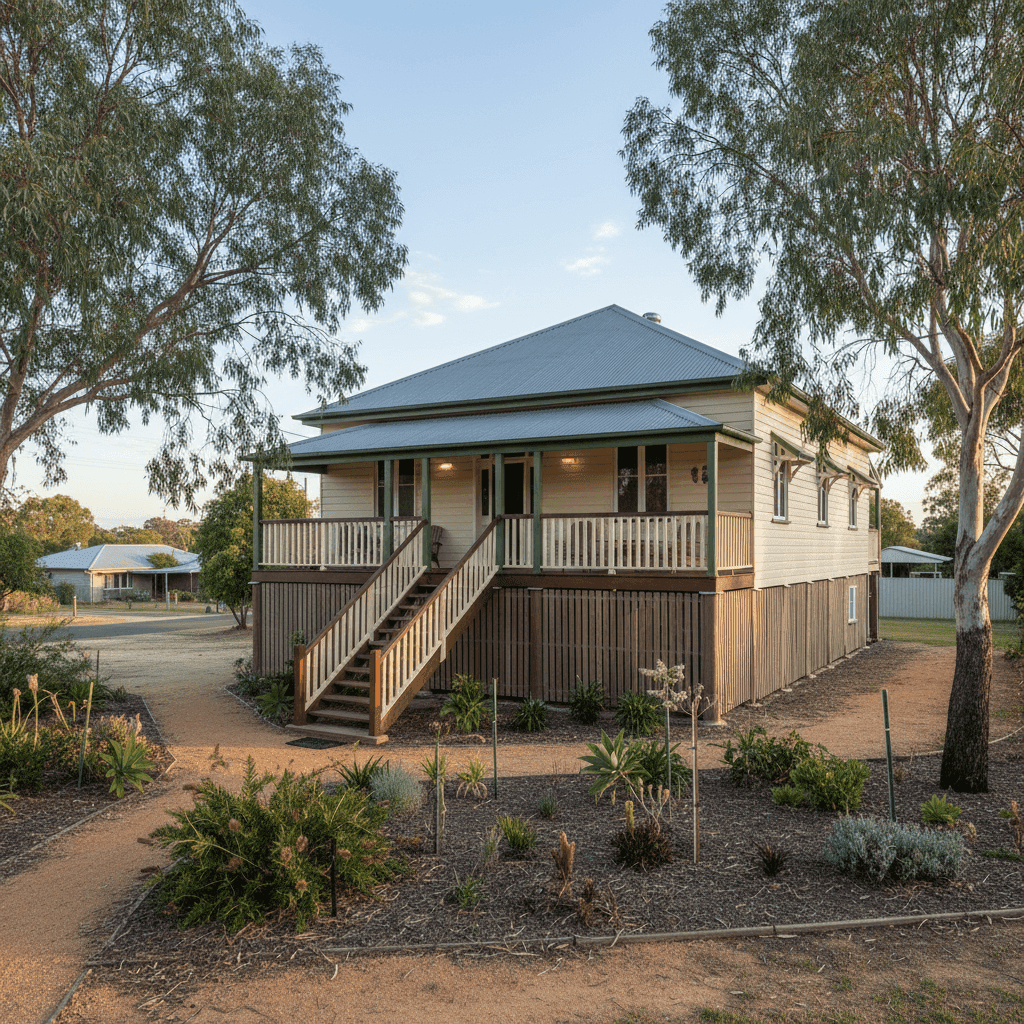
If you own a free standing home in Booie, QLD 4610, you're likely well aware that home insurance costs across Queensland can vary enormously depending on where you live and what your property is made of. This article breaks down a real building insurance quote for a three-bedroom, one-bathroom weatherboard home in Booie — and puts it in context against suburb, state, and national benchmarks so you can judge whether you're getting a fair deal.
---
Is This Quote Fair?
The quote in question comes in at $1,607 per year (or around $157 per month) for building-only cover on a home insured for $448,000, with a building excess of $3,000.
Our price rating for this quote is CHEAP — below average — and the numbers back that up convincingly. The suburb average premium in Booie sits at $2,638 per year, meaning this quote is roughly 39% below what most homeowners in the area are paying. Compared to the suburb median of $2,734, the saving is even more pronounced.
To put it another way: this quote sits well below the 25th percentile for the suburb ($1,819/yr), meaning it's cheaper than at least 75% of quotes recorded in Booie. That's a genuinely strong result, and homeowners in a similar position should feel confident they're not being overcharged.
Of course, premiums vary based on the insurer, the sum insured, and the specific risk profile of the property — so it's always worth comparing a few options before committing.
---
How Booie Compares
To appreciate just how competitive this quote is, it helps to zoom out and look at the broader picture.
| Benchmark | Annual Premium |
|---|---|
| This Quote | $1,607 |
| Booie Suburb Average | $2,638 |
| Booie Suburb Median | $2,734 |
| South Burnett LGA Average | $3,467 |
| QLD State Average | $4,547 |
| QLD State Median | $3,931 |
| National Average | $2,965 |
| National Median | $2,716 |
A few things stand out here. First, Booie's suburb average of $2,638 is actually below the national average of $2,965 — which is somewhat surprising given that Queensland as a whole is one of the most expensive states for home insurance in Australia. The QLD state average of $4,547/yr reflects the significant flood, storm, and cyclone exposure that affects much of the state, particularly in coastal and low-lying areas.
Booie, situated in the South Burnett region inland from the Sunshine Coast, benefits from being outside the most high-risk zones — though it's not without its own weather considerations. The South Burnett LGA average of $3,467/yr is notably higher than the Booie suburb average, suggesting premiums vary quite a bit across the broader local government area.
For a national perspective, the Australian average home insurance premium of $2,965/yr highlights just how affordable this particular quote is — sitting at roughly 54% of the national average.
---
Property Features That Affect Your Premium
Several characteristics of this property are worth discussing, as they each play a role in how insurers assess risk and price the policy.
Weatherboard Timber Construction
Weatherboard wood external walls are a hallmark of older Australian homes and bring a certain charm — but from an insurer's perspective, timber is generally considered higher risk than brick veneer or full brick. Timber is more susceptible to fire, termite damage, and general deterioration over time. Homeowners with weatherboard homes should ensure their sum insured accounts for the potentially higher rebuild cost of sourcing and fitting timber cladding.
Steel/Colorbond Roof
On the upside, a steel Colorbond roof is viewed favourably by most insurers. It's durable, fire-resistant, and performs well in high-wind conditions. Compared to terracotta tiles or older corrugated iron, Colorbond tends to attract lower premiums and requires less maintenance over its lifespan.
Elevated on Stumps (At Least 1 Metre)
This is one of the most significant factors working in favour of this property's premium. Homes elevated by at least one metre on stumps — classic Queenslander style — are substantially better protected against flood and storm water inundation. Many insurers apply meaningful discounts for elevated homes in flood-prone regions, and this is almost certainly contributing to the below-average premium here.
Construction Year: 1930
A home built in 1930 is nearly a century old, which raises questions about the condition of electrical wiring, plumbing, and structural elements. Older homes can attract higher premiums with some insurers due to the increased likelihood of maintenance-related claims. That said, a well-maintained heritage home on stumps with a modern roof can still be very insurable at reasonable rates.
Standard Fittings, No Pool, No Solar
The standard fittings quality, absence of a pool, and no solar panels all keep things relatively straightforward from a risk and replacement-cost perspective. There are no high-value extras to inflate the sum insured or introduce additional liability considerations.
---
Tips for Homeowners in Booie
Whether you're reviewing your existing policy or shopping for the first time, here are a few practical steps to make sure you're getting the best outcome.
- Review your sum insured regularly. Building costs have risen sharply across Australia in recent years. A sum insured of $448,000 for a 130 sqm home is worth revisiting annually — particularly for an older timber home where sourcing period-appropriate materials can push rebuild costs higher than you'd expect.
- Highlight your elevated foundation. When getting quotes, make sure you accurately declare that your home is elevated by at least one metre. This is a meaningful risk-reduction factor that not all comparison tools capture by default, and it can make a real difference to your premium.
- Maintain your weatherboard cladding. Insurers may reduce cover or increase premiums if a property is found to be poorly maintained at claim time. Regular painting, checking for rot, and keeping gutters clear are simple steps that protect both your home and your insurance position.
- Compare quotes before renewal. The fact that this quote sits well below the suburb average is a reminder that premiums vary significantly between insurers for the same property. Don't assume your renewal price is competitive — it often isn't. Get a fresh quote at CoverClub to see what the market is offering.
---
Find the Right Cover for Your Home
Whether this quote is your starting point or a benchmark to beat, the smartest move is always to compare. CoverClub makes it easy to see how your premium stacks up against real data from homeowners in your suburb, your LGA, and across Australia.
Start comparing home insurance quotes at CoverClub — it takes just a few minutes, and you might be surprised at what you find. You can also explore Booie suburb insurance statistics and Queensland-wide premium data to get a fuller picture of the market before you decide.