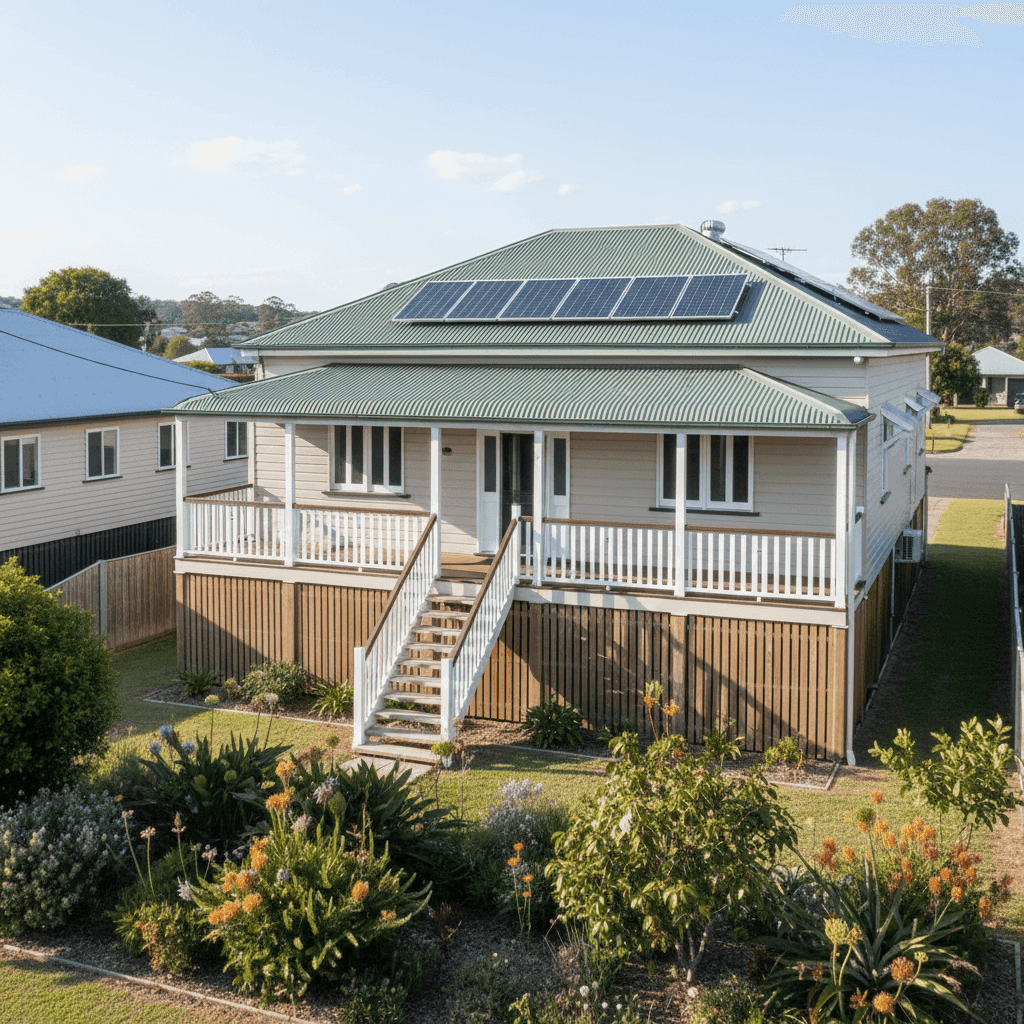
If you own a free standing home in Booie, QLD 4610, you're probably wondering whether you're paying a fair price for your home and contents insurance — or leaving money on the table. This article breaks down a real insurance quote for a 3-bedroom weatherboard home in Booie, compares it against local, state, and national benchmarks, and offers practical tips to help you get better value on your cover.
---
Is This Quote Fair?
The quote in question comes in at $2,014 per year (or $193/month) for combined home and contents insurance, with a building sum insured of $500,000 and contents valued at $50,000. The building excess is $5,000 and the contents excess is $2,000.
Our pricing analysis rates this quote as FAIR — around average. That's actually a reasonable outcome for a Queensland property, where insurance premiums have been climbing sharply in recent years due to increased weather events and rising rebuild costs.
The "fair" rating means this quote sits close to the middle of the market for comparable properties in the area — not the cheapest available, but not overpriced either. Whether it's the right price for you will depend on how the insurer's policy terms, inclusions, and excess structure suit your needs.
---
How Booie Compares
To put this quote in context, let's look at how it stacks up against the broader market. You can explore the full data on the Booie suburb stats page.
Suburb Level (Booie, 4610)
Based on 58 quotes collected for properties in this postcode:
| Metric | Premium |
|---|---|
| This Quote | $2,014/yr |
| Suburb Median | $2,021/yr |
| Suburb Average | $2,224/yr |
| 25th Percentile | $1,279/yr |
| 75th Percentile | $2,889/yr |
This quote lands almost exactly on the suburb median — meaning roughly half of comparable Booie properties are paying more, and half are paying less. It sits comfortably below the suburb average of $2,224, which suggests there may be some higher-risk or higher-value properties pulling the average upward.
The spread between the 25th and 75th percentiles ($1,279 to $2,889) is notably wide, which reflects the variation in property types, sum insured levels, and individual insurer pricing across the area.
LGA Level (South Burnett)
The South Burnett LGA average sits at $2,940/yr — meaningfully higher than this quote. That suggests Booie, as a suburb within the LGA, may attract slightly more competitive pricing than some neighbouring areas, and this particular quote is performing well against the broader council region.
State and National Level
The contrast becomes even starker when you zoom out:
- Queensland average: $9,129/yr — more than four times this quote
- Queensland median: $3,903/yr — still nearly double
- National average: $5,347/yr
- National median: $2,764/yr
You can view Queensland-wide data on the QLD insurance stats page and broader benchmarks on the national stats page.
The Queensland state average is heavily skewed by high-risk coastal and cyclone-prone areas — think Cairns, Townsville, and parts of the Gold Coast — where premiums can be eye-watering. Booie, situated in the South Burnett region inland from the Sunshine Coast, benefits from being outside designated cyclone risk zones, which keeps premiums considerably lower than the state norm.
---
Property Features That Affect Your Premium
Several characteristics of this property have a direct influence on how insurers price the risk.
Weatherboard Timber Construction
Weatherboard wood external walls are common in older Queensland homes and carry a moderate risk profile. Timber is more susceptible to fire, pest damage, and moisture compared to brick or rendered masonry, which can push premiums slightly higher. That said, well-maintained weatherboard homes are a staple of regional Queensland and most insurers price them routinely.
Steel / Colorbond Roof
Colorbond steel roofing is generally viewed favourably by insurers. It's durable, low-maintenance, and performs well in high-wind events. This roof type is unlikely to be adding a loading to the premium and may actually work in the homeowner's favour.
Elevated on Stumps (at Least 1 Metre)
This is a significant factor. Being elevated by at least one metre on stumps — classic Queenslander style — provides meaningful flood resilience. Water that might inundate a slab-on-ground home can pass beneath an elevated home without causing structural damage. Insurers recognise this, and it can result in more competitive flood cover pricing, particularly in areas with any overland flow or stormwater risk.
Solar Panels
The property has solar panels installed. These add to the insured value of the home and need to be covered under the building policy. Most home insurance policies in Australia include solar panels as part of the building sum insured, but it's worth confirming this is explicitly covered and that the $500,000 sum insured adequately accounts for replacement costs including the panels.
Ducted Climate Control
Ducted air conditioning systems are a significant fixed asset and are typically covered under building insurance. As with solar panels, homeowners should verify that the system is included in the building sum insured and that the coverage extends to mechanical breakdown or storm damage scenarios, depending on the policy.
Built in 1994
At around 30 years old, this home is mature but not ancient. Properties of this age are generally straightforward to insure, though it's worth ensuring the sum insured reflects current rebuild costs — including compliance with modern building codes, which can add significantly to reconstruction expenses after a total loss.
---
Tips for Homeowners in Booie
1. Review Your Sum Insured Regularly
Building costs in regional Queensland have risen sharply. A $500,000 sum insured may feel substantial, but if it hasn't been reviewed recently, it may not reflect true replacement value — especially factoring in demolition, site clearance, and code-compliant rebuilding. Use a building cost calculator or speak with a local builder to sense-check the figure annually.
2. Understand Your Excess Structure
This policy carries a $5,000 building excess and $2,000 contents excess. Higher excesses typically reduce your annual premium, but they also mean a larger out-of-pocket cost at claim time. Make sure you have accessible savings to cover these amounts if you need to make a claim, particularly for the building component.
3. Confirm Solar and Ducted AC Are Covered
As noted above, these are valuable assets. Read your Product Disclosure Statement (PDS) carefully to confirm both the solar panel system and ducted climate control are explicitly included in your building cover — and that the sum insured is sufficient to replace them.
4. Shop the Market at Renewal
Even with a "fair" rating, the wide premium spread in Booie (from $1,279 to $2,889) shows there's meaningful variation between insurers. At renewal time, it's worth getting at least two or three competing quotes. Loyalty doesn't always pay in home insurance — new customer pricing can be significantly lower than renewal offers from your existing insurer.
---
Compare Your Own Quote
Whether you're a first-time buyer in Booie or a long-time homeowner reassessing your cover, it pays to know where your premium stands. CoverClub helps Australian homeowners understand their insurance costs and compare quotes in minutes.
Get a home insurance quote today at CoverClub and see how your premium stacks up against your neighbours — and the rest of the country.