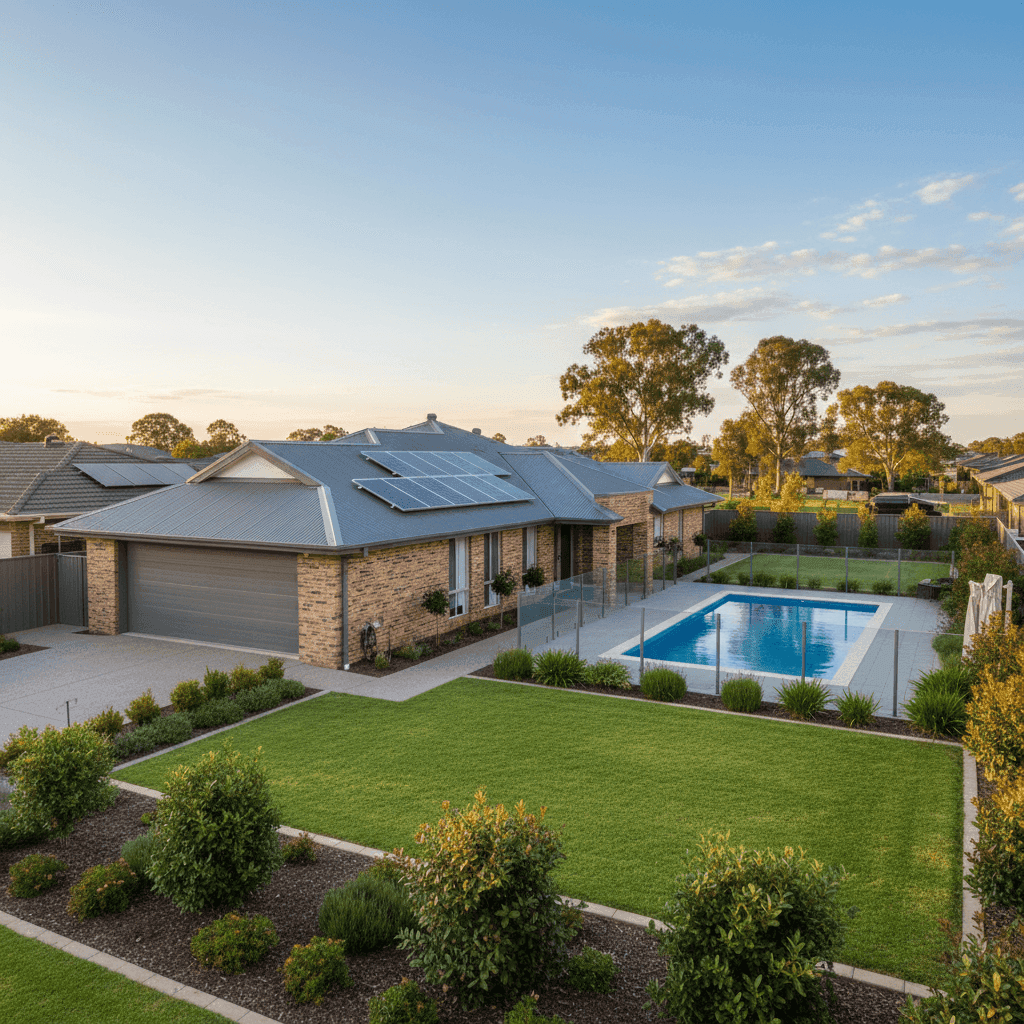
If you own a free standing home in Boorhaman, VIC 3678, you're likely no stranger to the realities of insuring a regional Victorian property. Nestled in the Moira local government area in the state's north-east, Boorhaman is a quiet rural locality where properties tend to be well-built and spacious — but where insurance costs can sometimes raise an eyebrow. This article breaks down a real home and contents insurance quote for a four-bedroom, two-bathroom home in the area, compares it against state and national benchmarks, and offers practical tips to help you get better value on your cover.
---
Is This Quote Fair?
The quote in question comes to $3,960 per year (or $388/month) for combined home and contents insurance, covering a building sum insured of $452,000 and contents valued at $120,000. The building excess sits at $3,000, with a separate $1,000 excess on contents.
Our rating for this quote is Expensive — above average when measured against both Victorian and national benchmarks.
To put that in perspective:
- The Victorian state average premium is $2,921/yr, and the median sits at $2,694/yr
- The national average is $2,965/yr, with a median of $2,716/yr
At $3,960/yr, this quote is approximately $1,039 above the Victorian average and $995 above the national average — a meaningful gap that's worth investigating before you simply accept the renewal or sign up with the first insurer you approach.
That said, context matters. A blanket comparison to state or national figures doesn't always tell the full story. The sum insured here is substantial ($452,000 for the building alone), the property includes a pool and solar panels, and the home is located in a regional LGA that carries its own risk profile. All of these factors legitimately push premiums upward.
---
How Boorhaman Compares
Unfortunately, there isn't enough suburb-level data to produce a reliable Boorhaman-specific average — which is common for smaller rural localities. However, we can look at the Moira LGA, which paints a revealing picture.
| Benchmark | Annual Premium |
|---|---|
| Moira LGA Average | $4,349/yr |
| VIC State Average | $2,921/yr |
| National Average | $2,965/yr |
| This Quote | $3,960/yr |
Interestingly, while this quote is above the Victorian and national averages, it actually comes in below the Moira LGA average of $4,349/yr. That suggests that — within its local context — this premium is not entirely out of step with what other homeowners in the region are paying.
The Moira LGA's elevated average likely reflects a combination of factors: flood and inundation risk from nearby waterways, the cost of insuring larger rural properties, and the higher rebuilding costs associated with regional areas where trades and materials can be harder to source.
You can explore more data for this area on our Boorhaman suburb stats page, or compare it against the broader Victorian insurance landscape and national averages.
---
Property Features That Affect Your Premium
Several characteristics of this particular home are worth examining, as they each play a role in how insurers calculate risk and set premiums.
Brick Veneer Walls & Colorbond Roof This is a solid, modern construction combination. Brick veneer is a widely accepted wall type that insurers generally view favourably — it offers good fire resistance and structural durability. The Colorbond steel roof is similarly well-regarded: it's lightweight, low-maintenance, and performs well in both heat and moderate weather events. Together, these materials typically attract more competitive premiums than timber-framed or older construction types.
Slab Foundation A concrete slab foundation, particularly on a home built in 2018, is a strong positive from an insurer's perspective. Slabs are less susceptible to subsidence and pest-related structural issues than older pier-and-beam foundations, which can reduce risk in the eyes of underwriters.
Swimming Pool Pools introduce additional liability risk and can increase premiums — particularly for public liability components of a home policy. Insurers factor in the potential for accidents and the cost of pool-related damage or repairs.
Solar Panels Rooftop solar is increasingly common, but it does add complexity to a home insurance policy. Panels represent a significant capital asset (often $8,000–$20,000 or more), and their installation can affect roof integrity claims. Some policies cover solar panels as part of the building sum insured; others treat them separately. It's worth confirming exactly how your policy handles this.
Ducted Climate Control Ducted air conditioning systems are a fixed building feature and are typically included in the building sum insured. These systems can be costly to repair or replace, and their presence contributes to a higher overall rebuild cost — which in turn justifies a higher sum insured.
2018 Construction A relatively modern build is a genuine advantage. Homes constructed after 2010 generally comply with updated Australian building codes, including improved energy efficiency and structural standards, which can translate to lower risk assessments by insurers.
214 sqm Building Size At 214 square metres, this is a comfortably sized family home. Building size is one of the most direct drivers of sum insured — and therefore premium — since a larger home costs more to rebuild from scratch.
---
Tips for Homeowners in Boorhaman
1. Shop around — especially given the LGA context The Moira LGA average of $4,349/yr shows that many locals are paying even more than this quote. That doesn't mean you should accept an above-average premium without question. Use a comparison platform like CoverClub to see quotes from multiple insurers side by side and identify whether a better deal exists for your specific property.
2. Review your sum insured carefully A $452,000 building sum insured is a significant figure. Make sure it reflects the actual cost to rebuild your home — not its market value. Over-insuring pushes your premium up unnecessarily, while under-insuring can leave you exposed. Tools like the Cordell Sum Sure calculator (often embedded in insurer quote flows) can help you arrive at an accurate figure.
3. Ask about your pool and solar panel coverage Given that this property has both a pool and solar panels, it's worth having a direct conversation with your insurer about exactly how these are covered. Are the solar panels included in the building sum insured? Is the pool equipment (pump, filter, heating) covered? Clarity now prevents disputes at claim time.
4. Consider the impact of your excess settings This quote carries a $3,000 building excess, which is on the higher side. While a higher excess reduces your premium, it also means a larger out-of-pocket cost if you need to make a claim. Review whether the premium saving justifies the excess level, particularly for a property with a pool (which can generate claims for accidental damage or liability events).
---
Ready to Compare?
Whether you're reviewing your current policy or shopping for the first time, it pays to see what's available across the market. CoverClub makes it easy to compare home and contents insurance quotes for properties across Victoria and Australia. Get a quote today and find out whether you could be paying less — without sacrificing the cover you need.