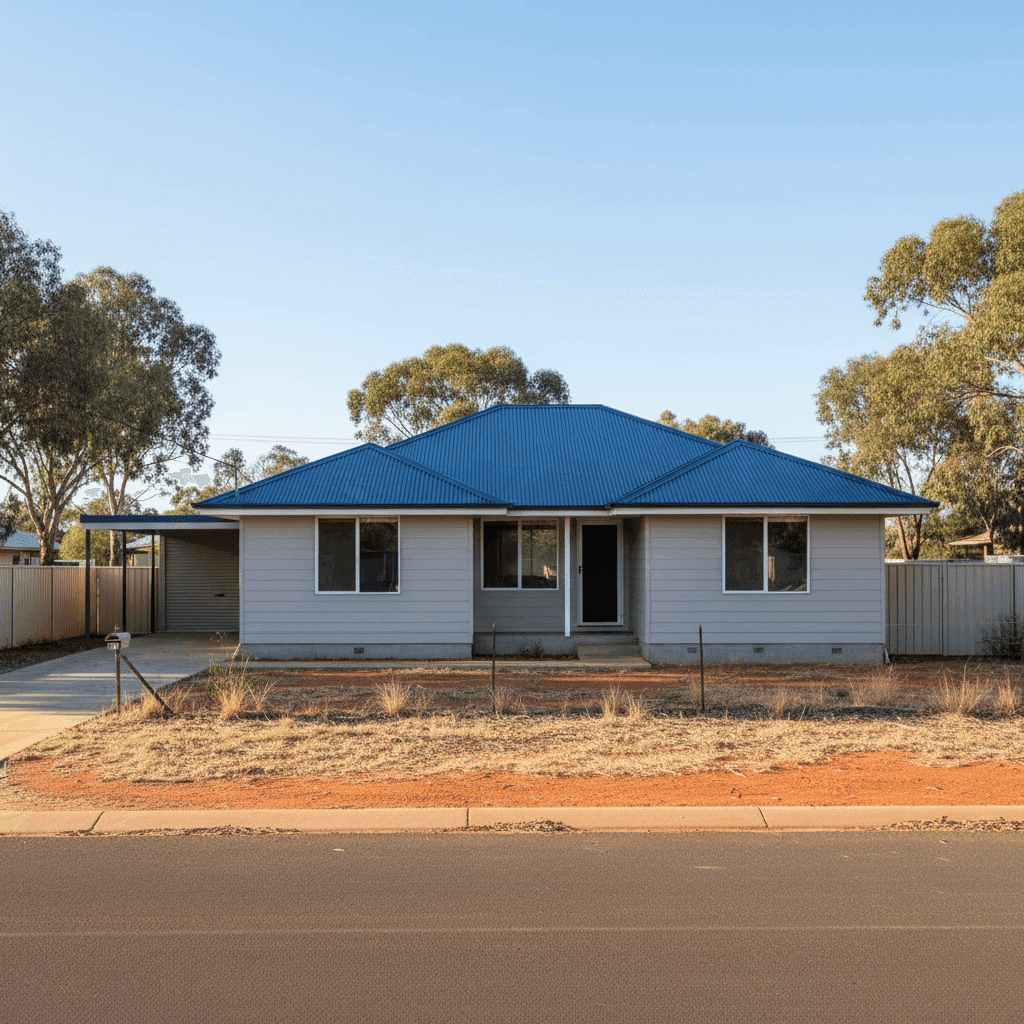
If you own a free standing home in Boulder, WA 6432, you've probably wondered whether you're paying a fair price for your home and contents insurance. Boulder is a historic goldfields town in the City of Kalgoorlie-Boulder, sitting in the heart of Western Australia's outback interior — and like any regional location, its insurance market has its own unique characteristics worth understanding.
In this article, we break down a real home and contents insurance quote for a three-bedroom, one-bathroom free standing home in Boulder, compare it against local, state, and national benchmarks, and share some practical tips to help you get the best value on your cover.
---
Is This Quote Fair?
The quote in question comes in at $1,983 per year (or $194/month) for combined home and contents cover, with a building sum insured of $692,000 and contents valued at $85,000. The building excess is $2,500 and the contents excess is $500.
Our price rating for this quote is FAIR — Around Average.
That assessment holds up well under scrutiny. The premium sits above the suburb median of $1,528/yr, but comfortably below the suburb's 75th percentile of $2,224/yr. In practical terms, roughly half of comparable Boulder properties are insured for less — but a meaningful portion are paying more. This quote lands in the middle of the pack, which is exactly what a "fair" rating reflects.
It's worth noting that the sum insured here is relatively substantial at $692,000 for the building alone. For a 130 sqm home built in 1985, that figure accounts for full replacement cost including demolition, materials, and labour at today's prices — not just the land value. A higher sum insured will naturally push premiums upward, so context matters when comparing figures.
---
How Boulder Compares
To put this quote in perspective, here's how Boulder stacks up across different geographic benchmarks:
| Benchmark | Average Premium | Median Premium |
|---|---|---|
| Boulder (suburb) | $1,843/yr | $1,528/yr |
| Kalgoorlie-Boulder LGA | $2,223/yr | — |
| Western Australia | $2,811/yr | $2,127/yr |
| National | $5,347/yr | $2,764/yr |
(Based on [Boulder suburb data](https://coverclub.com.au/stats/WA/6432/boulder), [WA state data](https://coverclub.com.au/stats/WA), and [national data](https://coverclub.com.au/stats/national) from CoverClub)
A few things stand out here. Boulder's suburb average of $1,843/yr is notably lower than both the broader WA average ($2,811/yr) and the national average ($5,347/yr). This is a meaningful advantage for Boulder homeowners — the region doesn't face the cyclone exposure of northern WA, nor the bushfire risk profiles of many coastal or peri-urban areas that drive premiums skyward elsewhere in the country.
The LGA average of $2,223/yr is higher than the Boulder suburb average, which suggests that other parts of the Kalgoorlie-Boulder council area may attract slightly higher premiums — making Boulder itself one of the more affordable pockets within the region.
With only 24 quotes in our Boulder suburb sample, it's worth keeping in mind that the local dataset is relatively small. As more data comes in, these averages may shift — but the current picture points to Boulder being a reasonably affordable place to insure a home by both state and national standards.
---
Property Features That Affect Your Premium
Every home is different, and insurers price risk based on the specific characteristics of your property. Here's how the features of this particular home are likely influencing the premium:
- Hardiplank/Hardiflex external walls: Fibre cement cladding like Hardiplank is generally viewed favourably by insurers. It's non-combustible, resistant to rot and termites, and holds up well in harsh conditions — all of which can contribute to more competitive premiums compared to timber weatherboard.
- Steel/Colorbond roof: Colorbond is one of the most popular roofing materials in regional Australia for good reason. It's durable, low-maintenance, and performs well in heat and wind. Insurers typically regard it as a lower-risk roofing choice than older materials like terracotta tiles or corrugated iron.
- Slab foundation: A concrete slab is a stable, well-understood foundation type that doesn't carry the same subsidence or termite-entry concerns as some older timber subfloor systems. It's a neutral-to-positive factor for insurers.
- 1985 construction year: Homes from the mid-1980s are well past the point where most major structural issues would have emerged, but they're also old enough that some systems (electrical, plumbing) may be ageing. Insurers factor this in when pricing older homes.
- Ducted climate control: The presence of ducted air conditioning adds to the contents and building value, and is likely reflected in both the sum insured and the premium. It's a common feature in Kalgoorlie-Boulder homes given the region's extreme summer heat.
- No pool, no solar panels: The absence of a pool removes a significant liability exposure, and no solar panels means one less system that could be damaged and need replacing. Both factors keep the risk profile clean and straightforward.
- Carpet flooring, standard fittings: Standard-grade fittings and carpet flooring are consistent with the contents valuation of $85,000 — neither inflating the premium unnecessarily nor leaving the homeowner underinsured.
---
Tips for Homeowners in Boulder
Whether you're reviewing an existing policy or shopping for new cover, here are four practical steps Boulder homeowners can take to get better value:
- Check your building sum insured regularly. Construction costs in regional WA have risen sharply in recent years. A sum insured set a few years ago may no longer reflect what it would actually cost to rebuild your home today. Use a building cost calculator or speak to a local builder to sense-check your figure annually.
- Consider raising your excess to reduce your premium. The building excess on this quote is $2,500 — already on the higher side, which likely helps keep the annual premium down. If you have a financial buffer and rarely make small claims, opting for a higher excess is one of the most effective levers for lowering your premium.
- Bundle home and contents cover. This quote already combines building and contents insurance, which is smart. Most insurers offer a discount for bundling, and it simplifies your admin — one policy, one renewal date, one insurer to deal with if you ever need to claim.
- Compare at renewal, not just when you first buy. The insurance market shifts every year. A quote that was competitive 18 months ago may no longer be the best available. Running a fresh comparison at each renewal — especially through a platform like CoverClub — takes only a few minutes and can surface meaningful savings.
---
Compare Your Own Quote
Curious how your Boulder home insurance stacks up? CoverClub makes it easy to compare quotes from multiple insurers in one place, with transparent pricing data drawn from real policies across Australia. Whether you're a first-time buyer or a long-term homeowner looking to save, you can get a quote and compare options here — no obligation, no hassle.
For more localised data on insurance costs in your area, explore the Boulder suburb stats page, the Western Australia state overview, or the national benchmarks.