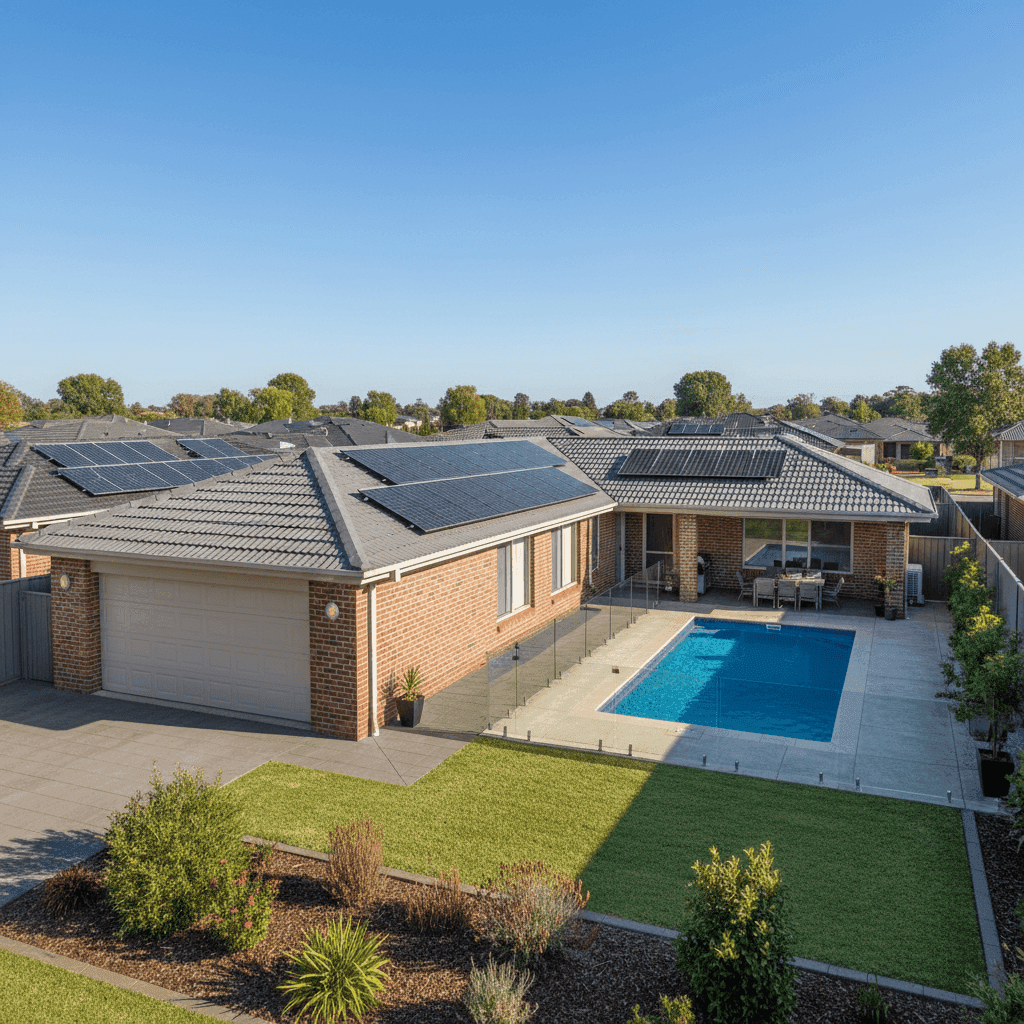
If you own a free standing home in Bourkelands, NSW 2650, you're likely paying close attention to the cost of home and contents insurance — especially as premiums across Australia continue to climb. This article breaks down a recent quote of $2,492 per year (or $243/month) for a four-bedroom, two-bathroom brick veneer home in the suburb, comparing it against local, state, and national benchmarks to help you understand whether you're getting a fair deal.
---
Is This Quote Fair?
The short answer: this quote is rated Expensive — above average for the area.
At $2,492 annually, this premium sits noticeably higher than what most comparable properties in Bourkelands are paying. The quote covers both building (sum insured: $738,000) and contents ($100,000), with a $1,000 excess applying to each. While the level of cover is comprehensive, the price tag warrants a closer look.
To put it in perspective, the suburb average premium is $2,219/yr and the median sits at $2,251/yr, meaning this quote is roughly $241–$273 above what most Bourkelands homeowners are paying for similar cover. It also clears the 75th percentile benchmark of $2,330/yr, placing it firmly in the more expensive tier for the postcode.
That said, several property-specific features — which we'll explore below — go some way toward explaining the higher figure.
---
How Bourkelands Compares
Understanding your premium in isolation only tells part of the story. Here's how Bourkelands stacks up against broader benchmarks:
| Benchmark | Average Premium | Median Premium |
|---|---|---|
| Bourkelands (2650) | $2,219/yr | $2,251/yr |
| Narrandera LGA | $2,038/yr | — |
| NSW | $9,528/yr (avg) | $3,770/yr |
| National | $5,347/yr (avg) | $2,764/yr |
> Note: NSW and national averages are skewed upward by high-risk and high-value properties. Median figures are often a more reliable comparison point.
Compared to the [NSW state average](https://coverclub.com.au/stats/NSW), Bourkelands homeowners are paying considerably less — a reflection of the region's relatively lower risk profile and more affordable property values compared to coastal or flood-prone areas. Against the [national median of $2,764/yr](https://coverclub.com.au/stats/national), this quote is actually slightly below, which provides some reassurance.
Within the Narrandera LGA, the average of $2,038/yr suggests that this particular quote is on the pricier end even by local government area standards. You can explore more localised data on the [Bourkelands suburb stats page](https://coverclub.com.au/stats/NSW/2650/bourkelands).
It's worth noting that the suburb sample size used in this comparison is five quotes, so while directionally useful, a larger dataset would provide even greater confidence in these figures.
---
Property Features That Affect Your Premium
Several characteristics of this property play a meaningful role in determining the final premium. Here's what insurers are likely factoring in:
Brick Veneer Walls & Tiled Roof
Brick veneer construction is generally well-regarded by insurers — it's durable, fire-resistant, and widely understood. Combined with a tiled roof, this property sits in a fairly standard risk category for construction materials. These features typically work in a homeowner's favour compared to, say, weatherboard or metal cladding.
Slab Foundation
A concrete slab foundation is common in homes built around this era and is generally considered low-risk by insurers. It provides good structural stability, though it can complicate certain types of repairs if issues do arise beneath the slab.
Built in 1991
At over 30 years old, the home is at an age where insurers may apply modest loading to account for ageing systems — plumbing, electrical wiring, and roofing materials can all degrade over time. Keeping maintenance records and ensuring the home is well-maintained can help manage this risk.
Swimming Pool
The presence of a pool adds liability exposure and increases the overall replacement cost of the property — both factors that contribute to a higher premium. Pool-related claims (from damage, leaks, or third-party incidents) are a real consideration for insurers.
Solar Panels
Solar panels are increasingly common but do add complexity to a home insurance policy. They represent a meaningful capital investment (typically $8,000–$20,000+) and can be damaged by hail, storms, or fire. Insurers factor in both the replacement cost and the additional roof access risk they introduce.
Ducted Climate Control
A ducted air conditioning system adds to the overall insured value of the home and its contents. Mechanical systems like these can also be a source of claims if they fail or cause water damage, which insurers account for in their pricing.
Timber & Laminate Flooring
Timber and laminate floors are susceptible to water damage — a common and often costly claim type. This flooring type can influence how insurers assess the contents and building risk, particularly in the event of a burst pipe or storm event.
Building Size: 214 sqm
At 214 square metres, this is a generously sized home. The $738,000 sum insured reflects the cost to fully rebuild the property, which at roughly $3,449/sqm is broadly in line with current construction costs in regional NSW.
---
Tips for Homeowners in Bourkelands
If you're looking to ensure you're getting the best value on your home insurance, here are four practical steps worth considering:
- Compare quotes regularly. Insurance loyalty rarely pays off. Premiums can vary significantly between providers for the same level of cover. Use a comparison tool like CoverClub to benchmark your current policy against the market at renewal time.
- Review your sum insured carefully. Underinsurance is a widespread problem in Australia. Make sure your building sum insured reflects current rebuild costs — not the market value of your home. With construction costs rising, it's worth reassessing this figure annually.
- Check what's covered for your pool and solar panels. Not all policies treat these features the same way. Some may require you to list solar panels as a separate item, or may cap pool-related liability. Read the Product Disclosure Statement (PDS) carefully or ask your insurer directly.
- Consider a higher excess to reduce your premium. If you're in a position to absorb a larger out-of-pocket cost in the event of a claim, opting for a higher excess (e.g., $2,000 instead of $1,000) can meaningfully reduce your annual premium. Just ensure the saving is worth the additional financial exposure.
---
Find a Better Deal with CoverClub
Whether you're renewing your policy or shopping for the first time, it pays to compare. CoverClub makes it easy for Australian homeowners to benchmark their premiums against real market data and find cover that suits their property and budget. [Get a quote today](https://coverclub.com.au/?focus=address) and see how your current premium stacks up.