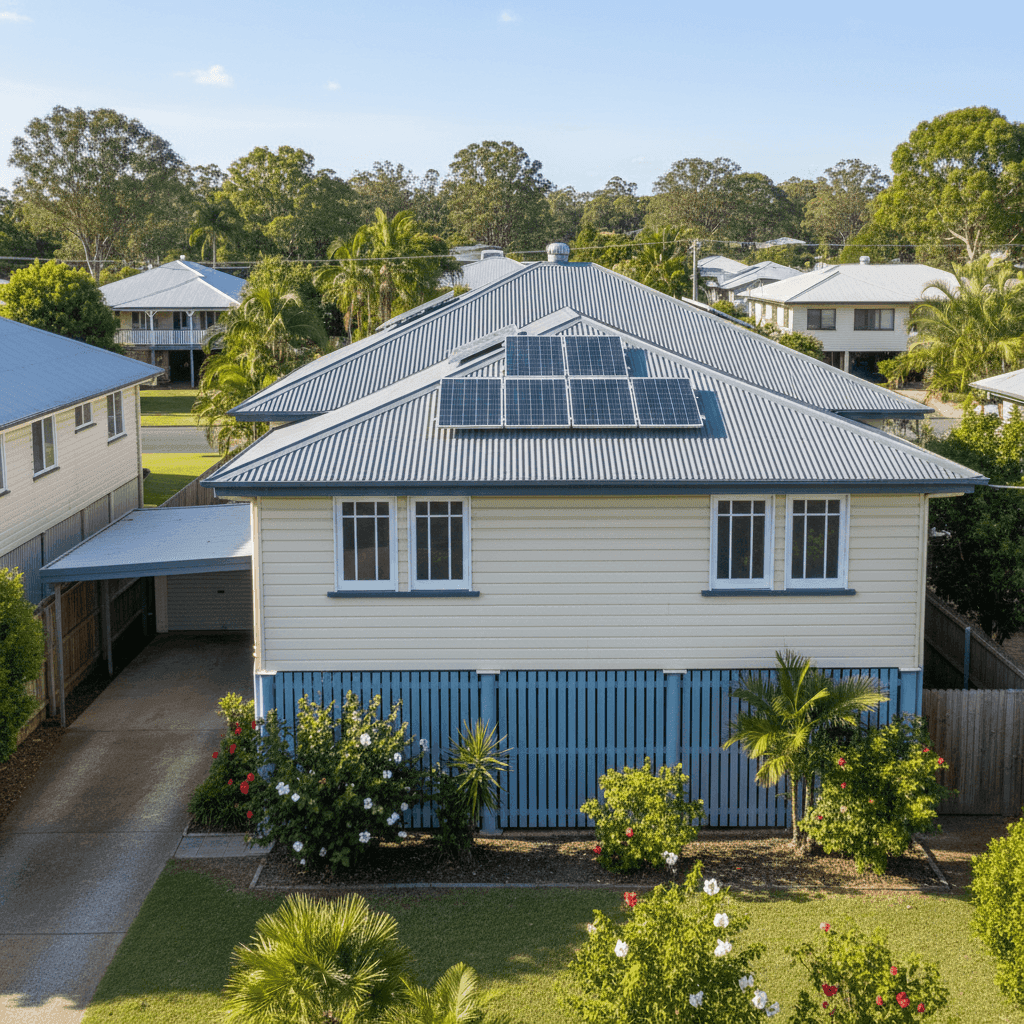
Bowen is a coastal town in North Queensland with a lot going for it — stunning beaches, a rich agricultural history, and a tight-knit community. But sitting in a cyclone-prone region of Queensland also means homeowners here face some of the more complex home insurance decisions in the country. This article breaks down a real building insurance quote for a three-bedroom, free-standing home in Bowen (postcode 4805), and puts it in context using suburb, state, and national data.
---
Is This Quote Fair?
The quote in question comes in at $5,407 per year (or $518/month) for building-only cover on a 153 sqm weatherboard home, with a $1,000 building excess and a sum insured of $700,000.
Our price rating for this quote is FAIR — Around Average.
That assessment holds up when you look at the numbers. The suburb average premium in Bowen sits at $6,920/year, meaning this quote is roughly $1,513 below the local average — a meaningful saving. It also falls between the suburb's 25th percentile ($3,075/yr) and 75th percentile ($6,039/yr), placing it in the upper-middle range of what Bowen homeowners typically pay. The suburb median is $4,501/year, so this quote is moderately above the midpoint — not a bargain, but not an outlier either.
Given the age of the property (built in 1944), its weatherboard construction, and its location in a designated cyclone risk area, a premium in this range is broadly reasonable. Insurers price these characteristics carefully, and the fact that this quote comes in below the suburb average suggests the insurer has assessed the risk competitively.
---
How Bowen Compares
To understand whether this premium is truly fair, it helps to zoom out and look at the broader picture. You can explore the full Bowen suburb insurance stats, Queensland state averages, and national benchmarks on CoverClub.
Here's how the numbers stack up:
| Benchmark | Average Premium | Median Premium |
|---|---|---|
| Bowen (4805) | $6,920/yr | $4,501/yr |
| Queensland | $9,129/yr | $3,903/yr |
| National | $5,347/yr | $2,764/yr |
| Whitsunday LGA | $4,773/yr | — |
A few things stand out here. Queensland's average premium of $9,129/year is dramatically higher than both the national average and the Bowen suburb average — a reflection of the extreme weather events, cyclone exposure, and flood risk that affect many parts of the state. However, Queensland's median of $3,903/year is actually below the national average, which tells us the state's average is being pulled upward by high-risk properties and large sums insured.
Bowen's suburb average of $6,920/year is elevated compared to the national figure, but the Whitsunday LGA average of $4,773/year is notably lower — suggesting that within the broader region, Bowen carries a slightly higher risk profile than some surrounding areas.
For this particular quote at $5,407/year, the homeowner is paying above the national median ($2,764) and above the Whitsunday LGA average ($4,773), but below the Bowen suburb average and well below the Queensland state average. On balance, it's a fair result for a property with this risk profile.
---
Property Features That Affect Your Premium
Several characteristics of this property have a direct bearing on what insurers charge. Understanding them can help you make smarter decisions about cover and cost.
Cyclone Risk Area
This is the single biggest factor. Bowen sits within a designated cyclone risk zone, and insurers apply significant loadings to properties in these areas. Cyclone damage can be catastrophic, and the cost of rebuilding after a major event is substantial — which is reflected in premiums across the entire region.
Weatherboard Timber Walls
Weatherboard construction is common in older Queensland homes, but it's considered higher risk than brick or rendered masonry. Timber is more susceptible to fire, termite damage, and wind damage — all of which influence how insurers assess the property.
Age of Construction (1944)
An 80-year-old home presents unique challenges for insurers. Older properties may have outdated wiring, plumbing, or structural elements that increase the likelihood of a claim. They can also be more expensive to rebuild to modern standards, which is partly why a $700,000 sum insured is appropriate here despite the modest size.
Steel/Colorbond Roof
On the positive side, a Colorbond steel roof is generally viewed favourably by insurers. It's durable, fire-resistant, and performs well in high-wind conditions — a meaningful advantage in a cyclone-prone area.
Timber/Laminate Flooring on Stumps
The stump foundation is typical of older Queensland homes and allows for airflow underneath — practical in the tropical climate. However, it also means the subfloor is exposed, and water or wind damage can affect flooring and structural elements more readily.
Solar Panels
Solar panels add replacement value to the property and can increase the sum insured required. They're generally covered under building insurance, but it's worth confirming with your insurer that your panels and inverter are included in your policy.
---
Tips for Homeowners in Bowen
1. Review Your Sum Insured Carefully
At $700,000 for a 153 sqm home, the sum insured reflects the true cost of rebuilding — not the market value of the land. In a cyclone-prone area with an older home, rebuilding costs can escalate quickly due to labour shortages and material costs post-disaster. Make sure your sum insured accounts for this, and revisit it annually.
2. Ask About Cyclone Excess Separately
Many insurers in North Queensland apply a separate cyclone excess that differs from the standard building excess. This can be a flat dollar amount or a percentage of the sum insured. Always read the Product Disclosure Statement (PDS) carefully and ask your insurer to clarify what applies in a cyclone event.
3. Compare Multiple Quotes Every Year
The spread of premiums in Bowen is wide — from $3,075/year at the 25th percentile to $6,039/year at the 75th percentile, based on 111 quotes in our dataset. That's a significant range, and loyalty to a single insurer rarely pays off. Shopping around annually can save hundreds of dollars.
4. Consider Maintenance as a Risk Mitigation Tool
Insurers expect homes to be maintained to a reasonable standard. For an older weatherboard home on stumps, this means keeping the subfloor clear, checking for termite activity, maintaining gutters and downpipes, and ensuring the roof is in good condition. Proactive maintenance can also reduce the likelihood of a claim — and some insurers may look more favourably on well-maintained older homes.
---
Compare Your Own Quote
Whether you're renewing your policy or shopping for the first time, it pays to know where your premium sits relative to the market. CoverClub makes it easy to benchmark your quote against real data from homeowners in your suburb, your state, and across Australia.
Get a home insurance quote today and see how your premium stacks up — in seconds, for free.