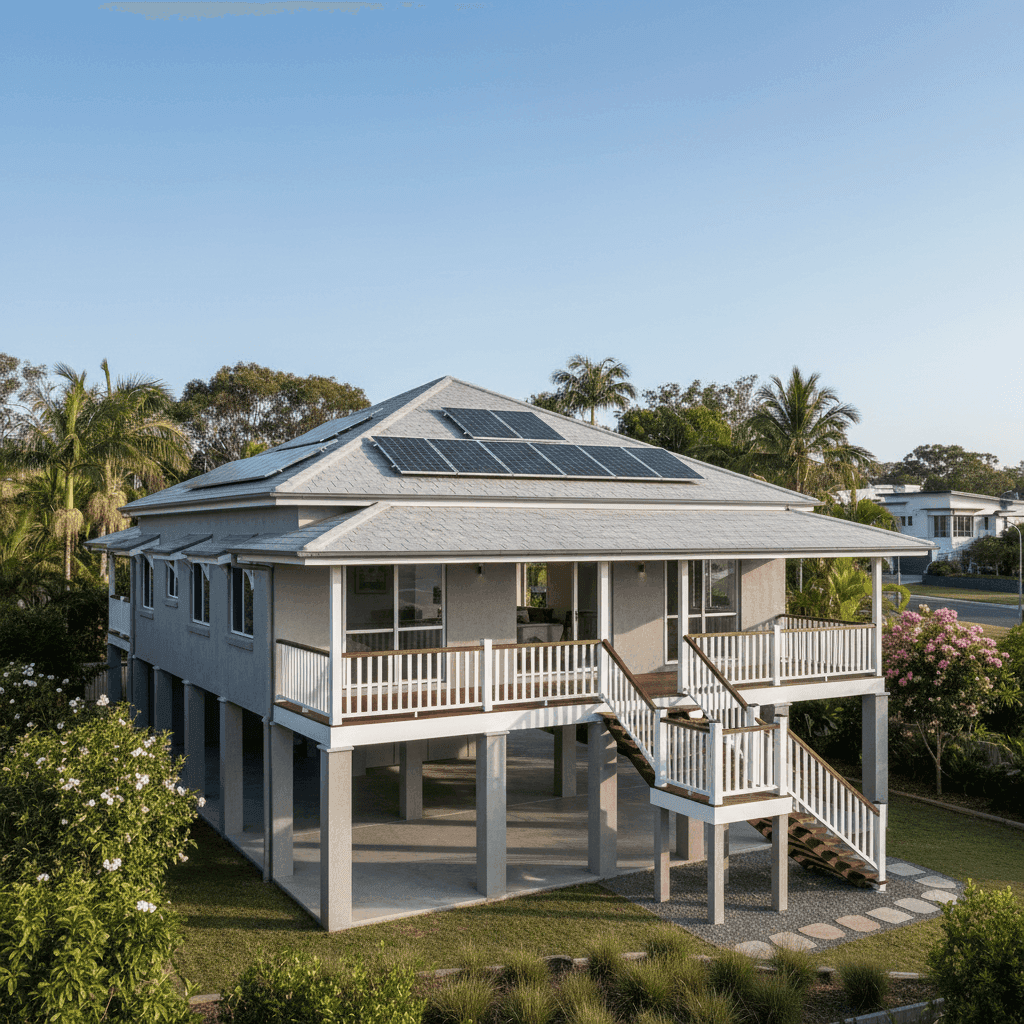
Bowen is a coastal Queensland town with a lot going for it — stunning beaches, a strong agricultural identity, and a growing residential community. But if you own a free standing home in this part of North Queensland, you'll know that home insurance can be a significant household expense. This article breaks down a real building insurance quote for a 3-bedroom, 2-bathroom free standing home in Bowen (postcode 4805), and puts it in context against local, state, and national benchmarks.
---
Is This Quote Fair?
The annual premium for this property came in at $2,748 per year (or $263/month), covering building only with a sum insured of $550,000 and a building excess of $2,000. Our pricing model rates this quote as CHEAP — below average for the area.
That's a meaningful finding. North Queensland has a well-earned reputation for expensive home insurance, driven largely by cyclone risk, flooding, and the elevated cost of rebuilding in regional areas. For a quote to land this far below local benchmarks is genuinely noteworthy — and worth understanding.
At face value, $2,748/year represents solid value for a property of this type in this region. Whether you're a first-time buyer or a long-term Bowen resident reviewing your policy, this kind of benchmark data helps you assess whether your own insurer is giving you a fair deal.
---
How Bowen Compares
To appreciate just how competitive this quote is, it helps to look at the numbers side by side.
Based on data from 111 quotes collected in the Bowen suburb:
| Benchmark | Premium |
|---|---|
| This quote | $2,748/yr |
| Suburb 25th percentile | $3,075/yr |
| Suburb median | $4,501/yr |
| Suburb average | $6,920/yr |
| LGA (Whitsunday) average | $4,773/yr |
| QLD state median | $3,903/yr |
| QLD state average | $9,129/yr |
| National average | $5,347/yr |
| National median | $2,764/yr |
This quote sits below the suburb's 25th percentile, meaning it's cheaper than at least 75% of quotes collected in Bowen. It also comes in well under the Queensland state average of $9,129/year and the national average of $5,347/year.
One figure worth noting is the gap between the suburb average ($6,920) and the suburb median ($4,501). That spread suggests a portion of Bowen properties are attracting very high premiums — likely pulling the average upward — while the middle of the market sits closer to $4,500. This quote at $2,748 comfortably undercuts even that median figure.
The Queensland state average of $9,129 is notably higher than the national average, reflecting the disproportionate insurance burden carried by Queenslanders — particularly those in coastal and cyclone-prone regions. Even against the more moderate national median of $2,764, this quote holds its own.
---
Property Features That Affect Your Premium
Several characteristics of this property likely contribute to its competitive pricing. Let's unpack the key ones.
Concrete Walls and Concrete Roof
Concrete construction is among the most resilient building materials available, and insurers know it. Homes built with concrete external walls and concrete roofing are generally more resistant to impact damage, fire, and extreme weather events. In a region like North Queensland, this kind of structural durability can translate directly into lower premiums.
Built in 2022
A relatively new build brings its own advantages. Modern homes constructed in 2022 must comply with current Australian building codes, which include updated standards for wind resistance, waterproofing, and structural integrity. Newer properties also tend to have fewer maintenance-related risks, which insurers factor favourably into their pricing.
Elevated Foundation (At Least 1 Metre)
The property sits elevated by at least one metre on a slab foundation. Elevation is a meaningful risk mitigation factor in Queensland, where flood and storm surge events are not uncommon. Homes raised off the ground are less vulnerable to inundation, and many insurers reward this with reduced premiums or broader coverage terms.
Not in a Cyclone Risk Zone
Despite being located in North Queensland — a region often associated with cyclone exposure — this property is assessed as not in a cyclone risk area. This is a significant pricing factor. Cyclone loading can dramatically increase premiums for nearby properties, so sitting outside that risk classification provides a meaningful cost advantage.
Solar Panels and Ducted Climate Control
The presence of solar panels and ducted climate control are worth noting. Solar panels add replacement value to the property, and some insurers treat them as an additional risk (particularly for roof-mounted systems). Ducted climate control systems similarly represent a higher-value fit-out. Despite these inclusions, the quote remains highly competitive — suggesting the insurer has priced these features proportionately.
---
Tips for Homeowners in Bowen
Whether your own quote looks similar to this one or significantly higher, here are some practical steps to help you get the most from your home insurance.
1. Review your sum insured annually Building costs in regional Queensland have risen sharply in recent years. A sum insured of $550,000 may be appropriate today, but it's worth reassessing each year to ensure it reflects current rebuild costs — not the value you set when you first took out the policy.
2. Understand your excess structure This quote carries a $2,000 building excess. A higher excess typically reduces your annual premium, but it also means more out-of-pocket expense when you make a claim. Make sure your excess level reflects what you could realistically afford to pay at short notice.
3. Check whether your elevation is documented If your home is elevated and you haven't formally declared this to your insurer, you may be missing out on a pricing benefit. Speak with your insurer or broker to confirm that your property's elevation is captured in your policy details.
4. Compare quotes before your renewal date The spread of premiums in Bowen is wide — from under $3,000 to well above $6,000 for broadly similar properties. That variation means shopping around at renewal time can yield real savings. Don't let your policy auto-renew without checking what else is available.
---
Find Out What Your Home Should Cost to Insure
If you're a Bowen homeowner wondering whether your current premium is fair, the best starting point is a fresh comparison. CoverClub makes it easy to see how your property stacks up against local and national benchmarks — and to get quotes tailored to your specific home.
Compare home insurance quotes for your Bowen property at CoverClub →